Top 10 Good Dishwashers for 2027
Dirty dishes piling up, noisy cycles, and confusing features can make choosing the right appliance feel overwhelming. You’re not alone—many people struggle to find a dishwasher that fits their space, budget, and cleaning needs.
This guide to the Top 10 Good Dishwashers for 2027 makes the decision easier.
You’ll want dishwashers that match your space, noise tolerance, and cleaning needs. Look for models under 44 dB, ENERGY STAR ratings, soil sensors, and adjustable racks.
Pick a compact unit for apartments, a heavy-duty model with high-temp sanitize for pots, or a premium smart dishwasher for app control and firmware updates.
Budget options under $600 can still clean well if maintained. Keep going and you’ll find top picks, specs, and buying tips to narrow your choice.
Key Takeaways
- Prioritize ENERGY STAR-rated models with soil sensors and variable-temperature cycles for the best cleaning, energy, and water efficiency.
- Choose dishwashers under 44 dB for quiet operation, especially in open-plan homes or shared living spaces.
- Look for adjustable racks, robust spray arms, and high-temperature sanitize cycles (150–160°F) for heavy-duty pots-and-pans cleaning.
- For small kitchens, choose compact or slimline models with fold-down tines and adjustable baskets that fit your counter or under-counter space.
- Consider smart features, such as app control, diagnostics, and firmware updates, only if they improve convenience and long-term reliability.
How to Pick the Right Dishwasher: Size, Noise, Cycles, Water & Warranty
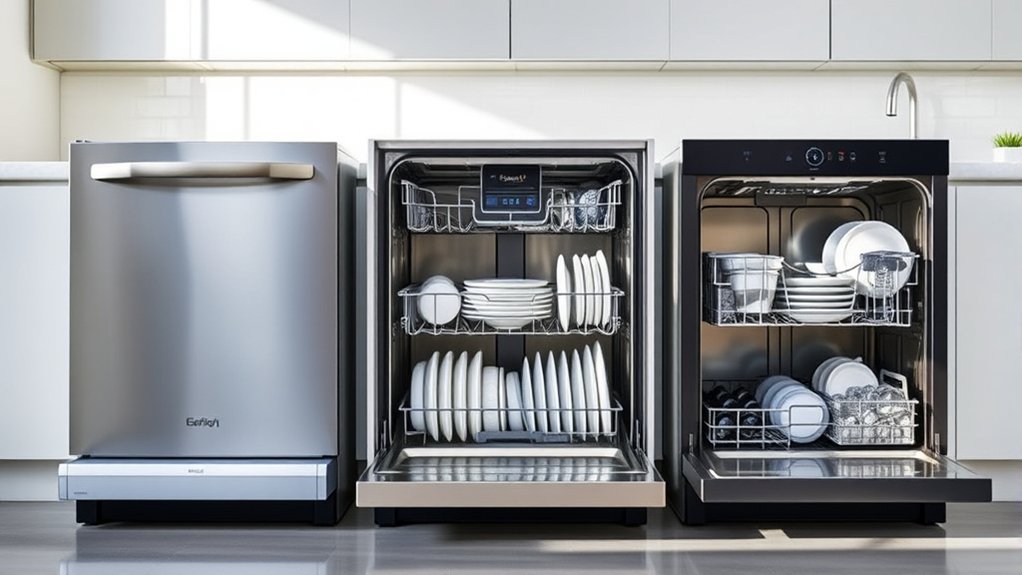
When choosing a dishwasher, start by matching its size and layout to your kitchen and household habits so you won’t end up with awkward fits or wasted capacity. Check interior dimensions, adjustable racks, and whether a compact or 24-inch model suits your daily load.
Match dishwasher size and layout to your kitchen and habits—measure interior dimensions and choose compact or 24‑inch accordingly.
Next, prioritize noise level. Aim for 44 dB or lower if your kitchen’s near living spaces, and read real-world reviews rather than just specs.
Select cycles that match your routine, including quick, heavy, sanitize, and eco modes. Make sure the controls are intuitive.
Look for Energy savings via ENERGY STAR ratings and efficient motor designs. Lower energy use usually pairs with better water management.
Water conservation matters, too. Check gallons per cycle, soil sensors, and partial-load options.
Finally, compare warranties and service. A clear parts-and-labor policy and accessible support will save time and money.
Balance capacity, quiet operation, useful cycles, efficiency, and warranty to get a dishwasher that fits your life.
Best Overall Dishwasher (2027): Quiet, Efficient, Smart
After weighing size, noise, cycles, water use, and warranty, you’ll want a dishwasher that balances all those factors without forcing compromises.
You’ll appreciate a model that blends energy efficiency with real cleaning power, cutting utility bills while tackling dried-on meals. Look for ENERGY STAR ratings, variable wash pressures, and soil sensors that adjust cycles automatically so you don’t overuse water or power.
Quiet operation matters. Advanced insulation, refined motor design, and targeted noise reduction features keep sound levels under 44 dB, so you can run cycles overnight without disturbance.
Smart connectivity should feel useful, not gimmicky. App alerts, cycle customization, and voice control can integrate smoothly with your routines.
Durable racks, adjustable tines, and a reliable warranty mean fewer surprises. Choose a unit that delivers low decibel levels, high cleaning scores, and proven energy savings.
That combination gives you a dishwasher that’s quiet, efficient, smart, and genuinely worth the investment.
Best Budget Dishwasher Under $600: Solid Cleaning for Small Households
If you’ve got a tight budget and limited space, you can still get a dishwasher that cleans reliably without breaking the bank. Look for compact models under $600 that prioritize core performance: strong wash cycles, effective drying, and adjustable racks to fit small pots and plates. You’ll trade off high-end extras, but you’ll save on purchase price and energy use.
Focus on build quality, warranty length, and user-friendly controls. Read reviews for consistent cleaning results and simple filters that make dishwasher maintenance straightforward. Easy access and removable parts cut down on clogs and odors.
Choose models with good energy and water ratings so you don’t pay more over time. Use eco-friendly detergents to protect finishes and reduce residues, and run a monthly rinse cycle to keep spray arms clear.
For small households, run full loads on economy cycles. It’s efficient and gentle. A well-chosen budget dishwasher will serve reliably for years.
Best Premium Dishwasher: Advanced Sensors & App Control
Because you want spotless results with minimal hassle, premium dishwashers pair advanced sensors and app control to automate cleaning, monitor performance, and give you remote command over cycles and diagnostics.
You’ll appreciate smart technology that senses soil levels, adjusts water and time, and reports maintenance needs to your phone. Pairing app control with eco friendly features helps you save water and energy without sacrificing cleanliness.
- Sensor-driven cycles: They detect grime, choose temperatures, and cut waste so you get consistent results.
- App integration: You can start, stop, schedule, and receive alerts remotely, plus view cycle history and diagnostics.
- Customization and updates: Firmware updates add improvements; customizable wash profiles handle delicate glass to heavy pots.
Choose a model with clear app UX, reliable connectivity, and verified eco friendly certifications.
That combination keeps dishes pristine, reduces manual checks, and makes upkeep straightforward. It’s perfect if you want performance and convenience in equal measure.
Best Ultra‑Quiet Dishwasher for Open‑Plan Homes: Decibel Profile & Insulation
When you’re shopping for an ultra-quiet dishwasher, start by checking its decibel rating to see how it might sound in an open-plan space. Ideally, choose a model that lists several noise measurements—such as idle, wash, and drain cycles—instead of relying on a single overall figure.
It’s also worth looking at the dishwasher’s soundproofing and insulation. Dense insulation, sturdy construction, and anti-vibration mounts can all help reduce noise and keep your kitchen quieter.
Noise Level Measurements
Though decibel ratings don’t tell the whole story, they give you a clear starting point for comparing dishwashers in open‑plan homes. Look beyond the headline dB number to practical measurements: average running level, peak splashes, and motor hum.
Sound isolation and decibel reduction strategies built into the machine affect what you actually hear.
- Measure: note continuous dB during wash, rinse, and drain cycles to spot spikes.
- Compare: use a consistent distance of 1 meter and the same background baseline for fair tests.
- Evaluate: listen for frequency character. Low rumbles carry through floors, while high whines travel through walls.
You’ll pick a model that performs quietly in real life, not just on spec sheets.
Soundproofing Materials
Want your open-plan home to stay peaceful while the dishwasher runs? Choose soundproofing materials that cut noise without compromising kitchen aesthetics.
Dense insulation panels, acoustic foam strips, and mass-loaded vinyl behind cabinets reduce vibration and airborne sound. Combine them with anti-vibration mounts under the unit for best results.
You’ll want thin, high-density materials where space is tight, along with removable panels for access. Seal gaps around the dishwasher with acoustic sealant to stop flanking noise.
When installing, balance soundproofing with ventilation needs and easy access for dishwasher maintenance. Test decibel levels before and after to verify improvement.
These targeted upgrades keep conversation audible in open areas and maintain a sleek look while delivering measurable noise reduction.
Best Fast‑Cycle Dishwasher: Speed Without Compromising Cleaning
When you need clean dishes fast, compare cycle times with cleaning performance so you don’t end up with greasy plates. Look for a high-temperature rinse or sanitizing boost to help loosen grime during shorter cycles.
Loading also makes a difference. Place plates and utensils carefully, and avoid overcrowding so the water and detergent can reach everything. That way, even a quick program has a better chance of delivering thorough results.
Cycle Time Versus Results
How fast should a dishwasher be before you sacrifice spotless dishes? You want quick cycles that still clean, so weigh cycle efficiency against actual results.
Shorter runs save time and water, but they need intelligent sensors and detergent compatibility to work well. Consider these practical checks:
- Look for smart sensors that adjust time based on soil levels and load size.
- Verify the machine’s compatibility with your preferred detergent type. Some fast cycles need high-performance pods or gels.
- Check real-world reviews for stubborn-item performance. Manufacturers’ cycle times don’t always reflect greasy pans.
You’ll prefer models that balance speed with rinsing patterns and spray coverage. Pick a unit that consistently delivers clean dishes in reduced time rather than just fast numbers.
High‑Temperature Rinse Importance
Why does a high-temperature rinse matter in a fast cycle? You want speed but not soggy glasses or greasy pans, and a hot rinse cycle helps: it dissolves oils faster, sanitizes surfaces, and evaporates water more quickly for better drying.
When a dishwasher offers precise temperature control, you get consistent results even on abbreviated programs. Look for models that boost rinse heat late in the cycle to finish off residues without extending total time.
You’ll also benefit from sensors that adjust heat based on soil level, avoiding unnecessary energy use. In short, a high-temperature rinse preserves cleaning performance in fast cycles by improving degreasing, sanitization, and drying, so you won’t trade cleanliness for convenience.
Loading For Quick Runs
Boosting rinse heat matters only if you load the dishwasher to let that short, hot finish reach every item. For quick runs, arrange dishes to expose soils and allow water and steam to circulate.
You’ll also protect dishwasher durability by avoiding overloading and using racks as intended. Fast cycles need clear paths for spray arms and vents.
- Place bowls and cups angled downward at the sides so spray hits interiors.
- Stagger plates and bakeware to prevent masking. Keep large items on the sides or back.
- Use eco-friendly detergents and smaller detergent doses made for quick cycles to avoid residue.
Follow these steps and you’ll get speedy, spotless results without stressing your machine.
Best for Heavy Pots & Pans: Powerful Spray, High‑Temp Cycles
When you regularly tackle burnt-on food and grease, pick a dishwasher with a powerful spray system and true high‑temperature cycles to get pots and pans truly clean. You’ll want models that combine concentrated spray arms, adjustable racks, and sanitize or boost modes reaching 150–160°F.
During Dishwasher installation, position the spray arms unobstructed and confirm water‑heater compatibility to preserve those high-temp benefits. For ongoing results, follow simple Maintenance tips: clean filters, descale monthly, and inspect seals.
| Feature | Why it matters | Quick check |
|---|---|---|
| Powerful spray arms | Breaks up stuck food | Spin freely? |
| High-temp sanitize | Kills bacteria, loosens grease | 150–160°F available? |
| Adjustable racks | Fit large pans | Fold tines easily? |
| Durable interior | Resists staining | Stainless or polymer? |
Pick a model with targeted cycles and robust wash pressure, so you don’t pre-soak or scrub heavy cookware before loading.
Best Compact Dishwasher for Apartments: Space‑Saving Performance
If you live in a small apartment and want clean dishes without sacrificing counter or cabinet space, a compact dishwasher gives you full-size performance in a smaller footprint. You’ll love how these units tuck under a counter or sit on a counter while preserving kitchen aesthetics; many models offer sleek finishes and a simple user interface that’s easy to learn. Pick a model that balances capacity with dimensions so you can fit plates, mugs, and a few pans without crowding.
- Choose a width that fits your available space and leaves room for cabinet doors.
- Look for adjustable racks and fold-down tines to maximize interior layout flexibility.
- Prioritize a clear user interface with cycle shortcuts and status indicators for quick operation.
Compact dishwashers are ideal if you want reliable cleaning, minimal impact on your layout, and controls that make daily use straightforward without overwhelming a small living area.
Most Energy‑ and Water‑Efficient Dishwasher: Lowest Operating Cost
Compact models save space, but you might also want a dishwasher that cuts your utility bills. Look for units with ENERGY STAR certification, advanced soil sensors, and variable-temperature wash cycles. They deliver measurable energy savings by tailoring cycles to load size and soil level.
Low-flow spray arms and efficient pumps support water conservation without sacrificing cleaning power, so you won’t rerun loads.
You should compare annual operating cost estimates, which factor in kilowatt-hours and gallons used per year. Models with heat-pump drying or fan-assisted options use less electricity than traditional electric-heated drying.
Also check for eco or sanitize settings that balance water use and hygiene. Stainless-steel tubs retain heat better, reducing cycle length, and smart controls let you schedule runs during off-peak rates to lower costs further.
Prioritize proven efficiency metrics and realistic energy-water labels so you buy a dishwasher that minimizes your monthly bills over its lifetime.
Best Family Dishwasher (Value): Capacity, Reliability, Long‑Term Cost
Because families juggle big, dirty loads and busy schedules, you’ll want a dishwasher that balances roomy capacity with proven reliability and low lifetime costs. Look for racks that fit pots and kids’ dishes, intuitive cycles that cut wash time, and sturdy parts that reduce repair visits.
For busy families, choose a roomy, reliable dishwasher with smart racks, quick cycles, and durable parts to cut repairs.
Prioritize machines with easy dishwasher maintenance, including accessible filters, self-cleaning cycles, and clear error codes, so you spend less on service calls.
- Capacity: Choose a model with flexible racking and at least 12 place settings to handle daily meals and weekend gatherings without extra cycles.
- Reliability: Pick brands with long warranties, readily available parts, and strong user reviews to minimize downtime and maximize resale value.
- Long-Term Cost: Factor in expected energy use, water efficiency, and potential repair costs. Models designed for eco-friendly cleaning can save money while cutting your household’s footprint.
This approach helps you find a family dishwasher that’s practical, durable, and economical.
Frequently Asked Questions
Can Dishwashers Handle Specialized Cookware Like Cast Iron or Carbon Steel?
You shouldn’t throw cast iron or carbon steel in the dishwasher. It’ll wreck the seasoning faster than lightning, strip protective oils, invite rust, and dull surfaces.
Instead, hand-wash with hot water and a brush. Dry thoroughly, then oil lightly while warm.
For stuck-on food, use coarse salt or gentle scraping. Avoid harsh detergents and long soaking.
Treat them gently, and they’ll last generations.
How Do Dishwasher Detergents and Rinse Aids Affect Warranty Coverage?
They usually won’t void the warranty unless you use incompatible chemicals, but you should check detergent compatibility and rinse aid effects in the manual.
If you use harsh or non-recommended detergents, manufacturers may deny damage claims. Rinse aids can cause spotting or corrosion if incompatible, which could affect coverage.
Keep receipts, follow approved product lists, and document maintenance. If in doubt, contact the manufacturer for written confirmation to protect your warranty.
Are There Dishwasher Models Compatible With Hard‑Water Treatment Systems?
Yes, many dishwashers work with hard water treatment systems. You’ll find models with built-in water softening or ones designed to pair with whole-house water softeners or aftermarket water conditioning.
Check the specifications for a water softening unit, salt reservoir, or hard-water compatibility. Installing a softener reduces scale, improves detergent performance, and helps protect seals.
Follow the manufacturer’s guidance to maintain the warranty and achieve the best cleaning results.
How Often Should Dishwasher Filters and Spray Arms Be Professionally Serviced?
You should schedule professional service every 12–24 months, and sooner if you notice performance drops, odors, or visible buildup. Keep routine filter maintenance monthly and run a quick spray arm cleaning quarterly yourself.
Call a pro for deep cleaning, inspection, and replacements annually or biannually, depending on water hardness. That way, you’ll prevent clogs, maintain spray pressure, and prolong pump life while avoiding costly repairs and ensuring consistent cleaning results.
Can Smart Dishwashers Be Integrated With Home Energy‑Management Systems?
Yes, you can integrate smart dishwashers with home energy-management systems. You’ll use manufacturer apps, smart home hubs, or protocols like Wi-Fi, Zigbee, or Matter to enable smart home integration.
That lets you schedule cycles during off-peak rates, monitor energy use, and trigger ECO modes. You’ll want compatible appliances, updated firmware, and secure network setups so the dishwasher communicates reliably with your energy management platform and overall smart home.
Conclusion
You’re standing in a bright kitchen, dishes gleaming like tiny moons in a calm bay. Pick a dishwasher that fits your space, noise tolerance, and budget, and it’ll be the quiet tide that keeps your counters clear.
Whether you choose a compact workhorse for apartment life or a premium, whisper-quiet model for open-plan living, aim for efficiency, strong cleaning, and a solid warranty. With the top 10 good dishwashers for 2027, you can spend more time enjoying dinner and less time scrubbing.