
7 Key Advantages of Induction Hobs
You’re not alone if slow boiling, uneven heating and hard-to-clean surfaces make cooking feel like a chore. Many people want a hob that saves time, uses less energy and gives them better control without adding complexity.
You’ll get faster, more efficient cooking with induction hobs: magnetic coils heat ferrous pans directly, so water boils quicker and adjustments are instant. You’ll save energy and lower bills thanks to reduced heat loss and quicker cooldowns.
Safety improves with cooler surfaces, automatic shutoffs and child locks. Precision controls help with delicate sauces and even browning.
Check cookware with a magnet to verify compatibility. Keep going to learn practical tips, tests and when a switch makes sense.
Key Takeaways
- Much faster heating and boiling than gas or electric hobs, saving time and reducing overall cooking duration.
- Highly energy-efficient because heat transfers directly to ferrous cookware, minimizing waste and lowering energy costs.
- Extremely responsive, with instant power adjustments for precise temperature control and consistent cooking results.
- Safer operation due to lower surface temperatures, automatic shutoffs, and child-lock features that reduce burn and fire risks.
- Easy to clean and maintain, thanks to the smooth glass-ceramic surface and fewer baked-on spills.
How Induction Hobs Work (Quick Explainer)
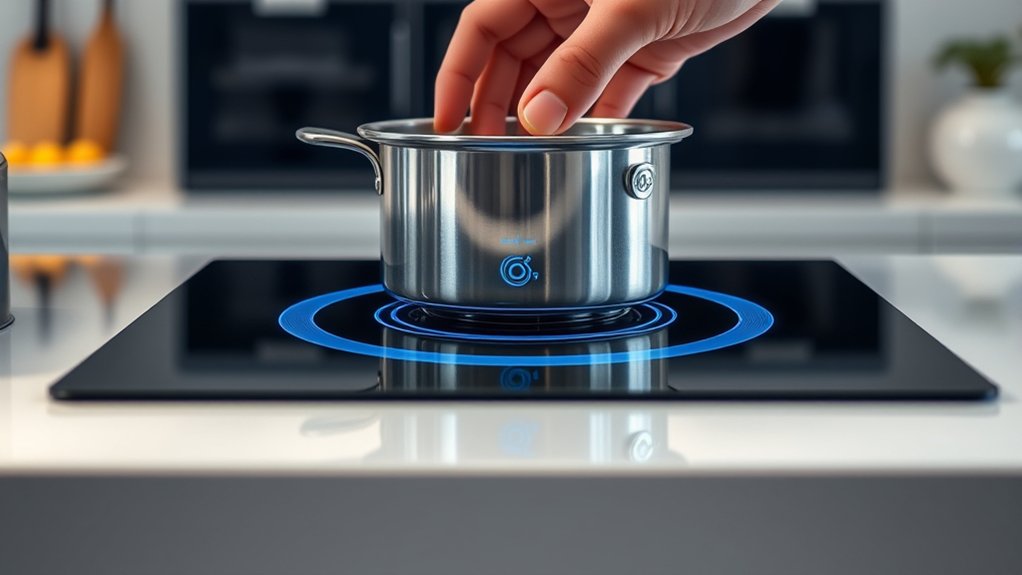
How do induction hobs heat your pots so quickly? You place a ferrous pan on the glass surface, and induction technology kicks in. Beneath the cooktop, a coil sends alternating current that generates changing magnetic fields.
Those fields induce eddy currents in the pan’s metal, and the metal’s resistance converts those currents into heat directly in the cookware. You don’t heat the hob surface first; you heat the pot itself, so energy transfer is far more efficient.
Controls adjust the coil’s power almost instantly, giving you responsive temperature changes. Safety sensors detect absence of suitable cookware and cut power, reducing burn risk.
Because the hob remains relatively cool, spills are less likely to bake on, and cleanup’s easier. You’ll want magnetic-compatible cookware, typically cast iron or stainless steel with a ferrous base, to take full advantage of this precise, efficient method of cooking.
Faster Heating and Time Savings With Induction

You’ll notice that induction hobs bring water to a boil much faster than gas or electric hobs, shaving minutes off everyday cooking. Heat control is instant, too—change the setting, and the temperature adjusts right away. Since heat is generated directly in the pan, it’s distributed more evenly, helping you achieve consistent results while spending less time in the kitchen.
Rapid Boil Times
Ever wondered why water seems to reach a rolling boil so much faster on an induction hob? Direct magnetic heating sends energy straight to the pan, so less heat is wasted and your kettle or pot reaches boiling point quickly.
That speed saves time when cooking and improves energy efficiency by reducing overall run time. You’ll notice faster meal prep, whether you’re blanching vegetables or bringing pasta water to a boil.
Rapid boil capability also complements modern kitchen aesthetics. Sleek surfaces stay cool and uncluttered because you don’t need extra burners running for long.
The result is practical: quicker, cleaner, and more sustainable boiling without compromising safety or cookware performance.
Instant Heat Control
Beyond rapid boiling, induction gives you near-instant control over cooking temperature, so you can drop from a roaring boil to a gentle simmer in seconds. You’ll notice immediate response when you dial settings up or down, so recipes that demand timing, such as sauces, custards, and tempering chocolate, become more reliable.
That speed saves time and reduces wasted energy, letting you finish meals faster without guessing. The precise controls also complement modern design aesthetics, since sleek touch panels and minimalist surfaces match a streamlined workflow.
Because heat’s confined to the cookware, spills don’t burn on, which improves maintenance ease and shortens cleanup. Overall, the faster feedback and simpler upkeep make your cooking faster, cleaner, and more predictable.
Even Heat Distribution
How quickly does heat move from cooktop to pan with induction? You’ll notice heat transfers almost instantly and spreads evenly across compatible cookware, so you’ll cook faster and save time.
Even heat distribution reduces hot spots, improves browning, and cuts reheating intervals. That efficiency also means less mess and simpler surface cleaning, while sleek glass tops support modern design aesthetics without sacrificing performance.
| Benefit | Effect |
|---|---|
| Rapid transfer | Faster boiling |
| Uniform heat | No hot spots |
| Energy efficiency | Lower cooking time |
| Easier cleanup | Quick surface cleaning |
| Sleek look | Enhanced design aesthetics |
You’ll get consistent results with less monitoring, letting you multitask and finish meals sooner.
Precise Temperature Control for Delicate Cooking

You’ll appreciate how quickly you can adjust the heat on an induction hob, so you’re less likely to overshoot when a recipe calls for a sudden change. This responsiveness also makes it easy to maintain a gentle, even simmer for sauces and custards. Plus, with precise temperature settings, you can count on consistent results when cooking delicate dishes.
Rapid Heat Adjustments
Want to stop overcooking delicate sauces and melting chocolate into a grainy mess? You’ll love how an induction hob responds instantly when you change heat: raise power and a pan jumps to boil, cut it and temperature drops almost immediately.
That responsiveness gives you precise control for tasks like tempering chocolate or finishing a sauce without resorting to trial-and-error. It also keeps your kitchen aesthetics sleek since you won’t need extra equipment crowding the counter.
Because adjustments are electronic, follow simple maintenance tips: keep the glass top clean, avoid abrasive cleaners, and ensure cookware bases stay flat to preserve fast, even response. You’ll work confidently and reduce ruined batches by reacting in real time.
Even Gentle Simmering
Ever tried keeping a pot barely bubbling without babysitting it? With an induction hob, you’ll hold steady low heat so your stocks, sauces, and stews gently develop.
You can set a mild power level and trust the cooktop to respond instantly to changes, preventing sudden boils that break emulsions or toughen proteins.
Use simple simmering techniques: cover partially, stir occasionally, and position ingredients for even heat. This helps extract deeper aromas while avoiding scorching.
That controlled warmth means better flavor improvement. Subtle compounds meld over time instead of evaporating or burning off.
You’ll finish dishes more predictably, rescue delicate custards and reductions, and spend less time fiddling with knobs, letting the food do the work.
Exact Temperature Settings
If gentle simmering helps flavors develop, precise temperature settings let you control that development to the degree. You’ll set exact degrees with confidence because induction hobs respond instantly; tiny adjustments matter for sauces, chocolate, and custards.
The hob’s user interface makes choices clear, and temperature calibration keeps readings honest so you don’t guess. You’ll reduce burnt edges and broken emulsions by trusting consistent heat and instant feedback.
This control turns fragile techniques into repeatable results, so you’ll experiment without fear. The tactile feedback and clear readouts make cooking feel intentional and calm.
| Emotion | Action | Result |
|---|---|---|
| Relief | Fine-tune | Perfect sauce |
| Pride | Mastery | Consistent meals |
| Joy | Create | Confident plating |
Safer Cooking: Lower Surface Heat and Automatic Shutoffs
Because induction transfers heat directly to the cookware, the hob itself stays much cooler, so you get fewer accidental burns and less residual heat in your kitchen.
You’ll notice how child safety improves: the lower surface temperature reduces burn risk for curious hands, and many models include locks and automatic shutoffs that stop heating if a pan isn’t present or if temperature sensors detect overheating.
That automatic protection also guards against forgotten pots and pans, cutting energy waste and fire hazards. You won’t need long cooldown periods, which helps during busy cooking sessions and keeps nearby surfaces and controls safer.
Surface durability benefits too, since less extreme heat cycling reduces stress on glass-ceramic tops, and spills are less likely to bake onto the hob.
Which Cookware Works With Induction : And How to Test Yours
Wondering which pots and pans actually work on an induction hob? You need cookware compatibility that’s magnetic—cast iron, enameled steel, and most stainless steel with ferrous bases work.
Lightweight aluminum, copper, and some nonstick pans usually won’t unless they have an induction-ready plate.
Two simple testing methods confirm compatibility: the magnet test (stick a magnet to the base) and the boil test (see if water heats quickly and evenly).
If the magnet holds, the hob will detect the pan and heat efficiently.
| Material | Likely Compatible? | Quick Tip |
|---|---|---|
| Cast iron | Yes | Excellent heat retention |
| Enameled steel | Yes | Easy care, magnetic |
| Stainless steel | Often | Check magnet test |
| Aluminum | No (usually) | Look for induction base |
| Copper | No (usually) | Buy with ferrous plate |
Use the table and tests to sort your cookware.
Replace or upgrade only the pans you use most to get the best induction performance.
How Induction Saves Energy (And Reduces Bills)
Now that you know which pans will actually work on an induction hob, you can see how that compatibility helps cut energy use and lower bills.
Because induction heats the pan directly through electromagnetic energy, you waste less heat warming the cooktop or surrounding air. That efficiency means faster boiling and lower overall energy consumption, which supports energy conservation goals in your home.
Induction heats pans directly, wasting less heat—so water boils faster and overall energy use drops.
You’ll also use lower power settings more effectively. Precise temperature control keeps food from overcooking and avoids repeated reheating, both of which add to household energy use.
Shorter cooking times and targeted heat reduce cumulative electricity draw, producing measurable bill reduction over weeks and months.
In addition, induction surfaces cool quickly after use, limiting standby losses and making ventilation less demanding.
Taken together, these factors let you cook precisely while consuming less energy and paying noticeably less on your utility statements, without changing your recipes or habits.
When Switching to Induction Makes the Most Sense (Costs, Kitchen Fit, Use Cases)
When you’re weighing the switch to induction, consider upfront costs, your kitchen layout, and how you cook most days. If you’re on a tight budget, cost considerations matter: induction hobs cost more than basic electric or gas, and you may need to replace non-magnetic cookware.
Factor in potential energy savings and faster cooking, which can offset the purchase price over several years.
Check kitchen compatibility before buying. Ensure your electrical supply can handle the hob’s load and that countertop cutouts and ventilation suit the new unit.
If you’re renovating, integrating induction is simpler. Retrofitting may require an electrician.
Think about daily use: if you simmer often, use heavy pans, or cook quickly at high heat, induction gives precise control and responsiveness. It’s especially sensible for small households, busy cooks, and those prioritizing safety and easy cleaning.
If you rarely cook or can’t upgrade the wiring, waiting might be smarter.
Frequently Asked Questions
Do Induction Hobs Interfere With Medical Implants Like Pacemakers?
Yes, they can, but the risk is low for most users. Induction hobs produce electromagnetic fields that may affect pacemakers, especially at close range or with older devices.
Stay at least 30 cm away while the hob is on, and avoid leaning over pans. Consult your cardiologist or device manufacturer for personalised advice.
Take precautions and monitor for symptoms such as dizziness or palpitations.
Can Induction Hobs Be Used With Glass-Top Compatible Griddles?
Yes, you can use glass-top compatible griddles on induction hobs. Picture a smooth black surface heating a heavy, flat griddle evenly. Glass compatibility guarantees good contact and heat transfer, while a flat, ferromagnetic base keeps the griddle efficient.
You’ll get rapid, even cooking and easy cleanup. Always check the griddle’s specifications to confirm it is induction-ready, and avoid warped or thin bases that can reduce performance.
How Noisy Are Induction Hobs During Normal Cooking?
They’re generally quiet; you’ll notice low noise levels during normal cooking. You’ll hear light cooking sounds like a gentle hum from the fan or occasional clicking as temperature controls adjust.
Some pans can produce a faint high-pitched whine at high power, but it’s usually unobtrusive. If you’re sensitive to sound, choose a model with quieter fans and solid-state controls, and you’ll rarely find the noise levels disruptive.
What Maintenance Extends an Induction Hob’s Lifespan?
You should keep a regular cleaning routine, wiping spills promptly with a soft cloth and non-abrasive cleaner to prevent scratches and residue buildup. Use cookware with smooth bases and avoid sliding pans.
Protect the hob from power surges with a surge protector or whole-home surge device, and check electrical connections periodically. Schedule professional servicing for fans and controls if you notice performance changes, and follow the manufacturer’s care instructions to maximize lifespan.
Are There Resale Value Benefits to Homes With Induction Hobs?
Like a magnet drawing eyes, you’ll find induction hobs can boost resale appeal because buyers value modern kitchen aesthetics and energy efficiency. They’ll see your kitchen as updated, cleaner, and safer, which can justify a higher asking price.
You’ll attract eco-conscious buyers looking to lower bills, and realtors may market the appliance as a premium feature. Overall, it’s a smart selling point that often pays off.
Conclusion
You’ll notice induction’s speed and precision cut cooking time and reduce mistakes, while cool surfaces and automatic shutoffs add safety and ease. This modern technology simplifies everyday cooking.
However, induction hobs require compatible pans and a higher upfront investment, so you’ll need to weigh convenience against cost.
When you switch, you’re choosing efficient, controlled heat over slower traditional methods. With a small cookware upgrade, induction hobs can deliver major gains in time, energy, and peace of mind.