7 Best Built Microwave Ovens for Modern Kitchens
Finding the right built-in microwave can be frustrating, especially when you’re trying to balance limited cabinet space, cooking power, and a polished kitchen design. You’re not alone—many people struggle to find a model that fits their layout without sacrificing useful features.
This roundup covers seven of the best built-in microwave ovens for modern kitchens. Compare capacity and wattage for your typical dishes, then consider inverter or convection cooking for more precise results.
Before buying, confirm the cabinet cutout, venting requirements, and trim-kit compatibility for a seamless installation. Sensor cooking, child locks, easy-clean interiors, and finishes that match your wall oven can also make everyday use easier.
Scroll on to see which models best fit different cooking needs, kitchen styles, and available spaces.
Key Takeaways
- Prioritize 900–1200W built-in microwaves with inverter or convection for fast, even cooking and expanded functions.
- Choose a size and cavity shape that fit your cabinet cutout and accommodate typical family plates and bakeware.
- Look for integrated trim kits, matching finishes, and coordinated control placement for a seamless kitchen aesthetic.
- Favor units with sensor cooking, multi-stage programs, and easy-clean interiors for convenience and consistent results.
- Ensure proper venting, electrical requirements, and professional installation for safety, longevity, and reliable performance.
Buying Guide: How to Choose a Built-In Microwave
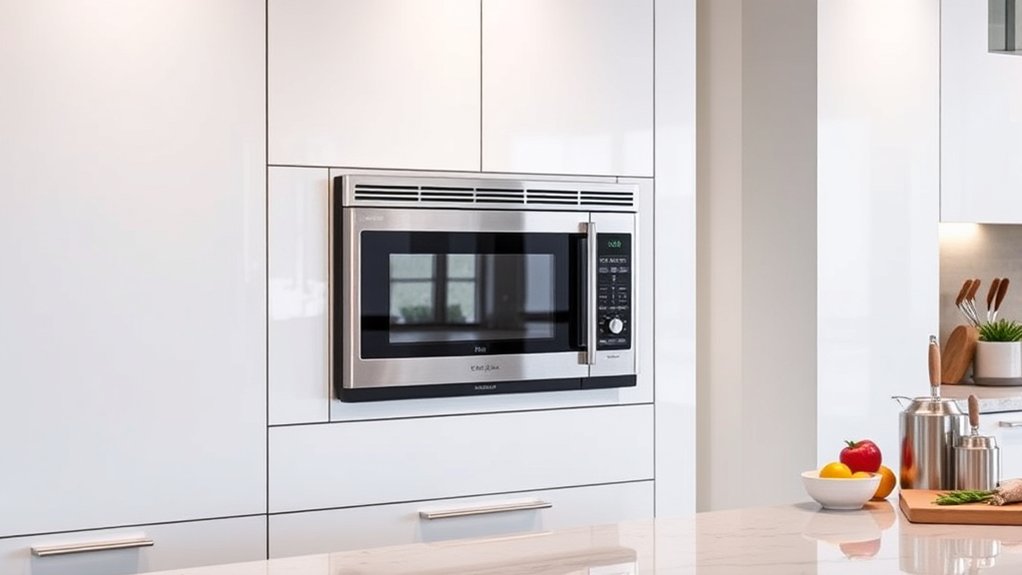
Choosing a built-in microwave comes down to matching capacity, power, and installation needs to your kitchen and cooking habits. You’ll want to measure cabinet space and door clearance first so the unit fits without surprises.
Think about capacity in quarts or cubic feet relative to the dishes and platters you use. Bigger isn’t always better if you rarely heat large items.
Check wattage and cooking modes to ensure even heating and speed. Inverter tech or convection options can expand functionality.
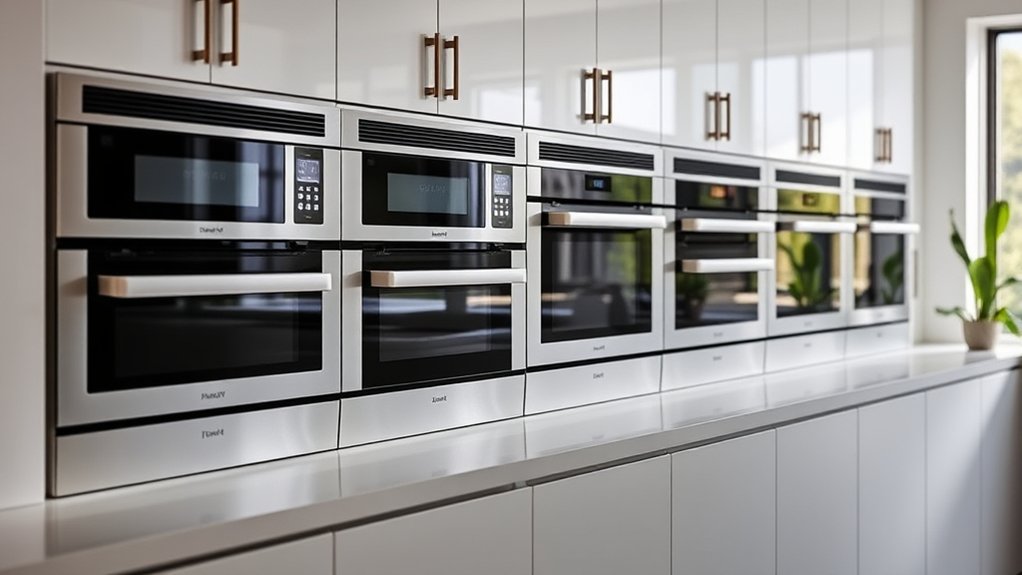
Prioritize Appliance integration: look for consistent finishes, handle styles, and control panel placement so the microwave blends with ovens and dishwashers.
Consider ventilation requirements and whether you need a trim kit or dedicated cabinet space. Don’t forget user interface and maintenance, including easy-clean interiors, intuitive controls, and service access.
Finally, balance features against budget and long-term reliability. Your choice should support Kitchen aesthetics and daily use without compromise.
Our Selection Criteria and Testing Notes
Because you’ll rely on this guide to pick a microwave that actually performs, we tested models against clear, objective criteria: cooking speed and evenness, capacity and rack usability, control intuitiveness, build quality and finishes, ventilation and installation fit, energy use, and long-term reliability indicators like warranty and serviceability.
You’ll see test results that matter: how quickly a model reheats a standard meal, how evenly it heats across plates, and whether the interior rack lets you fit everyday cookware.
You’ll also get measured data for energy efficiency and real-world observations of noise levels during operation and fan use. We verified control responsiveness, display legibility, and trim durability under repeated use.
Installation checks confirmed trim fit and ventilation clearance in typical cabinet layouts. Finally, we weighed brand support, warranty terms, and parts availability so you can expect realistic service timelines.
Use these notes to compare units based on performance, practicality, and long-term value.
Best Overall Built-In Microwave for Most Kitchens
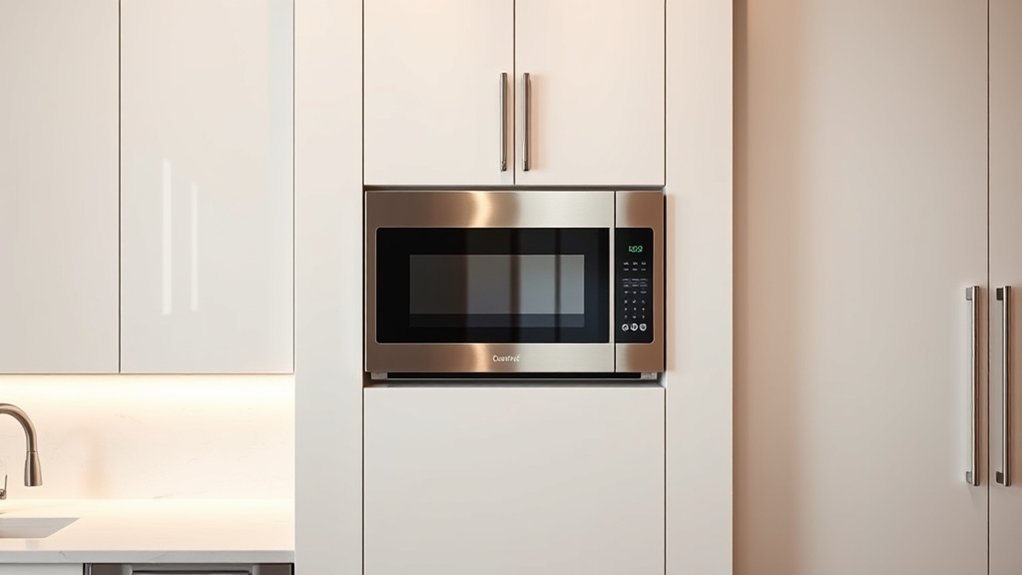
When choosing the best overall built-in microwave, start with performance and power. Consistent heating, accurate presets, and enough wattage make everyday meal prep more reliable.
It’s also important to consider the design and installation requirements. Make sure the microwave fits your cabinet space, complements your kitchen’s style, and can be installed cleanly without costly modifications. Balancing these factors will help you find a model that performs well and looks seamlessly integrated into your kitchen.
Performance And Power
Performance and power matter most if you want a built-in microwave that heats evenly, cooks quickly, and stands up to daily use. You’ll check microwave wattage first — higher watts mean faster, more consistent results.
Also look for models that balance wattage with power efficiency so you don’t waste electricity. Convection options and inverter technology improve consistency and reduce run time.
For everyday use pick 900–1200W for versatility; choose inverter controls for delicate tasks.
| Feature | Why it matters | What to look for |
|---|---|---|
| Wattage | Faster, even cooking | 900–1200W |
| Technology | Smoother power delivery | Inverter/convection |
| Energy use | Lower operating costs | High efficiency rating |
Design And Installation
Design and installation determine how seamlessly a built-in microwave fits into your kitchen’s workflow and look, so measure the cavity, check venting requirements, and confirm electrical specs before you buy. You’ll want to plan placement for accessibility, verify clearance for door swing, and factor in kitchen ventilation to prevent heat buildup. Think about color coordination with cabinets, hardware, and surrounding appliances so the unit feels integrated, not tacked on.
- Verify cabinet depth, cutout dimensions, and mounting brackets to ensure a secure fit.
- Confirm the venting path, whether recirculating or external, and compatible hood placement for proper airflow.
- Match the finish, trim kit options, and control panel alignment to maintain a cohesive aesthetic.
Proper planning saves time and helps you avoid costly modifications.
Best Compact Built-In Microwave for Small Spaces
Although space is tight in many modern kitchens, you can still get a powerful built-in microwave that fits snugly into a compact cabinet or under a counter. When choosing the best compact built-in microwave for small spaces, focus on footprint, ventilation, and installation flexibility.
Look for models specifically designed for trim kits or shallow-depth cabinets so they function like countertop alternatives without sacrificing performance. Choose units with smart features, such as sensor cooking, quick presets, and easy-clean interiors, to maximize utility in tight quarters.
Opt for trim-kit or shallow-depth models with sensor cooking, quick presets, and easy-clean interiors for compact convenience.
If you need mobility, consider portable microwave options that can double as temporary built-ins or move between stations. Prioritize clear cabinet dimensions, and measure door swing, ventilation clearance, and electrical requirements before you buy.
Energy-efficient units reduce runtime and heat buildup, which helps when neighboring cabinets store delicate items. With thoughtful measurements and the right compact model, you’ll get the convenience of a built-in microwave without giving up counter space or cooking power.
Best High-Capacity Built-In Microwave for Families
When you need a built-in microwave for family-sized meals, choose one with a spacious interior and enough power to cook food quickly without overcooking it. Durable construction and easy-to-use controls also matter when the microwave gets daily use. An easy-clean finish is the final touch, especially for busy households and hectic weeknights.
Large Interior Capacity
A roomy built-in microwave makes meal prep easier for families. Pick one with plenty of usable space for casseroles, large plates, and oversized leftovers you’ll reheat all week. Focus on interior space and stated capacity so you know it fits your dishes, not just looks big on paper.
You want easy-access shelving, a flatbed turntable or no turntable, and clear measurements that match your cookware.
- Measure your largest casserole and compare it with the usable interior depth and height.
- Choose a model with flexible rack positions to maximize usable volume.
- Prioritize cavity shape and door swing to avoid awkward loading and wasted space.
Family-Friendly Power Levels
Think about power levels like gears in a car: you want quick high heat for boiling or browning and low, steady settings for defrosting and simmering. For families, you’ll appreciate microwaves that offer many adjustable increments so you can reheat leftovers without overcooking or gently thaw meals overnight.
Look for presets that simplify common tasks, such as popcorn, veggie steaming, and kid-friendly snacks, while still letting you override them. Prioritize models with child safety locks and clear displays so curious hands can’t change settings.
Choose appliances that time and cycle efficiently to reduce wasted energy. Balancing versatile power control with simple, secure operation gives you reliable, predictable results for busy family routines without sacrificing energy efficiency or safety.
Durable, Easy-Clean Finish
You’ll want a finish that stands up to sticky hands, splatters, and frequent use without demanding constant scrubbing, especially in high-capacity built-ins that serve a busy household. Choose a stainless steel exterior with a protective coating so fingerprints wipe away and the surface resists dulling.
Look for scratch resistant treatments on handles and control panels. They keep the unit looking new despite daily traffic. Also verify that seals and trims are corrosion-resistant to prevent staining where food accumulates.
A practical finish minimizes cleaning time and preserves resale value.
- Opt for stainless steel with a fingerprint-resistant layer for easy maintenance.
- Prioritize models labeled scratch resistant on high-contact areas.
- Check for sealed edges and corrosion-resistant trims to avoid grime buildup.
Best Smart Built-In Microwaves With Sensor Cooking
When you want hands-off precision, smart built-in microwaves with sensor cooking take the guesswork out of reheating and defrosting by automatically adjusting time and power based on moisture and steam levels.
Hands-free precision: sensor-equipped built-in microwaves automatically adjust time and power using moisture and steam levels.
You’ll appreciate sensor technology that senses plate temperature and humidity, so leftovers, veggies, and frozen entrees come out evenly without trial-and-error.
These units pair well with your kitchen integration plans: flush mounting, coordinated finishes, and shared controls keep counters clear and sightlines smooth.
Look for models with customizable presets, multi-stage cooking, and user profiles that remember preferences.
Smart features like voice control, app notifications, and remote start save steps when you’re multitasking, while safety locks and child modes protect curious hands.
Choose a cavity size and power level that match your routine, and pick an interior finish that’s easy to wipe.
Best Microwaves to Match Wall Ovens and Cabinet Panels
Sensor-packed built-ins make kitchen tasks easier, but matching your microwave to wall ovens and cabinet panels keeps the look cohesive. You’ll want a model that supports Cabinet integration and offers Wall panel compatibility so finishes and trim align.
Pick a microwave with adjustable trim kits, matching stainless tones, or customizable panels to avoid awkward seams. Think about control placement and display color to echo nearby ovens for a unified readout.
- Choose models with reversible trim kits and coordinated handles for seamless Cabinet integration.
- Prioritize Wall panel compatibility and consistent venting paths to prevent visible gaps.
- Match touchscreen illumination and font styles to your wall oven for visual harmony.
When you shop, measure cutouts precisely, confirm electrical and ventilation requirements, and check manufacturer matching guides.
That way you’ll install a microwave that not only performs well but also reads like a single, intentional design element beside your wall ovens and integrated cabinetry.
Frequently Asked Questions
Can I Install a Built-In Microwave Myself?
Yes, you can install a built-in microwave yourself, but you’ll face installation challenges and should be prepared. You’ll need proper electrical wiring, secure cabinet framing, and ventilation that meets code.
You’ll also want to guarantee aesthetic integration with surrounding cabinetry and trim so the unit looks professional. If you’re handy and follow the manufacturer’s instructions and local codes, you can do it. Otherwise, hire a pro to avoid safety or fit issues.
Do Built-In Microwaves Require Special Ventilation?
Yes, built-in microwaves usually require special ventilation. You’ll face ventilation requirements and installation challenges like duct routing, clearances, and proper exhaust to avoid overheating or moisture issues.
You’ll need to follow the manufacturer’s specs for recirculating versus external venting, confirm cabinet cutouts match, and possibly hire a pro for electrical and ductwork. Plan ahead to meet codes and keep the unit safe and efficient.
What Warranty Options Are Common for Built-Ins?
About 80% of appliance owners prefer extended protection, so you’ll often see standard 1-year warranties plus optional extended plans. You’ll get basic warranty coverage for parts and labor, with extra-year options that cover repairs beyond manufacturer defects.
Some providers bundle on-site repair services or offer mail-in servicing. You can usually buy accidental-damage or labor-only add-ons, and some retailers include installation-related coverage as part of premium packages.
Are Built-In Microwaves Energy-Efficient?
Yes, built-in microwaves can be energy-efficient. You’ll lower energy consumption by choosing models with inverter technology, sensor cooking, and proper sizing so you’re not heating extra space.
This reduces runtime and cuts electricity use, which lowers your environmental impact. You’ll also want ENERGY STAR-rated options if available.
To avoid standby power waste, unplug the microwave or use a switched outlet when it’s not in use.
Can I Convert a Countertop Microwave to Built-In?
Like trying to fit a square peg in a round hole, you can’t safely convert most countertop microwaves to built-in without a proper kit and ventilation. You’ll need a conversion kit matched to your model, professional installation for venting and clearance, and attention to microwave aesthetics so the unit blends with the cabinetry.
Countertop conversions often void warranties and can create hazards, so consult the manufacturer and a qualified installer first.
Conclusion
You’ve seen the options—now trust your gut: measure carefully, match styles, and pick features you’ll actually use. Don’t overbuy for one-off needs; “a stitch in time saves nine” applies—plan now to avoid frustration later.
Whether you want compact convenience, family-sized capacity, or smart sensor cooking, there’s a built-in microwave oven that fits your kitchen and routine. Make a practical choice that looks good and makes everyday life easier.