What Is the Ideal Freezer Temp?
Wondering what is the ideal freezer temp for keeping food fresh without wasting energy? You’re not alone—many people struggle with freezer burn, spoiled food, or confusing temperature settings. The right freezer temperature can help protect your groceries and preserve their quality.
What Is the Ideal Freezer Temp?
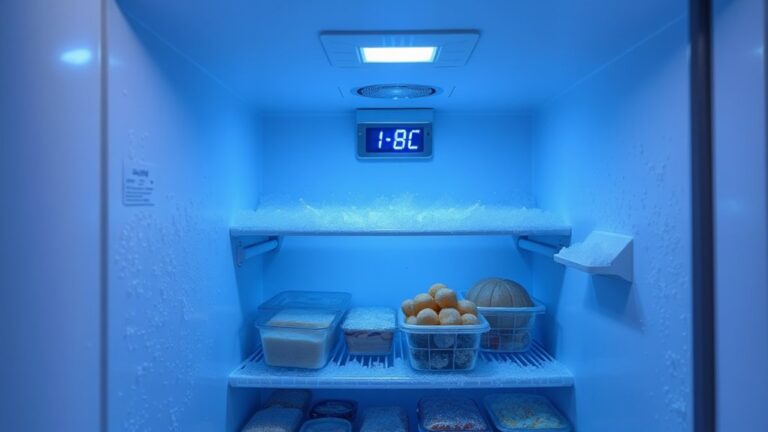
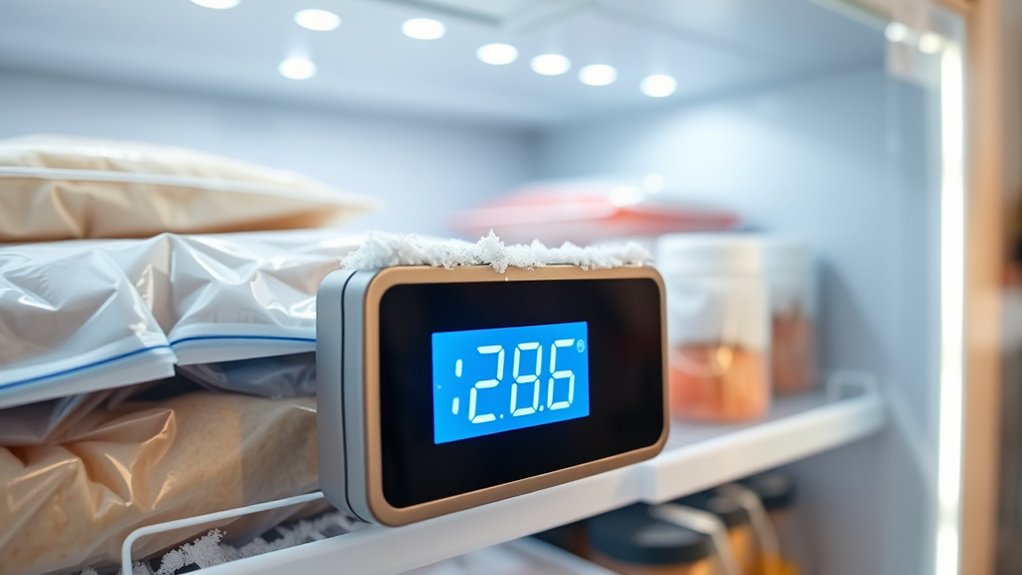
Set your freezer to 0°F (−18°C) to keep food safe, slow bacterial growth, and preserve flavor and texture while staying energy efficient. Use the control panel or dial to select 0°F, leave the door closed to stabilize, and verify with an appliance thermometer placed centrally for at least four hours.
Check multiple spots for uneven cold, keep vents clear, and maintain seals. Follow the simple troubleshooting and maintenance steps below to learn how to adjust, monitor, and save energy.
Key Takeaways
- Set your freezer to 0°F (−18°C) for optimal food safety and energy efficiency.
- 0°F slows bacterial growth and minimizes enzymatic and texture degradation in stored foods.
- Use an appliance thermometer in central and door areas, leaving it for at least 4 hours to verify temperature.
- Avoid overcooling below 0°F, which wastes energy without extending safe storage times.
- Maintain seals, keep vents clear, and monitor frost to ensure steady temperatures and efficient operation.
Ideal Freezer Temperature : Why 0°F (−18°C) Is Recommended
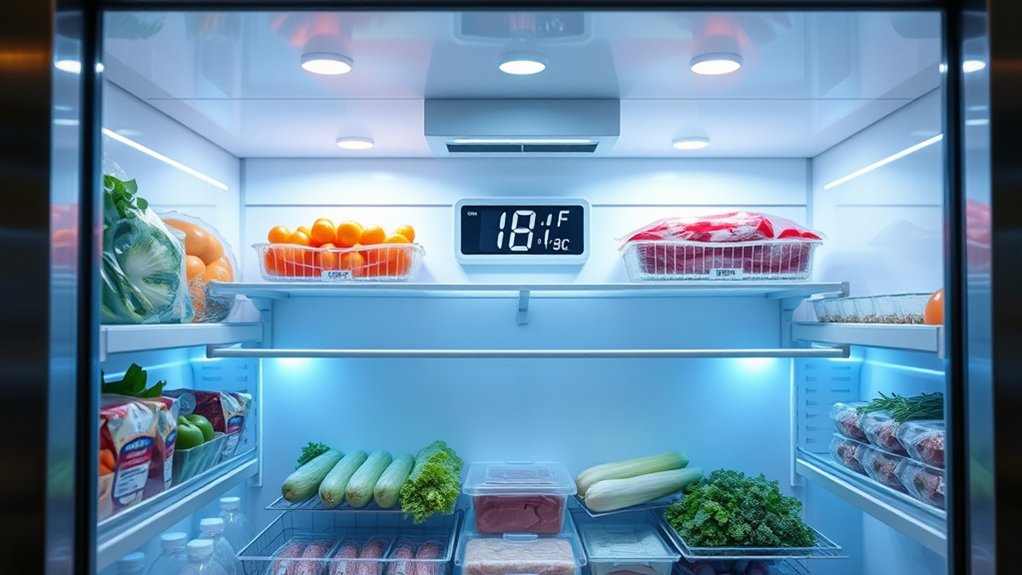
Because maintaining consistent cold preserves both safety and quality, you should set your freezer to 0°F (−18°C). At that temperature, bacterial growth slows to a near halt and enzymatic reactions that degrade flavor and texture are minimized, so meats and prepared meals stay safer longer.
You’ll notice frozen desserts keep their intended mouthfeel when their structure isn’t compromised by temperature fluctuations. When ice crystal formation is reduced, cellular damage in fruits and vegetables is limited, and thawed food retains more of its original texture.
Keeping the freezer at 0°F also gives you a practical buffer: brief door openings or power blips won’t immediately push items into unsafe zones. Energy use stays reasonable compared with colder settings that add cost without meaningful safety gains.
Aim for that point and you’ll balance preservation, quality, and efficiency, protecting taste, texture, and health without overcooling.
Quick Checklist: Set, Check, and Stabilize Your Freezer Temperature
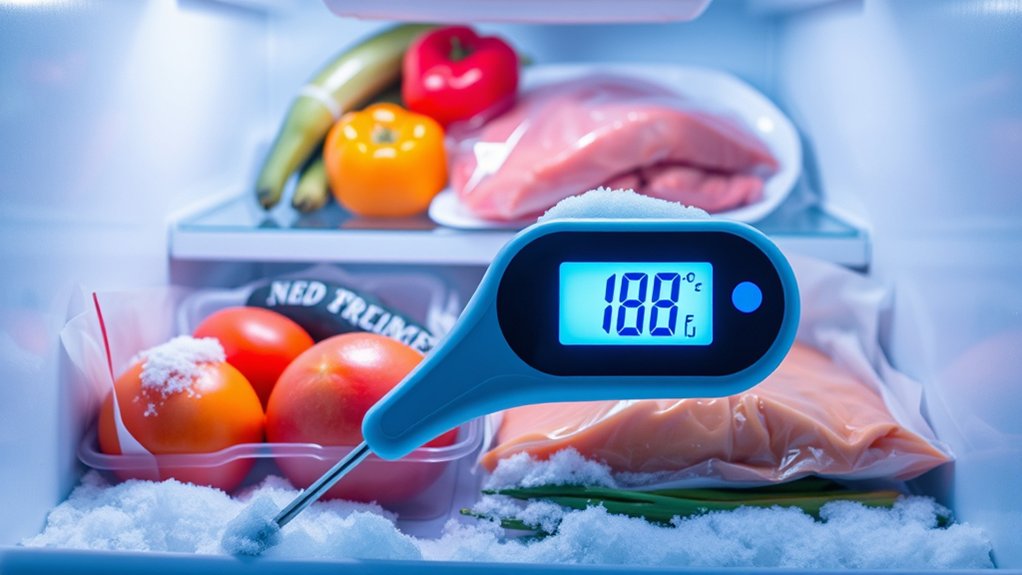
Now that you know why 0°F (−18°C) is the target, use this quick checklist to set, verify, and keep your freezer at that temperature. Follow each step so frozen desserts keep their texture and ice crystal growth stays minimal.
- Set the dial or digital control to 0°F (−18°C), and confirm the indicator reads the chosen setting.
- Leave the door closed for several hours after adjusting it. This gives the compressor time to stabilize and the internal air time to reach the new set point.
- Arrange items to allow airflow. Don’t overcrowd the freezer, place frozen desserts where cold air circulates, and avoid blocking vents to prevent warm pockets that cause ice crystal damage.
- Monitor performance daily for the first week. Listen for normal cycling, watch for frost buildup, and quickly reseal or defrost if temperatures drift.
Keep a simple log of adjustments and observations. This helps you spot trends early and maintain consistent freezing that preserves quality and safety.
How to Check Your Freezer’s Actual Temperature Accurately
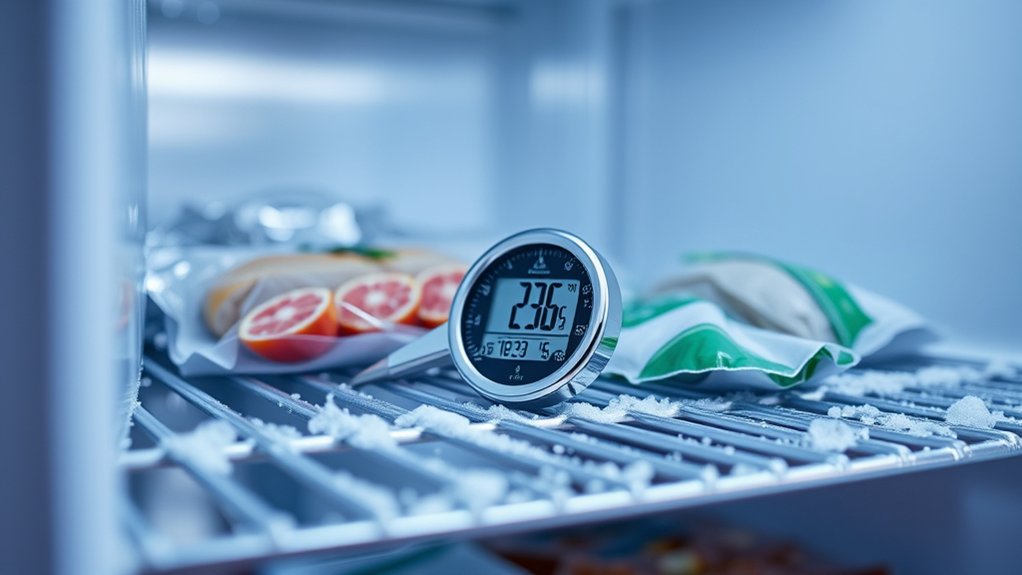
To find out your freezer’s actual temperature, place a certified freezer thermometer inside instead of relying on the built-in dial.
Check the temperature in several spots—near the front, at the back, and by the door—because freezers can have warmer and colder areas. If the readings differ, use the coldest reliable reading when assessing food safety, and adjust the settings as needed.
Use A Thermometer
If you want to know whether your freezer is truly at a safe temperature, use a reliable thermometer and check it directly. Don’t trust the dial or display alone. A good thermometer tells you if frozen desserts stay at 0°F (-18°C) and helps spot problems like large ice crystal buildup, which can indicate temperature fluctuations.
- Place a digital or dial thermometer in a central location, away from the walls.
- Leave it for at least 4 hours, or overnight for the best accuracy.
- Read the temperature and compare it to the recommended 0°F (-18°C).
- If it’s off, adjust the control, then recheck after several hours.
Regular checks help prevent spoilage and keep food safety and texture consistent.
Test Multiple Locations
Checking a single spot can miss cold or warm pockets, so check several locations to get an accurate picture of your freezer’s temperature. Place thermometers at the top, middle, and bottom, front and back, and leave them for several hours.
You’ll spot uneven Temperature regulation and adjust shelves or airflow. If readings vary, rethink Freezer organization: move heavy items away from vents, avoid overcrowding, and rearrange for better circulation.
Record readings and repeat after changes to confirm improvement. Below is a simple emotional reminder to care for food and your peace of mind:
| Cold corners | Warm worries |
|---|---|
| Top shelf | Melted hope |
| Middle core | Sigh |
How to Adjust Controls on Common Freezers (Chest, Upright, Fridge‑Freezer)
When your frozen food isn’t as solid as it should be, adjusting the controls on your chest, upright, or fridge-freezer will usually fix it quickly. Check the manual first for the control type and to avoid voiding warranties.
You’ll want to balance temperature calibration with energy efficiency so you don’t overcool and waste power.
- Chest freezers: Find the dial inside, turn it one notch colder, wait 24 hours, then test with a thermometer.
- Upright freezers: Use the exterior or interior digital panel. Change settings in 1°C increments and monitor airflow from the vents.
- Fridge-freezers: Adjust the freezer setting separately if available. Avoid making the fridge compartment colder to compensate.
- If temperatures stay off after adjustments, defrost the freezer, clean the coils, and recheck the calibration. Call for service if readings still differ from the control setting.
Make gradual changes, recheck temperatures in multiple spots, and log readings to achieve stable, efficient freezing.
Best Freezer Temperatures by Type: Chest, Upright, and Fridge‑Freezers
Although different freezer styles cool in slightly different ways, you should aim for a consistent target: -18°C (0°F) for long-term storage. Chest freezers hold temperature well because cold air stays low; set them near -18°C and check pockets for uneven zones. You’ll rely less on the compressor, but monitor for freezer frost buildup around the seal and defrost if thick.
Upright freezers circulate air more, so they recover faster after door openings. Keep them at -18°C and organize shelves to avoid blocking vents. Their constant airflow reduces localized ice crystal formation, preserving texture.
Fridge-freezers combine compartments with different thermostats. Set the freezer section to -18°C and verify with an appliance thermometer. If the fridge portion runs warm, adjust settings rather than lowering the freezer excessively.
No matter the type, check seals, avoid overpacking, and address frost or ice early to maintain steady temperatures and efficient performance.
What Cold Does to Food: Safety, Quality, and Freezer Burn
Set your freezer to the right temperature to slow bacterial growth and keep food safe for longer. Cold also helps preserve quality by slowing enzyme activity. However, it can lead to freezer burn, which happens when food loses moisture and is exposed to air. Knowing the safe temperature range and using proper packaging can help prevent both spoilage and freezer burn.
Food Safety Standards
Freezing stops most bacterial growth but doesn’t make food sterile, so you still need to handle, thaw, and cook items properly to keep them safe and high-quality. Treat freezing as part of a food storage system: label dates, use airtight packaging, and don’t refreeze food that’s been held above safe temps. Maintain and check temperature calibration regularly so your freezer stays at or below 0°F (-18°C).
- Monitor: use a fridge/freezer thermometer and log temps to confirm safe storage.
- Rotate: first-in, first-out reduces long-term quality loss.
- Thaw safely: move food to the fridge, cold water, or microwave, not the countertop.
- Cook to temp: follow internal temperature guidelines after thawing to eliminate pathogens.
Follow standards, and you’ll minimize risk while preserving quality.
Freezer Burn Mechanisms
If you’ve ever found dried, discolored patches on frozen meat or limp, pale vegetables, that’s freezer burn: damage caused by moisture loss and oxidation when air reaches food’s surface. You want to limit air exposure because ice crystal formation punctures cell walls, letting water sublimate and leaving leathery textures.
Oxidation changes flavors and colors, so fatty cuts and frozen desserts lose quality faster. You should wrap items tightly, remove as much air as possible, and use airtight containers or vacuum sealing to slow both ice crystals and oxidation.
Fast freezing helps by forming smaller crystals that do less damage. Check seals regularly, label and rotate stock, and discard items with severe freezer burn. It’s safe, but the taste and texture won’t recover.
Troubleshooting: Freezer Too Warm or Too Cold – Step‑by‑Step Fixes
Because a freezer that’s too warm or too cold can spoil food and waste energy, troubleshoot it methodically. Check the settings, airflow, seals, and components in order to pinpoint the problem.
Start by confirming the temperature with an appliance thermometer. Aim for the ideal temperature to balance energy efficiency and food preservation. Then follow these steps:
- Verify the thermostat and controls: adjust to the recommended setting and reset the unit to rule out electronic glitches.
- Inspect door seals and gaskets: clean them, press them firmly into place, and replace them if you see gaps or wear that let cold escape.
- Check airflow and contents: avoid overpacking, ensure vents aren’t blocked, and let a recently loaded warm batch cool before sealing.
- Examine coils, fans, and defrost system: clean the condenser coils, listen for the evaporator fan, and watch for excessive frost that signals defrost failure.
If these fixes don’t work, contact a technician to diagnose compressor problems, refrigerant leaks, or control board issues.
Save Energy Without Risking Food: Efficient Temperature Settings
Now that you’ve ruled out mechanical issues, you can focus on settings that save energy without putting food at risk. Set your freezer to 0°F (-18°C); that’s the safe balance for food preservation and energy conservation. Don’t overcool—lower temps waste power without extending safe storage life.
Use a small appliance thermometer to confirm internal conditions and perform regular temperature calibration so the displayed setting matches the actual temperature.
Arrange items for airflow, avoid overfilling, and keep the door closed to maintain steady temps. Frequent openings force the compressor to work harder.
Defrost manual-freezers when frost exceeds about 1/4 inch. Thick frost reduces efficiency. Replace worn door gaskets to prevent leaks that increase energy use.
If you have separate fridge and freezer controls, coordinate them to avoid unnecessary overlap. These steps lower energy usage while keeping food safely frozen, and they rely on simple adjustments rather than risky temperature compromises.
Seasonal and Storage Tips for Long‑Term, Bulk, and Outage Situations
When rotating seasonal items, label and date each package so you use the oldest items first and nothing gets forgotten in the back.
For long-term and bulk storage, keep the freezer at 0°F (-18°C). Organize items by how often you use them to minimize the amount of time the door stays open.
To prepare for outages, keep a block of ice or sealed coolers on hand. It’s also helpful to know how long your freezer can keep food frozen without power.
Seasonal Food Rotation
As seasons shift, rotate what’s in your freezer so older items get used first and fresh seasonal buys don’t get buried. You’ll protect quality and avoid waste by labeling dates and grouping similar items.
Keep frozen desserts like pies and ice cream near the front if you’ll eat them sooner, and place long-term staples toward the back.
- Store seasonal harvests in clear, dated bags so you can see and prioritize older batches.
- Batch-cook and freeze meals in portions, rotating older containers to the top.
- Use a simple log on the door to track purchase or freeze dates and planned use weeks.
- Freeze fresh produce at peak ripeness, then move it forward when new batches arrive.
Power Outage Prep
If the power goes out, you’ll want a clear plan to keep bulk and long-term frozen goods safe and usable. Prioritize what you’ll consume first, secure coolers and ice, and know how long different items stay safe without power.
First, group items by thaw risk and plan meals to use high-risk food quickly. Keep freezer doors shut to maintain temperature. A full freezer stays cold longer.
Use energy efficiency measures: unplug other appliances and avoid opening the freezer to conserve generator or battery power for critical needs.
Have a thermometer and practice temperature calibration so you know when food reaches unsafe levels. Move perishables into coolers with ice packs if needed, labeling them with dates.
Replace ice and monitor temperatures until power returns.
Simple Maintenance Habits to Keep Your Freezer at the Ideal Temp
Because regular upkeep prevents bigger problems, adopt a few quick maintenance habits to keep your freezer reliably at 0°F (-18°C). Small routines protect food preservation, boost energy efficiency, save money, and prevent spoilage.
- Clean coils every 6 months: Unplug the unit and vacuum dust off the condenser coils so the compressor runs efficiently and maintains the proper temperature.
- Defrost when frost exceeds 1/4 inch: Excess ice reduces airflow and forces longer run cycles, hurting energy efficiency and temperature stability.
- Check door seals monthly: Press a dollar bill in the closed door. If it slides out easily, replace the gasket to prevent warm air leaks that raise the internal temperature.
- Keep it reasonably full and organized: Frozen items help stabilize temperatures. Label and rotate stock so cold air flows freely and you avoid leaving the door open for long periods.
Follow these focused habits, and your freezer will maintain 0°F reliably for *ideal* food preservation.
Frequently Asked Questions
Can Freezing Kill Bacteria Already Present in Food?
No, freezing won’t reliably kill bacteria already in food. You’ll induce bacterial dormancy, stopping growth but not sterilizing the product; many microbes survive freezing and resume activity when thawed.
Freezer sterilization is a misconception. Freezing reduces metabolic activity and can damage some cells, yet it doesn’t guarantee elimination.
You should still cook or use proper food-safety methods to inactivate pathogens, rather than relying on freezing alone.
How Long Can Opened Packaged Foods Stay Safe in the Freezer?
Like a time capsule sealing memories, you can keep opened packaged foods safe in the freezer for months if you manage Food preservation and Freezer organization well. Most cooked leftovers stay good 2–6 months, deli meats 1–2 months, seafood 2–3 months, and raw meat 4–12 months depending on cut.
Label and date items, use airtight packaging, and rotate stock so older packages get used first to maintain quality and safety.
Do Ice Crystals on Food Mean It’s Unsafe to Eat?
No, ice crystals on food don’t mean it’s unsafe to eat. You’ll notice ice crystal formation when moisture leaves cells and refreezes; that often changes food texture, making it dry or tough. You can still cook and eat the food safely; just expect some quality loss.
To minimize crystals and texture damage, package items airtight, remove excess air, and freeze quickly so ice crystals stay small and cellular structure stays more intact.
Will Frequent Door Openings Significantly Raise Freezer Temperature?
Like a quick gust through a room, yes — frequent door openings will considerably raise your freezer temperature. You’ll cause temperature fluctuations that make the compressor work harder and let frost build if door insulation isn’t perfect.
You’ll lose cold air each time, especially with poor seals, so try to open the door briefly, group items, and avoid lingering. Better insulation and fewer swings keep food safer and energy use lower.
Can Glass Containers Crack at 0°F During Freezing?
Yes, you can get cracking. Water expands about 9% when it freezes, so rigid glass containers without room for expansion can crack at 0°F.
For freezer safety, use tempered glass, leave headspace, or choose plastic designed for freezing to avoid stress fractures. Cooling foods first also helps prevent sudden temperature shocks that can cause glass to break.
Conclusion
Keeping your freezer at 0°F (−18°C) keeps food safe and quality intact, like a trustworthy anchor in a storm. Check with a thermometer, tweak controls as needed, and address issues quickly—don’t let warm spots or heavy frost sneak up on you.
Use energy-smart settings, store logically, and prepare for outages or bulk freezes. With regular maintenance and the right habits, the ideal freezer temp will protect meals and stretch your grocery dollars efficiently.