
7 Induction Range Pros and Cons You Should Know
Cooking can feel frustrating when meals take too long, cleanup is messy, or your stovetop responds too slowly. You’re not alone—many people struggle with these issues and wonder whether an induction range is worth the switch.
You’ll get faster, cleaner, and more precise cooking with an induction range because it heats pots directly and responds instantly to adjustments. It’s safer and easier to clean, and uses less energy, but you’ll face higher upfront costs, possible electrical upgrades, and need magnetic cookware or replacements.
It also feels different than gas, so timing and technique may change. Keep going to uncover specific induction range pros and cons, plus practical tips for making the switch.
Key Takeaways
- Induction heats cookware directly for very fast, responsive cooking with precise temperature control.
- Requires ferrous (magnetic) cookware—test with a magnet or buy induction-ready pots and pans.
- More energy-efficient and cooler kitchen than gas or conventional electric cooktops.
- Installation may need a dedicated 40–50A circuit and possible electrical or countertop modifications.
- Smooth glass surface is easy to clean but can scratch from abrasive cleaners or rough-bottomed cookware.
How Induction Heating Works (And Why It Matters)

Curious how a cooktop can boil water without a visible flame or a glowing coil? You’re seeing magnetic induction at work: when you place a compatible pan on the glass surface, alternating current in a copper coil beneath creates changing electromagnetic fields.
Those fields induce tiny electric currents, called eddy currents, in the ferrous base of the pan. The pan heats directly from resistive losses, so heat reaches your food quickly with minimal loss to the surrounding air.
You’ll notice faster boil times, cooler surfaces, and safer operation because the cooktop stays relatively cool while the cookware gets hot.
Knowing this matters when you pick pots: nonmagnetic metals won’t couple well, so test them with a magnet. You’ll also care about cooktop design and control electronics, since advanced sensors and coil arrangements improve efficiency, heat distribution, and ease of cleaning compared with traditional gas or radiant elements.
Faster, More Responsive Cooking Performance
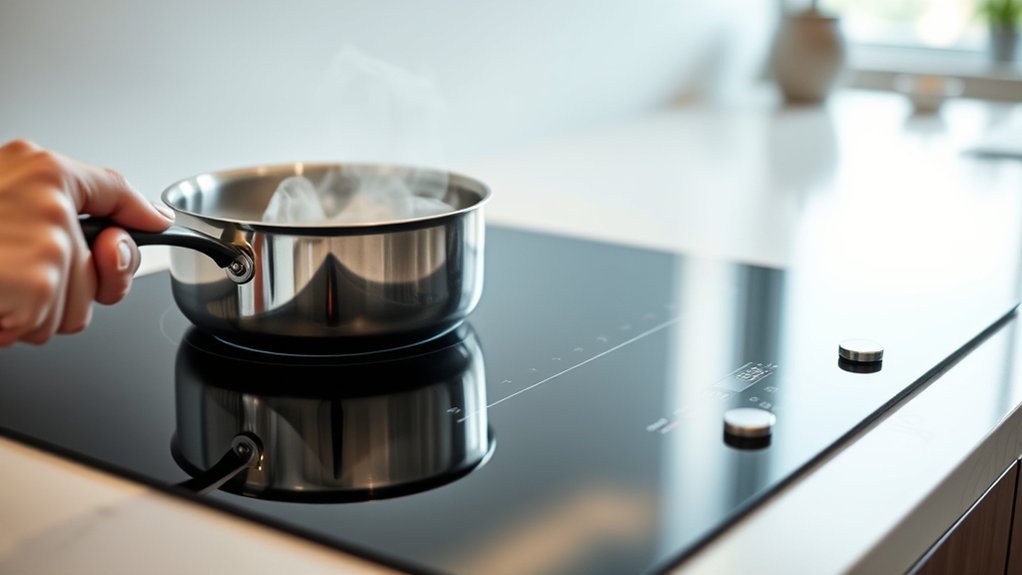
One of the biggest perks you’ll notice with induction is how quickly it responds to your inputs: power changes take effect almost instantly, so a boil, simmer, or rapid cooldown happens far faster than on gas or electric coil.
One of induction’s standout perks is its instant response — power changes take effect almost immediately, speeding up boils, simmers, and cooldowns.
You’ll gain precise temperature control that lets you chase delicate sauces, sear meats without overshooting, and finish chocolate or custards with less risk of scorching. That immediacy translates to better flavor improvement because you’re maintaining target temps instead of guessing and correcting.
You also get consistent heat distribution across the cookware base, so hot spots that ruin texture and taste are minimized. Because pans react directly to the cooktop’s magnetic field, you’ll spend less time babysitting and more time plating.
The clean, modern look of an induction surface adds aesthetic appeal to your kitchen while supporting pro-level responsiveness. If you value control and cleaner results, induction raises both the process and the plate.
Energy Efficiency and Lower Running Costs

You’ll notice that an induction range uses less energy than a gas or traditional electric cooktop because it heats the pan directly. Over time, that lower energy use can mean lower operating costs. We’ll compare typical energy consumption and estimated savings so you can see how much you might save.
Lower Energy Consumption
How much energy could you really save by switching to an induction range? You’ll notice faster heat-up and less wasted heat, so your pots reach temperature quicker and you use less energy overall.
Use Energy saving tips like matching pan size to the burner and using lids to retain heat. A quick Power consumption comparison shows induction often outperforms gas and traditional electric in real cooking scenarios.
| Method | Time to Boil | Relative Energy Use |
|---|---|---|
| Gas | 10 min | 1.0x |
| Electric coil | 12 min | 1.2x |
| Induction | 7 min | 0.7x |
These practical points help you understand lower energy consumption without getting into billing or long-term cost math.
Reduced Operating Costs
Lower energy use from faster, targeted heating directly cuts your monthly bills and upkeep, so the savings you saw in cooking times translate into lower operating costs over the long run.
You’ll notice smaller utility bills because induction transfers energy efficiently to cookware, wasting less heat and shortening cook cycles.
That efficiency reduces wear on ventilation and cooling systems, lowering repair needs and replacement frequency.
Over time, these factors add up to measurable long-term savings, especially if you cook often or run a busy household.
Factor in possible rebates or incentives for energy-efficient appliances, and your upfront cost gap can shrink.
Keep an eye on actual usage patterns. Your real savings depend on how consistently you use induction’s efficiency.
Cookware Compatibility : What to Keep and Replace
Because induction heats pots through magnetic fields, you’ll need cookware with ferrous (magnetic) bases to get efficient, even heating. Check your existing pieces with a magnet: if it sticks, the cookware material is likely compatible. Cast iron and many stainless steel pans work well; aluminum, copper, and nonmagnetic stainless usually won’t unless they have a bonded magnetic base.
Induction needs magnetic-base cookware—test with a magnet. Cast iron and many stainless work; aluminum and copper usually don’t.
Decide what to keep versus replace based on performance and replacement considerations, such as weight, flatness, and induction-specific features. Keep heavy, flat-bottomed pans that heat evenly and have no warped bottoms. Replace warped, thin, or purely nonmagnetic items that cause hot spots or poor contact.
If you love lightweight aluminum, consider induction-ready versions with an encapsulated ferrous layer rather than discarding every favorite pan.
When shopping, look for labels such as “induction-ready” or test with a magnet. Prioritize a few high-quality, induction-compatible pieces, such as a skillet, saucepot, and Dutch oven, to cover most cooking needs.
Induction Range Cost and Installation Checklist
Once you’ve sorted your cookware, it’s time to look at what an induction range will cost and what’s involved in getting one installed. You’ll weigh the appliance price, from budget to premium models, along with extended warranties, delivery, and recycling fees for your old range.
Don’t forget potential countertop modifications if you’re switching sizes.
For installation requirements, check your kitchen’s electrical capacity. Many induction ranges need a dedicated 40–50 amp circuit and a proper outlet or hardwired connection.
You may need an electrician to upgrade wiring, install a new breaker, or verify grounding. Measure cabinet clearance and ventilation needs, and confirm compatibility with your countertop cutout.
Get written estimates for labor, permits, and any gas-to-electric conversions if applicable. Schedule installation when replacement parts and certified installers are available.
With clear cost considerations and completed installation requirements, you’ll avoid surprises and get your induction range working reliably from day one.
Safety and Cleanup : Benefits and Heat Quirks
When you clean an induction range, you’ll enjoy fewer scorched spills because the cooktop itself stays relatively cool. This reduces burned-on messes and makes wipe-downs faster and safer.
You’ll still watch for safety hazards like hot cookware and rapid temperature changes, but overall, the reduced surface heat lowers burn risk and fire potential.
Cleanup challenges mainly involve avoiding abrasive cleaners that can dull the glass and wiping up sugary spills quickly to prevent pitting.
| Advantage | Quirk | Tip |
|---|---|---|
| Lower cooktop heat | Pots get very hot | Use oven mitts |
| Easy wipe-downs | Sugary spills can pit | Clean promptly |
| Reduced burn risk | Magnetic-only pans work | Check cookware compatibility |
| Faster cool-down | Sensors may auto-shutoff | Read manual for quirks |
You’ll appreciate how induction simplifies safe kitchen cleanup while still requiring sensible handling of hot pots and attention to manufacturer care instructions.
Who Should Buy an Induction Range (And Who Shouldn’t)
If you love cooking quickly and want precise temperature control, an induction range can feel like a major upgrade. It’s also a great choice if you want less cleanup and minimal maintenance, thanks to its smooth surface and sealed elements.
On the other hand, induction may not be the best fit if you rely on nonmagnetic cookware or prefer a simple, low-tech stove.
Home Cooks With Speed
Looking for speed in the kitchen? If you value fast heat-up, precise control, and quick cooldowns, an induction range fits you. You’ll shave minutes off weekday meals, nail temperature-sensitive tasks, and enjoy modern kitchen aesthetics that match a sleek countertop.
Consider how recipe adaptation will play out. High-heat searing and rapid simmering behave differently than on gas, so you’ll tweak timings.
- Fast boil and sauté for busy weeknights.
- Precise simmering for sauces and chocolate work.
- Strong magnetic cookware requirement for performance.
You should buy one if you cook often, multitask, and like predictable, repeatable results. Avoid it only if you can’t or won’t adjust recipes or don’t own compatible cookware.
Those Needing Simpler Maintenance
Speed and control matter, but maintenance often decides long-term satisfaction, especially if you’d rather spend time cooking than scrubbing. If you want maintenance simplicity, an induction range is ideal: spills don’t burn onto a cold glass surface, so you can wipe sauces away with a damp cloth before they harden.
You’ll appreciate cleaning ease if you dislike scraping grates or soaking burners; smooth tops take minutes, not hours. That said, you’ll need compatible cookware and gentle cleaners to avoid scratches, so it isn’t zero-effort.
If you live alone, have limited mobility, or juggle kids and work, induction reduces cleanup time and stress. If you enjoy stove tinkering or need cast-iron searing, weigh those habits against maintenance gains.
Frequently Asked Questions
Do Induction Ranges Interfere With Pacemakers or Medical Implants?
Generally, you won’t have issues: induction ranges are designed to limit medical device interference and meet electromagnetic safety standards.
If you have a pacemaker or implant, you should still check with your cardiologist and the device manufacturer because rare cases can occur.
Keep a safe distance while cooking, avoid leaning directly over active cooktops, and follow appliance manuals.
If you notice symptoms, stop using the range and seek medical advice immediately.
Can Induction Ranges Be Used During a Power Outage With Generators?
Yes, you can use an induction range during a power outage if your generator is compatible. You’ll need a generator that supplies enough continuous wattage and a stable sine wave. Inverter generators are best.
Check your range’s power rating and start-up surge. A qualified electrician should verify proper grounding and wiring.
Don’t overload the generator. Otherwise, you risk damaging the range or causing unsafe operation during the outage.
How Long Do Induction Cooktops Typically Last Before Replacement?
You’ll typically get 10–15 years from an induction cooktop before replacement, depending on use and care. You’ll enjoy energy efficiency that keeps operating costs lower over its lifespan, and cooking versatility that stays consistent if you maintain sensors and glass properly. Heavy daily use, spills, or power surges can shorten life, while gentle cleaning and surge protection’ll help you reach the upper end of that range.
Are Induction Ranges Compatible With Wok Cooking and High-Temperature Stir-Frying?
Yes, you can use a wok on an induction range, but compatibility depends on the wok’s material and shape. You’ll want a flat-bottomed, magnetic stainless steel or cast-iron wok for good contact.
Induction provides rapid, precise heat, so you can achieve high-temperature cooking and quick stir-frying. Traditional round-bottomed woks designed for gas burners won’t work as well unless you use a special wok adapter.
Do Induction Ranges Emit Any Harmful Electromagnetic Radiation?
No, induction ranges don’t emit harmful electromagnetic radiation in normal use. They’re designed to meet electromagnetic safety standards and limit radiation exposure to safe levels.
You’ll get localized, low-frequency fields near the cooktop that drop off sharply with distance.
If you have medical implants like pacemakers, check the manufacturer’s guidance and consult your doctor. Otherwise, you can use an induction range confidently without worrying about harmful radiation exposure.
Conclusion
You’ve seen how induction uses electromagnetic fields to heat cookware directly, giving faster, more responsive cooking, lower energy use, and easier cleanup. It may require checking your pots and paying more up front, but it’s safer and often cheaper to run.
Picture a stovetop where only the pan warms, proving the field is at work. If you value precision, energy savings, and safety, induction cooking is a smart upgrade. Otherwise, stick with what you know.