
3 Key Pros and Cons of Induction Cooktops
Cooking should make life easier, but slow heating, hot surfaces, and limited counter space can make it frustrating. If you’re comparing induction cooktops, you’re not alone—many home cooks wonder whether the faster performance and added safety are worth the cost and cookware changes.
You’ll get three big wins with an induction cooktop: near-instant heat for faster boiling and precise temperature control, cooler surfaces and auto-shutoffs that boost safety, and a sleek, space-saving design that modernizes your kitchen.
The three trade-offs are higher upfront cost and possible electrical upgrades, the need for ferrous-compatible cookware, and a short learning curve for noise and pan behavior; simple budgeting, a magnet test, and practice usually fix them.
Keep going to learn practical fixes and tips.
Key Takeaways
- Rapid, precise heating boosts cooking speed and temperature control, saving time and energy.
- Cool-to-touch surfaces and auto-shutoff reduce burn risks and improve kitchen safety.
- Sleek, low-profile designs integrate well into modern kitchens and simplify surface cleanup.
- Higher upfront costs and potential need for electrical upgrades increase initial investment.
- Requires ferrous-compatible cookware and learning new heating/noise behaviors for optimal use.
Quick Verdict: Is Induction Right for You?
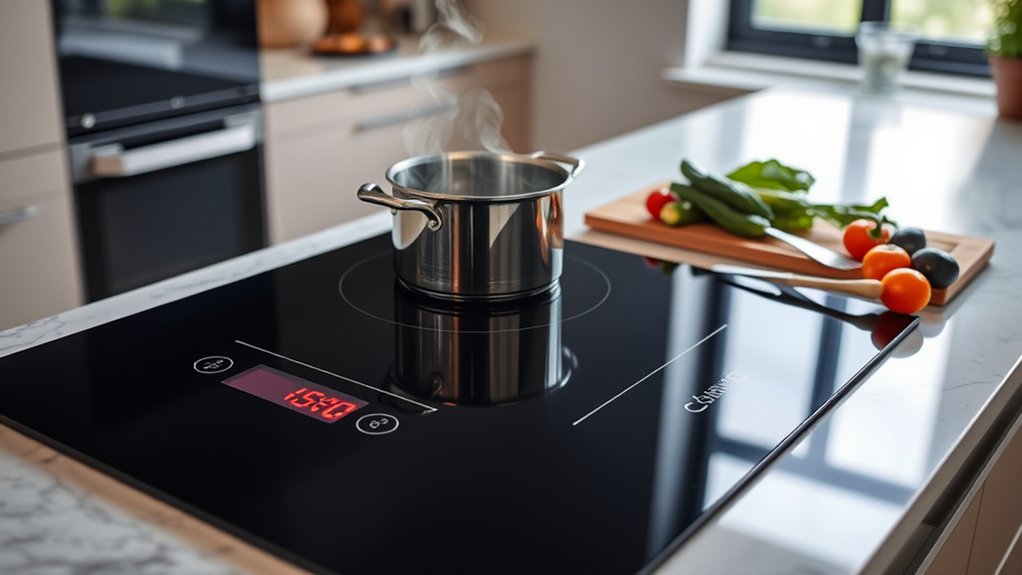
Curious whether an induction cooktop fits your kitchen and cooking style? You’ll find it’s a strong choice if you value rapid temperature control, clean surfaces, and built-in safety features like automatic shutoff and cool-to-touch zones.
You’ll appreciate how induction’s direct magnetic heating boosts energy efficiency, cutting waste and often trimming utility bills compared with electric coils.
If you mainly stir, sear, or simmer with compatible ferrous cookware, you’ll enjoy the responsiveness and predictable results.
However, you shouldn’t expect magic: you’ll need to replace non‑magnetic pots, and initial costs tend to be higher than conventional ranges.
If you move often or keep a strict budget, that upfront expense could be a dealbreaker. You’ll also want to check whether your kitchen’s electrical service supports the unit’s power requirements.
Top 3 Benefits of Induction Cooktops

A clear advantage of induction cooktops is their speed: they heat cookware almost instantly because electromagnetic energy goes straight into the pot, so you’ll boil, sear, and simmer far faster than with gas or traditional electric.
Second, efficiency is a big win. Less wasted heat means lower energy use and quicker temperature changes, so you’ll spend less time and money cooking.
Third, control rivals professional ranges. Induction gives precise, responsive adjustments that help you avoid overcooking and nail delicate tasks like chocolate tempering or simmering sauces.
You’ll also appreciate safety considerations. Surfaces stay relatively cool, reducing burn risk and making spills easier to wipe up, and many models include auto-shutoff features.
Finally, design options are plentiful. Flush, portable, and sleek built-in units fit modern kitchens and complement different layouts.
Together, speed, efficiency, and control make induction a compelling choice for cooks who want performance and tidy, safe kitchens without sacrificing style.
Top 3 Drawbacks and How to Handle Them

Those performance and safety perks make induction attractive, but it’s not without downsides you should weigh. First, upfront Cost implications can be steep: the cooktop itself and compatible cookware add expense.
You can handle this by budgeting, shopping sales, or replacing pots gradually. Start with a magnetic tester to prioritize purchases.
Second, Safety concerns include sensitivity to small pans and potential interference with medical devices. You can reduce risk by using recommended cookware sizes, avoiding metal utensils on hot zones, and consulting your device manufacturer or doctor if you have implants.
Third, learning curve and noise: fans, coil buzz, or different heating behavior may frustrate you initially. You’ll adapt fast by reading the manual, practicing temperature control, and using flat-bottomed pans.
Frequently Asked Questions
Do Induction Cooktops Work During Power Outages?
No, induction cooktops won’t work during power outages because they need electricity to create the magnetic field. You’ll need power outage solutions and alternative cooking methods like gas stoves, camping stoves, charcoal grills, or a portable propane burner.
You can also use battery-powered or solar generators to run an induction unit briefly. Plan ahead, keep fuel safe, and test any backup system so you’re ready when the lights go out.
Are Induction-Compatible Pans Expensive?
They’re not inherently expensive; you’ll find a range. For cost comparison, basic induction-compatible pans (stainless with magnetic base) often match mid-range cookware prices, while premium clad or copper-core sets cost more.
Material compatibility matters: look for ferrous bases or use a magnetic test. You can convert cheaper pans by adding magnetic discs, or buy budget-friendly brands designed for induction.
Shop around to balance price and performance.
Can Induction Damage Pacemakers or Medical Devices?
Like a distant drumbeat, you’re usually safe. Induction cooktops rarely cause medical device interference.
You should still keep your distance and follow the manufacturer’s guidance, since strong magnetic fields can, in rare cases, affect pacemakers or other implanted devices.
Ask your cardiologist, test your device’s response, and follow electromagnetic safety recommendations. If you feel odd symptoms near a hob, move away and seek medical advice promptly.
How Do Induction Cooktops Affect Kitchen Resale Value?
You’ll likely boost resale value modestly, especially with modern buyers who value energy efficiency and cooking speed. Homes with updated kitchens that include induction cooktops often appear more high-end and practical, so you’ll attract buyers willing to pay a premium.
However, some buyers prefer traditional ranges or worry about cookware compatibility, so the impact varies by market. Overall, an induction cooktop can help your home sell faster.
Do Induction Cooktops Require Special Ventilation?
Yes, you still need ventilation. If you investigate whether induction removes cooking fumes, you’ll find it only cuts stray heat, not smoke or grease.
You should follow ventilation requirements similar to other ranges: a hood or exhaust that handles smoke extraction and moisture. You’ll want 300–600 CFM for typical cooking; heavier frying needs more.
Proper venting keeps odors, particulates, and heat out of your kitchen and maintains air quality.
Conclusion
Quick Verdict: If you want fast, precise cooking with easy cleanup, an induction cooktop is likely a great fit. If you need cheaper units, audible feedback, or compatibility with older cookware, it may not be.
You’ll save time, energy, and stress with induction cooking, but you’ll need to adjust your cookware, adapt to new sounds, and accept a higher upfront cost. Choose what matters most to you: speed over price, precision over tradition, and efficiency over habit.