What Is the Ideal Freezer Temp?
Many people struggle to keep food fresh in the freezer without dealing with freezer burn, icy textures, or wasted meals. You’re not alone—finding the ideal freezer temp can make a noticeable difference in food quality and storage life.
Set your freezer to 0°F (−18°C) to stop bacterial growth, slow enzymes, and keep flavor, texture, and nutrients intact. That temperature minimizes freezer burn by creating small, stable ice crystals and preserves meats, veggies, prepared meals, and frozen desserts for months when packed tightly and sealed.
Use an appliance thermometer in the center, avoid overpacking, and check seals and coils. Keep it steady, and you’ll find tips next to help fine-tune storage and troubleshooting.
Key Takeaways
- The ideal freezer temperature is 0°F (-18°C) to stop bacterial growth and preserve food quality.
- Maintain a steady 0°F (-18°C) for smaller ice crystals, better texture, and nutrient retention.
- Use an appliance thermometer in the center and check it after at least 24 hours to verify accuracy.
- Organize the freezer and avoid overpacking it to ensure proper airflow and consistent temperature distribution.
- Regularly check the seals, clean the coils, and defrost as needed to maintain the 0°F (-18°C) setting.
What Is the Ideal Freezer Temperature for Safety and Quality?
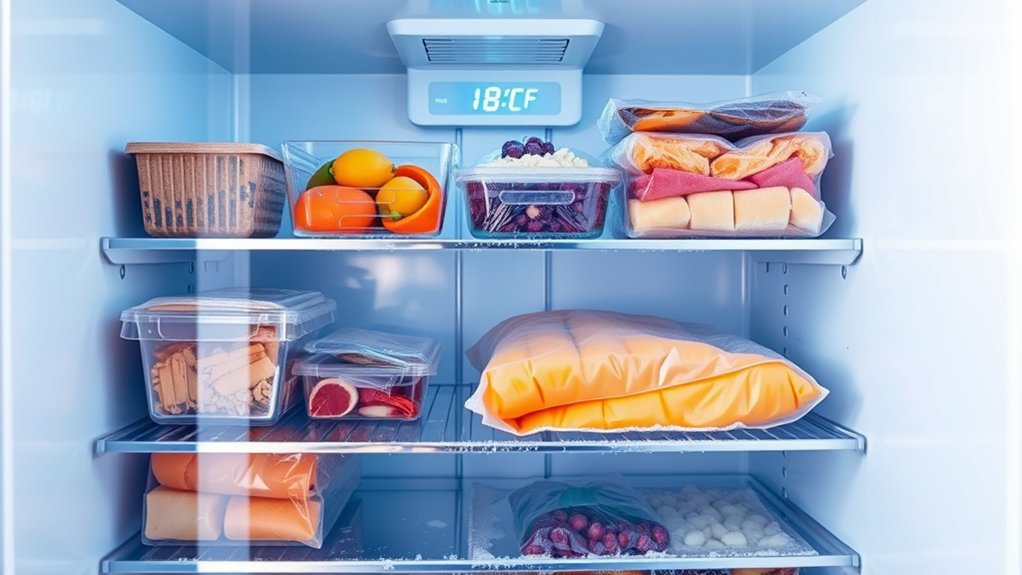
When you set your freezer to the right temperature, you keep food safe and preserve quality, so aim for 0°F (-18°C). You’ll stop bacterial growth and slow enzymatic reactions that degrade taste and texture.
At this temperature, meat, vegetables, and prepared meals retain nutrients and flavor longer, and you reduce spoilage risk. You’ll also protect delicate items: frozen desserts and ice cream stay firm without developing large ice crystals that ruin mouthfeel.
Meats, veggies, and meals keep flavor and nutrients; frozen desserts stay firm without large ice crystals ruining texture.
Consistent cold prevents partial thaw-refreeze cycles that cause freezer burn and textural loss. You should monitor with an appliance thermometer and avoid overpacking, which blocks airflow and creates warm spots.
If you store long-term, use airtight containers and remove excess air to maintain quality. Regularly defrost manual-freeze units and check seals so the temperature stays steady.
Why 0°F (−18°C) Is the Recommended Target
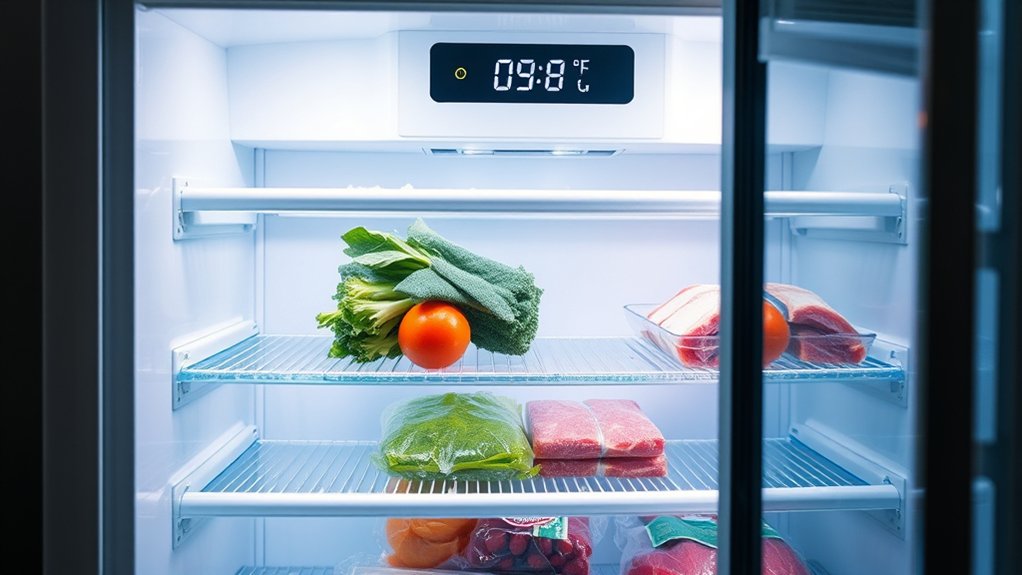
Keeping your freezer at 0°F (−18°C) slows most bacterial growth, helping keep your food safe.
That temperature also preserves texture and flavor better than warmer settings. Plus, it strikes a balance between using energy efficiently and preventing your appliance from working too hard.
Prevents Bacterial Growth
Because bacterial activity slows dramatically as temperature falls, you should set your freezer to 0°F (−18°C) to stop most pathogens from growing and to preserve food safety. That temperature keeps bacteria dormant, reducing spoilage and the risk of foodborne illness while you store items like frozen desserts and ice cream. Follow clear handling and storage habits to make freezing effective.
- Rapidly cool cooked foods before freezing to limit time in the danger zone.
- Package items tightly to prevent freezer burn and cross-contamination.
- Label and date packages so you rotate stock and avoid long-term storage.
- Thaw safely in the refrigerator or microwave to prevent bacterial revival.
Maintaining 0°F minimizes microbial risk so you can store food confidently.
Preserves Food Quality
Beyond slowing bacterial growth, 0°F (−18°C) also locks in flavor, texture, and nutritional value by slowing chemical reactions and ice crystal formation that damage foods.
When you freeze at this temperature, water turns to small, stable ice crystals that preserve cell structure, so meats stay tender and vegetables don’t turn mushy.
You’ll keep vitamins from degrading faster than at warmer temps, which helps meals retain nutrients and taste.
For frozen desserts, that stable freezing prevents large crystals that ruin creamy texture, so ice cream and sorbets stay smooth.
Ice preservation at 0°F reduces drip loss when you thaw, keeping juices and flavors inside.
In short, aiming for −18°C protects quality and gives you better results after storage.
Saves Energy Efficiently
While slightly colder settings might seem safer, 0°F (−18°C) hits the sweet spot where your freezer uses energy efficiently without sacrificing food safety or quality. You get Energy savings because the compressor cycles predictably, avoiding constant runs from excessive cold.
Proper temperature calibration keeps actual temps steady, so frozen items stay safe and texture stays intact. Follow these practical tips to maintain that balance:
- Check temperature calibration with an appliance thermometer monthly to confirm 0°F (−18°C).
- Keep the freezer reasonably full; stored items stabilize internal temperature and reduce run time.
- Avoid frequent door openings to prevent warm air influx that forces longer compressor cycles.
- Defrost and seal gaskets promptly to prevent ice buildup and wasted energy.
How to Check Your Freezer Temperature Accurately
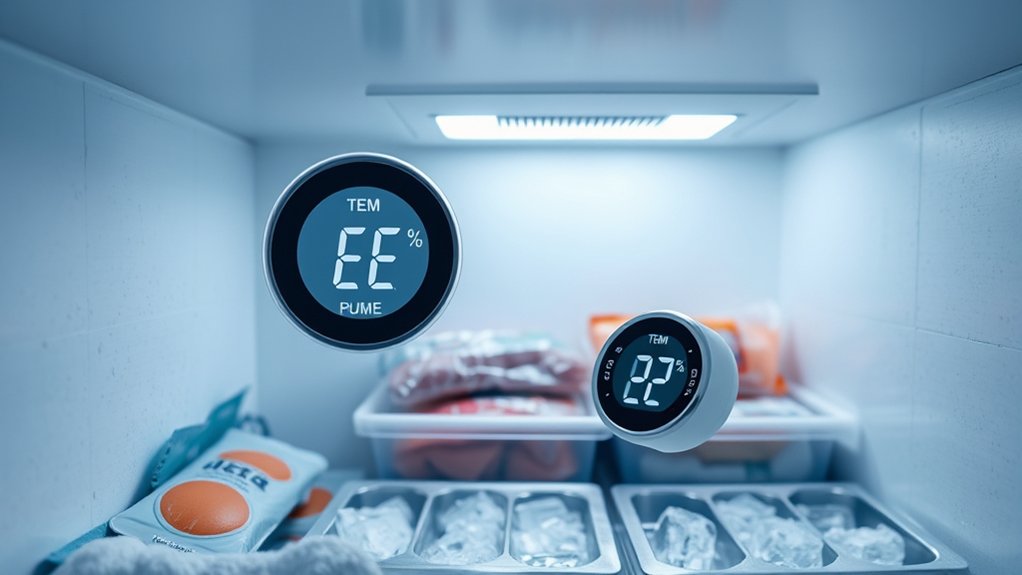
Want to know if your freezer is actually cold enough to keep food safe? Start by placing an appliance thermometer or a digital probe in the center of the freezer, away from walls and vents. This avoids readings skewed by cooling coils or weak spots in freezer insulation.
Leave the thermometer in place for at least 24 hours with the door closed to capture an accurate average rather than a transient low when the compressor runs. For quick checks, a 4-hour reading gives a reasonable snapshot, but longer is better.
Compare the reading to the recommended 0°F (−18°C) target to decide if adjustment or temperature calibration is needed. If your freezer fluctuates widely, log readings over a few days at different times to spot cycles or door-use effects.
Calibrate either the appliance control or the thermometer per manufacturer instructions when discrepancies appear. Regular checks help protect food quality and reveal maintenance needs before spoilage occurs.
Set Your Freezer to 0°F (−18°C) : Step-by-Step
Setting your freezer to 0°F (−18°C) helps keep food safe and maintain its quality. Start by adjusting the thermostat or digital control to that temperature. Then, place an appliance thermometer in the center of the freezer to verify the reading.
To maintain a steady temperature, avoid overcrowding the freezer and limit how often you open the door. Also, check the door seals and clean the condenser coils regularly.
Why 0°F Matters
Why does 0°F (−18°C) matter for your freezer? It preserves food safely and keeps texture, especially for frozen desserts, by halting bacterial growth and slowing enzymatic changes. You’ll also limit moisture migration, which reduces ice buildup and freezer burn.
- Food safety: 0°F stops most pathogens from growing, extending safe storage times.
- Quality: Maintaining −18°C keeps textures firmer, preserving frozen desserts and meats.
- Energy balance: That temp is cold enough to protect food without wasting excess energy.
- Frost control: Consistent 0°F minimizes temperature swings that cause condensation and ice buildup.
Settle on 0°F as the baseline so your freezer reliably preserves flavor, texture, and safety.
How To Set Temperature
Before you adjust the dial, check your freezer’s control type—mechanical dials, digital panels, and smart apps each work a bit differently—so you can select the right method to reach and maintain 0°F (−18°C).
For mechanical dials, move the setting toward colder in small increments, wait 24 hours, then verify with a thermometer.
For digital panels, enter the exact 0°F and confirm the display shows steady cooling.
With smart apps, set the target temperature and enable notifications for deviations.
Perform temperature calibration by placing a thermometer in the center of the freezer and testing after adjustments.
Monitor power use briefly to ensure energy efficiency isn’t compromised by overcooling. Make one change at a time to isolate effects.
Tips For Consistent Cold
Once you’ve dialed in 0°F (−18°C), keep your freezer consistently cold by minimizing door openings, organizing items so air can circulate, and avoiding overpacking. These simple habits reduce temperature swings and help the compressor run less often.
You’ll also want to adopt routines that protect food quality and guarantee accurate temperature calibration. Use these practical steps to stabilize conditions and optimize food storage.
- Keep a thermometer near the center and check weekly to confirm temperature calibration.
- Arrange items by size and frequency of use so you don’t hunt and leave the door open.
- Store foods in airtight containers or vacuum bags to limit moisture and freezer burn.
- Defrost or clean coils annually and replace seals if cold escapes.
Organize and Load Your Freezer to Keep Temperature Steady
When you load your freezer thoughtfully, you’ll keep the temperature steady and reduce energy waste. Use clear Freezer organization and smart Load management: group similar items, label and date packages, and keep airflow paths clear.
Put frequently used items near the front so you don’t keep the door open. Don’t overpack; a bit of empty space lets cold circulate.
Use bins and baskets to prevent shifting and make inventory easy. This reduces long door openings.
| Goal | Action | Benefit |
|---|---|---|
| Airflow | Leave channels between items | Even cooling, fewer warm spots |
| Rotation | First in, first out (label) | Minimized spoilage, fewer full-thaw cycles |
| Access | Bins for types (meat, veg, meals) | Faster finds, shorter door times |
Check seals, avoid hot items inside, and plan meals so you open the freezer less. These steps keep temperature steady and save energy while preserving food quality.
Recommended Temps by Freezer Type: Upright, Chest, and Fridge‑Freezer
Although different freezer styles share the same goal of keeping food safely frozen, they have distinct temperature behaviors and practical setpoints you should know.
Upright freezers circulate cold air across more consistent shelves. Set them to 0°F (-18°C) for reliable long-term food storage and to match modern freezer defaults.
Upright freezers circulate cold evenly—set to 0°F (-18°C) for dependable, long-term food storage.
Chest freezers hold cold better when closed. You can keep them at -10°F to 0°F (-23°C to -18°C) if you rarely open them, saving energy while protecting food quality and safety.
Fridge-freezers combine two compartments. Set the freezer section to 0°F (-18°C) and monitor the fridge temperature separately.
If you use quick-freeze settings, follow the manufacturer’s guidance.
- Upright: 0°F (-18°C), with even airflow for varied items.
- Chest: -10°F to 0°F (-23°C to -18°C), efficient for bulk storage.
- Fridge-freezer: 0°F (-18°C), balancing both compartments.
- Adjust for load and age: check with a thermometer to ensure consistent food storage.
How Freezer Temperature Affects Texture, Flavor, and Nutrients
How cold your freezer runs directly affects the size of the ice crystals that form in your food. That, in turn, influences the food’s texture and flavor after thawing. Freezing food quickly at lower temperatures creates smaller crystals, which help preserve cell structure and prevent juices and nutrients from leaking out. Keeping your freezer consistently cold can also help retain more vitamins and keep food tasting fresher.
Ice Crystal Size
Ever wonder why some frozen foods taste gritty or lose their snap? You’re seeing the results of ice formation and crystal growth. Slow freezing makes big crystals that puncture cells and change texture.
Freeze faster and you get many tiny crystals that preserve structure and flavor better. Control comes down to temperature and handling: colder, consistent temps speed freezing and limit recrystallization during storage.
- Set freezer to −18°C (0°F) or colder for quicker ice formation.
- Don’t overload; air circulation keeps temps steady and reduces crystal growth.
- Package tightly to limit moisture migration that fuels recrystallization.
- Avoid frequent thaw–refreeze cycles; they let small crystals merge into larger, damaging ones.
Monitor temperature and package well to keep texture intact.
Nutrient Retention
When you freeze food at consistently cold temperatures, you lock in more of its original nutrients, texture, and flavor by slowing enzymatic reactions and microbial activity that otherwise degrade quality.
You’ll notice firmer texture and brighter flavor when the freezer holds steady, because smaller ice crystals cause less cell rupture.
Rapid freezing preserves vitamins and antioxidants better than slow thawing, so plan portions and thaw gently to minimize loss.
For Food safety, keep temperatures at or below 0°F (-18°C) to prevent bacterial growth and enzymatic spoilage.
Balance preservation with Energy efficiency by avoiding frequent door openings and ensuring proper airflow. An efficient unit maintains consistent temperatures without wasting power.
Proper packaging also limits freezer burn and nutrient loss.
How Long Common Foods Stay Safe and High-Quality at 0°F (−18°C)
If you keep your freezer at 0°F (−18°C), most foods stay safe indefinitely, but their quality will decline over time. Knowing recommended storage times helps maintain flavor and texture.
Keep an eye on temperature calibration and address issues promptly to avoid quality loss from freezer malfunctions. Here are typical guidelines to help you plan meals and avoid waste:
- Meat and poultry: 6–12 months for large cuts (roasts, whole chicken), 3–4 months for ground meat. Vacuum-sealing can help extend quality.
- Fish: 3–8 months depending on fat content. Lean fish lasts longer than oily types, so label packages with the date and use FIFO.
- Fruits and vegetables: 8–12 months if blanched and sealed. Texture changes are normal, but safety is preserved.
- Prepared foods and baked goods: 2–6 months. Frost-free storage and airtight packaging help preserve flavor and prevent freezer burn.
Rotate items, use clear labeling, and consume older foods first to maximize quality.
Troubleshooting Common Freezer Temperature Problems
Because freezers are supposed to be reliably cold, any unexpected rise or fluctuation in temperature signals a problem you should diagnose quickly to protect food quality and safety.
First, check door seals for gaps or debris. A poor seal lets cold air escape, increases energy consumption, and speeds food spoilage.
Next, confirm proper airflow. Don’t overpack the unit, and keep items away from vents so the thermostat reads accurately.
Defrost excessive frost buildup, which can insulate coils and impair cooling.
Verify the thermostat setting and use an appliance thermometer to confirm readings. If the dial seems fine but the temperature swings, a faulty sensor or control board might be the cause.
Listen for the compressor and fan. Unusual sounds or silence can point to mechanical trouble.
Also inspect the condenser coils. Dirty coils reduce efficiency and raise energy consumption.
When to Call a Technician and How to Prevent Failures
Although many minor issues you can fix yourself, call a technician as soon as you notice persistent temperature swings, loud or unusual noises, or a nonworking compressor so you don’t risk food loss or bigger damage. You should also contact a pro if the freezer leaks, frost builds excessively, or the unit won’t reach set temps despite proper ventilation and door seals. While waiting, keep food cold and avoid frequent door openings.
- Check basics first: verify temperature calibration with an accurate thermometer and inspect seals, coils, and vents for dirt or obstructions.
- Monitor energy efficiency: rising bills or constant run times often signal failing components that need professional diagnosis.
- Schedule preventive service annually to clean coils, test defrost systems, and confirm thermostat accuracy to extend life and prevent sudden failures.
- Document symptoms and timings for the technician to speed repairs and avoid repeated visits.
Act promptly. Early professional intervention and routine upkeep cut repair costs and protect your food.
Frequently Asked Questions
Can Freezing Kill All Bacteria and Parasites in Food?
No, freezing won’t kill all bacteria and parasites in food. You’ll slow growth and often inactivate many pathogens, but bacterial resistance and parasite survival vary. Some bacteria survive freezing, and some parasites remain viable.
Freezing reduces risk, but it doesn’t sterilize. You should cook or properly treat foods after thawing, follow safe handling practices, and use recommended freezing durations for certain parasites, such as those found in fish.
Will Ice Crystals in Frozen Food Indicate Spoilage?
A farmer froze berries and found big ice crystal formation, so you don’t assume spoilage automatically. Ice crystals in frozen food often signal freezer temperature fluctuations or slow freezing, causing texture and freezer burn, not necessarily bacterial growth.
You should check smell, color, and packaging damage. If those seem fine and the food stayed continuously frozen at a safe freezer temperature, it’s usually safe though texturally degraded.
Can I Freeze Medicines or Supplements Safely?
You generally shouldn’t freeze medicines or supplements unless the manufacturer says it’s okay. Freezing can harm medication stability and reduce supplement preservation by altering potency, texture, or delivery systems (like suspensions, injectables, or capsules).
Store drugs per label—room temperature or refrigerated if specified—and keep sensitive items away from heat, moisture, and light. If unsure, check package instructions or ask your pharmacist to confirm safe storage practices for your specific products.
Does Frequent Door Opening Significantly Raise Freezer Temperature?
Yes — opening the door a lot can spike temperatures like a telegraph from the Victorian era: every door opening lets cold air escape and warm air rush in, causing temperature fluctuations. You’ll see short-term rises that the compressor works to correct, which can stress food safety and medicines if repeated. Limit how often and how long you open the door, organize items for quick access, and avoid overloading the freezer for more stable temperatures.
Are Flash Freeze and Regular Freeze Different for Safety?
Yes—flash freezing and regular freezing differ in safety and quality. You’ll get firmer food texture with flash freezing because small ice crystals form quickly, reducing cell damage and bacterial growth windows.
That lowers drip loss when thawing and can improve safety for delicate items. Flash freezing may use more freezer energy briefly, but it can preserve quality and reduce waste, which often offsets extra energy use over time.
Conclusion
Keep your freezer at 0°F (−18°C) to lock in safety and quality. Think of it as a time capsule for your food.
Check the temperature with an appliance thermometer, organize items so air can circulate, and avoid overloading the compartment.
If temperatures swing or the unit becomes noisy, troubleshoot the seals, coils, and settings. Call a technician if needed.
With a little care, you’ll keep flavors, textures, and nutrients preserved for months at the ideal freezer temperature.