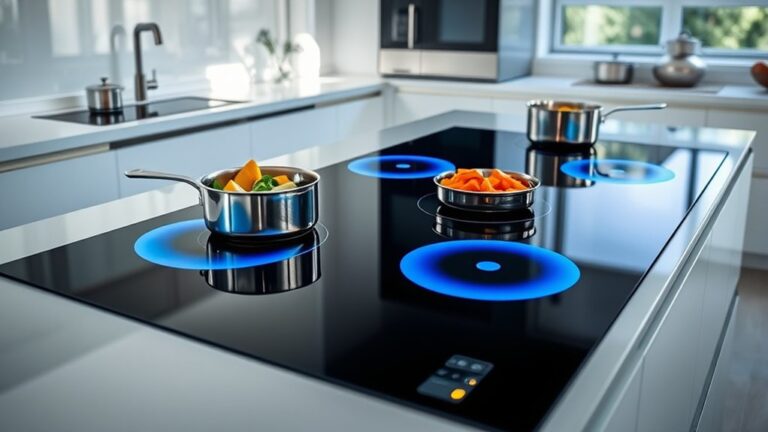

3 Types of Electric Ranges You Should Know
Choosing the right electric range can feel overwhelming, especially when you’re comparing features, prices, and cooking performance. You’re not alone—many people struggle to decide which option will best fit their kitchen and daily routine.
You’ll encounter three main electric ranges: coil, smooth-top, and induction. Coil ranges use exposed metal coils that heat cookware directly and cost less but trap spills.
Smooth-tops hide elements under glass-ceramic for easier wiping and a sleek look but can scratch and hold heat.
Induction creates a magnetic field that heats compatible pans fastest and most efficiently while the cooktop stays relatively cool. Keep going and you’ll find which type fits your cookware, budget, and cooking style.
Key Takeaways
- Coil ranges use exposed metal coils. They’re affordable, durable, and tolerate warped cookware, but they trap spills and take longer to clean.
- Smooth-top (glass-ceramic) ranges hide recessed elements under a flat surface. They’re easy to wipe and have a sleek look, but can scratch and retain heat.
- Induction ranges heat cookware directly via magnetic fields. They deliver fast, precise cooking with high energy efficiency and added safety.
- Choose ranges by cookware compatibility. Induction needs magnetic bottoms, smooth-tops prefer flat pans, while coils accept most pots.
- Consider cost versus savings. Induction has a higher upfront cost but better energy efficiency, while coils and smooth-tops offer a lower initial price.
How Coil, Smooth-Top, and Induction Electric Ranges Work

When you turn a knob on a coil range, electricity heats exposed metal coils that transfer heat directly to your cookware. Smooth-top ranges use recessed electric elements beneath a glass-ceramic surface that conduct heat through the cooktop.
Induction ranges create a magnetic field that induces heat directly in compatible pots and pans. Coils and smooth-tops heat the surface, but induction heats the cookware itself for faster, more efficient cooking.
Induction stirs a magnetic field that heats only compatible cookware—faster, cleaner, and far more efficient than surface heating.
You’ll notice coils warm quickly but retain heat. Smooth-tops offer a flat surface that’s easier to slide pans on, while induction responds almost instantly and stays cool except under the pan.
For cooktop maintenance, wipe spills on smooth-tops only when cool to avoid scratches. Lift coils to clean beneath them, and use compatible ferrous cookware for induction to prevent damage.
For safety, never leave flammable items near a hot coil. Avoid abrasive cleaners on glass-ceramic, and remember that induction won’t work with non-magnetic pots, so check compatibility before use.
Electric Range Comparison: Performance, Cleaning, and Energy Trade-Offs

Although each electric range has strengths, choosing the right one comes down to how you balance performance, cleaning effort, and energy use. Induction wins for rapid, precise heating and top energy efficiency, so meals cook faster and bills can be lower.
Smooth-top ranges offer steady heat and a sleek surface that wipes clean, but they retain heat longer and can be scratched by rough cookware. Coil elements are affordable and durable, yet they trap spills and need more scrubbing.
Consider cleaning time alongside daily use. Sealed elements and flat surfaces reduce maintenance, while bulky coils demand disassembly.
Think about safety features, too. Induction minimizes burn risk by heating only the pan, and many models include automatic shutoffs and child locks.
Finally, weigh long-term energy savings against upfront cost. Higher efficiency can offset the price over time, but immediate budget constraints might steer you toward simpler models that still meet your cooking needs.
Which Electric Range to Buy: Cookware, Cooking Style, and Budget Checklist

You’ve weighed performance, cleaning, and energy—now match those priorities to the cookware you own, your cooking habits, and your budget.
Start by checking cookware compatibility: induction needs magnetic bases, smooth-top ranges work best with flat-bottomed pans, and coil elements tolerate warped bottoms. If you’re attached to cast iron or copper, pick a surface that transfers heat evenly without scratching.
Check cookware first: induction needs magnetic bases, smooth-tops prefer flat bottoms, and coils handle warped pans.
Next, consider your cooking style. Do you simmer sauces, sear steaks, or bake frequently? Choose a range with steady low heat for long simmers, rapid high output for searing, or precise oven controls for baking.
Factor in budget considerations by setting a firm range for the purchase, installation, and maintenance costs. Mid-range models often balance features and reliability, while premium units add performance but cost more to repair.
Finally, prioritize features that align with your daily habits, such as control layout, burner count, and oven capacity. This helps ensure your choice fits both your cookware and routine without overspending.
Frequently Asked Questions
Are There Safety Differences for Children Around Each Range Type?
Yes, there are safety differences for children around each range type. You’ll need to manage child safety differently because range hazards vary.
Coil and exposed elements burn more easily, smooth-top glass retains heat longer, and gas ranges add flame and carbon monoxide risks.
Use back burners, knob covers, guards, and supervision. Teach children safe distances and hot-surface awareness to help reduce accidents and burns.
Do Electric Ranges Affect Home Insurance or Warranties?
Yes, check both insurance implications and warranty coverage. Your homeowner’s insurance may adjust premiums or require updates if you switch to a different electric range type, especially for high-powered or gas-conversion units.
Claims could also depend on compliant installation. Warranty coverage varies by manufacturer and may be voided by improper installation or DIY repairs, so keep receipts and professional installation records. Register the appliance to help protect your coverage and claims.
How Do Installation Costs and Electrical Upgrades Vary?
Installation costs and electrical upgrades vary based on cost factors like range type, labor rates, permit fees, and needed circuit work. You’ll pay less for a basic plug-in range but more for a hardwired induction or double-oven unit.
Electrical requirements, including panel capacity, a dedicated 240V circuit, wiring gauge, and breaker upgrades, can add significant expense if your home needs a service upgrade or new run. Get quotes and an electrician’s assessment.
Can Electric Ranges Be Resold or Recycled Easily?
About 60% of Americans report keeping appliances past their useful life, so you’ll want to act deliberately. Yes, you can often resell electric ranges, and resale value depends on brand, age, and condition. Higher-end models fetch more.
If resale isn’t viable, the recycling process removes metals, glass, and hazardous components. Many cities or retailers offer pickup or drop-off.
You’ll get more money and less waste by cleaning and documenting the range.
Do Electric Ranges Emit Any Odors or Electromagnetic Fields?
Yes, you might notice some odor emissions when an electric range is new or if food burns, but those smells usually fade quickly and don’t indicate ongoing harm. You’ll also have low-level electromagnetic exposure from the cooktop and wiring while it’s on; it’s typically well below safety limits.
If you’re worried, keep distance during high heat, verify proper ventilation, and have a qualified technician check grounding and installation.
Conclusion
Choosing the right electric range depends on how you cook, what cookware you own, and your budget. Coil models are reliable and affordable, smooth-top ranges look sleek and clean up easily, while induction ranges heat quickly and save energy.
Think of your kitchen like a toolbox: choose the range that fits your favorite tools and cooking tasks. With the right electric range, cooking becomes quicker, cleaner, and more enjoyable, just one confident click away.