

Top 3 Drop-In Gas Ranges for Modern Kitchens
Finding the right drop-in gas range can be frustrating when you need a perfect fit, powerful cooking performance, and reliable safety features. You’re not alone—many home cooks struggle to balance budget, burner control, ventilation, and installation needs.
You’ll want drop-in gas ranges that fit your cutout, give strong high-BTU searing and gentle simmering, and pair with proper ventilation.
For budget, choose a reliable sealed-burner model with basic safety interlocks; for best overall, pick a balanced unit with precise controls and versatile burners; for high-end, look for convection ovens, griddles, and flame-failure protection.
Make certain pro gas hookup, correct CFM venting, and routine maintenance.
Keep reading to discover specific top picks and practical installation tips.
Key Takeaways
- Choose ranges with at least one high-BTU burner (~18,000–20,000 BTU) and a low simmer burner for versatility.
- Prefer sealed, easy-clean burners and durable grates to simplify maintenance and improve reliability.
- Match the cooktop layout and cutout dimensions to your cookware and countertop for seamless installation.
- Confirm venting capacity (CFM) and hood type, whether downdraft or overhead, based on cabinet layout and BTU output.
- Verify safety features, including flame failure protection and auto shutoff. Check local code compliance and plan for professional gas hookup.
Choosing a Drop‑In Gas Range: Size, Burners, and Venting

Thinking about size, burners, and venting up front will save you time and money when choosing a drop‑in gas range. You’ll measure the cutout and surrounding countertop to guarantee cooktop compatibility, matching dimensions and trim so installation’s seamless.
Consider burner count and layout: high‑BTU power burners for searing, simmer burners for delicate sauces, and simmer plates if you often melt chocolate. Think about cookware size and spacing so pots don’t crowd each other.
Venting matters. You’ll decide between downdraft or overhead ventilation based on cabinet layout and hood capacity. Correct CFM prevents grease buildup and improves efficiency.
Check gas supply requirements and clearance recommendations to avoid costly modifications. Prioritize safety features like automatic shutoff, flame failure devices, and child locks to reduce risk.
Finally, verify service access and local code compliance so your range performs safely and reliably from day one.
Best Drop‑In Gas Ranges: Budget, Best Overall, and High‑End Picks
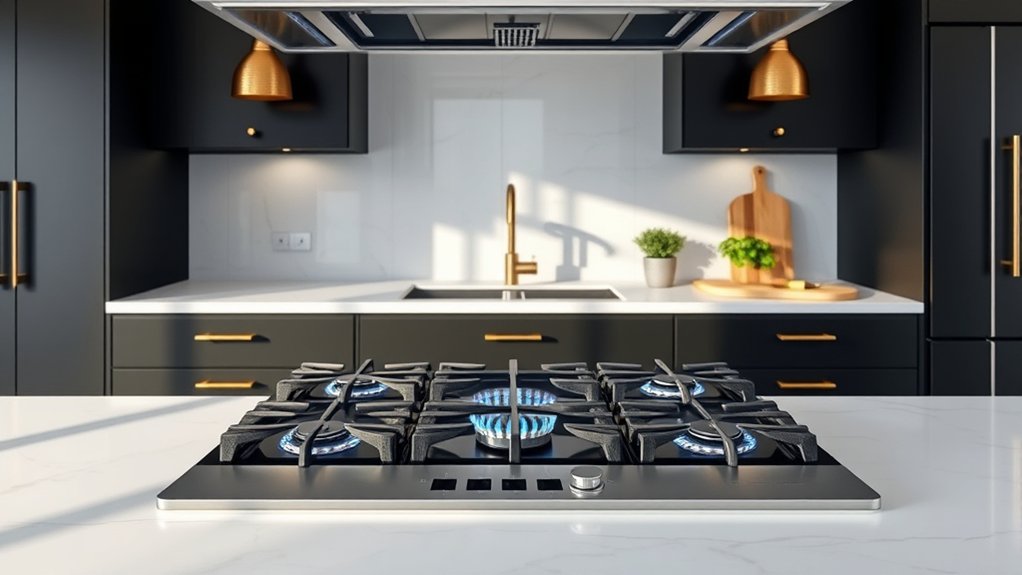
Now that you’ve covered size, burners, and venting, it’s time to match those specs to models that fit your budget and cooking style.
You want options that balance cooking safety, energy efficiency, and performance. For budget picks, look for reliable ignition, sealed burners, and basic safety interlocks.
The best overall models combine powerful burners, precise controls, and good energy ratings. High-end ranges add convection ovens, griddles, and smarter safety features like flame failure protection.
Match features to how you cook. Choose more simmer control if you braise, or stronger high-BTU burners if you sear.
| Tier | What to expect |
|---|---|
| Budget | Reliable basics, sealed burners, good value |
| Best Overall | Balanced power, precision, efficiency |
| High-End | Advanced features, premium materials |
| Safety/Efficiency focus | Flame failure, low-heat simmer, energy-efficient ovens |
Check the warranty and real-user reviews to confirm longevity. Choose the tier that fits your kitchen rhythm and priorities.
Install, Vent, and Maintain Your Drop‑In Gas Range

Before you cut the countertop or hook up the gas, confirm your kitchen’s clearances, gas line capacity, and venting plan so the installation goes smoothly and safely. You’ll want clear Installation tips: hire a licensed pro for gas hookups, use approved connectors, and test for leaks.
Verify the cooktop flange fits the cutout and that electrical needs are met for igniters and controls. For Ventilation considerations, choose a hood or downdraft rated for your range’s BTU output and position it to capture steam and grease.
- You’ll feel relief knowing a pro checked the gas pressure and sealed joints.
- You’ll love cleaner air when ventilation removes smoke and odors.
- You’ll relax with routine maintenance: clean burners, check igniters, and replace worn gaskets.
- You’ll gain confidence by scheduling annual inspections to catch issues early.
Follow these concise steps, and your drop-in range will perform safely and reliably.
Frequently Asked Questions
Can I Cook During a Power Outage With a Drop‑In Gas Range?
Yes, you can often cook during a power outage with a drop-in gas range if it has battery or manual ignition. You’ll still get stovetop heat.
You’ll want to evaluate energy efficiency and the range’s safety features, such as flame failure devices and automatic gas shutoff.
Keep matches or a lighter handy for manual lighting, follow the manufacturer’s instructions, and never use ovens or grills indoors without proper ventilation and precautions.
Do Drop‑In Gas Ranges Require Specialized Cookware?
Think of your pots as friendly neighbors—you don’t need exotic visitors. You can use most cookware with drop‑in gas ranges; cast iron, stainless, and heavy‑bottomed pans work especially well for even heat.
You won’t need specialized gear, though very thin pans may warp. For best results, check cookware compatibility when planning range installation so burners and grates suit your pots and you avoid wobble or uneven cooking.
Are Drop‑In Gas Ranges Compatible With Induction Cooktop Accessories?
No. Drop-in gas ranges aren’t induction compatible because induction requires magnetic cookware and an electromagnetic cooktop.
You can still use accessories such as cast-iron griddles, wok rings, simmer plates, or induction-ready pans on a separate portable induction unit placed nearby.
If you want induction features, look for a hybrid cooktop or countertop induction burner to pair with your gas range. This provides induction compatibility without replacing the built-in gas unit.
Can I Use a Drop‑In Gas Range in a Recreational Vehicle or Tiny Home?
Yes, you can, though it takes planning. Like fitting a puzzle piece, a drop-in gas range can work in an RV installation or tiny home if you measure, vent, and secure it properly.
You’ll need the correct propane hookup or conversion, proper ventilation, and anchoring to prevent movement. Check weight limits, clearance, local codes, and appliance certifications for mobile use.
Hire a professional for gas hookups to ensure safety and compliance.
How Loud Are the Igniters and Do They Get Quieter Over Time?
Igniter noise is usually a short, sharp click you’ll hear when lighting burners; it’s not loud and many people find it acceptable. You’ll get quiet operation between clicks, and some models emphasize quieter igniters or muffling.
Igniter noise doesn’t typically get quieter with use, though dust or wear can change the sound. You can clean contacts or replace noisy igniters to restore quieter operation.
Conclusion
You’re standing in your kitchen, tools in hand, picturing that perfect cooktop sinking into its slot—sleek edges and a steady flame. Pick the size that fits your layout, choose burners that match your recipes, and plan venting like you’d chart a breeze out the window.
Whether you budget, splurge, or find the middle ground, the right drop-in gas range can turn your kitchen into a warm, efficient stage where meals and memories rise with every reliable, blue-gold flame.


