
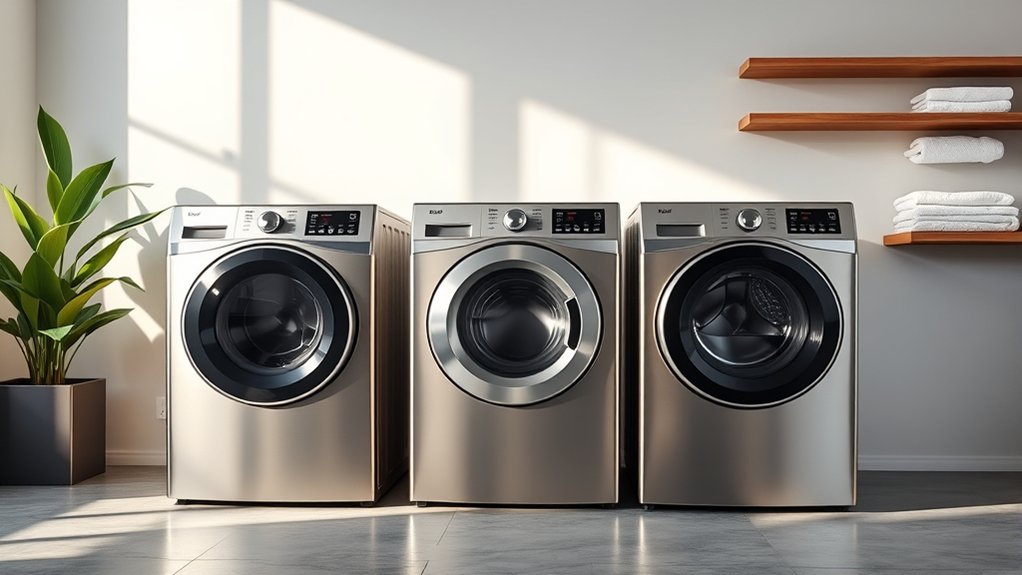
Top 3 Energy Efficient Washer and Dryer Sets for 2027
Laundry can be a frustrating drain on both time and energy, especially when utility bills keep climbing. You’re not alone—many people struggle to find a washer and dryer set that balances efficiency, performance, and convenience.
This guide to the Top 3 Energy Efficient Washer and Dryer Sets for 2027 can help you compare smarter options.
You’ll want matched front-load pairs with inverter motors, advanced sensors, and smart controls for the best savings. Look for models listing kWh per cycle and gallons per load so you can compare running costs.
For tight spaces, choose a heat-pump compact set that’s gentle and super-efficient.
If you do heavy laundry, pick a high-capacity washer and heat-pump dryer with variable spin speeds.
Keep installation, maintenance, and lifecycle recyclability in mind.
You’ll find more details if you keep going.
Key Takeaways
- Prioritize matched front-load inverter washer and heat-pump dryer pairs with verified kWh per cycle and gallons per load specifications.
- Choose models with smart scheduling, adaptive cycles, and remote diagnostics to maximize efficiency and reduce repeat cycles.
- Compare drum capacity (cu ft) and cycle durations. Larger drums with shorter cycles can still waste energy per pound.
- Estimate annual costs by multiplying kWh and gallons per cycle by local energy and water rates, including maintenance and resale.
- Use a weighted scoring spreadsheet combining energy, water, capacity, and total ownership cost to rank the top three sets.
Decision Framework: Energy, Water, Capacity, and Cost

When choosing an energy-efficient washer and dryer set, focus on four measurable factors: energy use, water consumption, drum capacity, and total ownership cost. This helps you compare models objectively.
Prioritize machines that list kilowatt-hours per cycle and gallons per load so their performance claims are verifiable. Check drum capacity in cubic feet, and note how cycle options affect usable space.
A larger drum does not always mean lower energy use per pound, especially if cycles run longer.
Factor in total ownership cost, including the purchase price, estimated annual energy and water bills, maintenance, and resale value.
Give extra weight to units with smart technology for scheduling, remote diagnostics, and adaptive cycles that reduce waste. Also assess environmental impact through lifecycle data, including manufacturing materials, recyclability, and end-of-life disposal.
Use a simple spreadsheet to score each factor and apply weights based on your priorities. Then compare the totals to choose a set that balances efficiency, convenience, and long-term cost.
Best Energy-Efficient Washer & Dryer Sets (Overall, Heat-Pump Compact, High-Capacity)

Now that you’ve got a scoring framework, it’s time to apply it to specific sets so you can pick the right balance of efficiency, capacity, and cost for your needs.
Now apply your scoring framework to appliance sets to find the right balance of efficiency, capacity, and cost.
For an overall best pick, choose a matched front-load pair with inverter motors, advanced sensors, and smart technology that schedules cycles and optimizes water use. You’ll get high energy savings and reliable performance with moderate noise levels.
If space is tight, opt for a heat-pump compact set. These deliver exceptional efficiency in a smaller footprint, keep garments gentler at lower temperatures, and often include app control so you can monitor cycles remotely.
For heavy-duty needs, a high-capacity set with robust drums and variable spin speeds cuts load counts, reducing total energy use. Look for models with smart technology that adapts cycles to load size and reports maintenance alerts.
In all cases, compare measured noise levels and energy ratings to match your priorities.
Compare Running Costs, Installation, and Space Needs

Because operating costs, installation complexity, and footprint all affect your lifetime expense and satisfaction, compare them upfront before you buy. Estimate energy and water use by checking kWh and gallons per cycle, then convert those figures into annual costs using local rates.
Heat-pump dryers and high-efficiency washers often reduce running expenses, though smart features can add phantom power draw. Check standby consumption before making a decision.
Factor in installation requirements. Stacked or ventless models save space but may need special hookups or condensate drains, while vented units require a compatible exhaust path.
Measure the room and door clearances, and account for stacked height if you’re placing units in closets. Consider repairability and brand reputation, since reliable parts and service can reduce total cost of ownership.
Finally, compare warranties and expected lifespan to estimate the cost per year. Prioritize the combination that minimizes ongoing bills while fitting your space and installation constraints.
Frequently Asked Questions
Do These Models Qualify for Federal or State Energy Rebates?
Yes, many models qualify, but eligibility depends on federal and state program rules and your utility. Check the specific rebate criteria, since Smart features, ENERGY STAR ratings, and documented efficiency often matter.
Also confirm installation and purchase dates, and whether Noise levels or other specifications affect qualifying categories. Contact your utility or state energy office, keep receipts and model numbers, and apply promptly to secure rebates.
How Long Are Typical Warranties and What Do They Cover?
Typical warranties run one to ten years; you’ll usually get a 1–2 year full parts-and-labor warranty and longer limited coverage (often 5–10 years) for major components.
Warranty coverage typically includes motors, drum and sealed systems but excludes wear items, misuse and accidental damage. You’ll want to check repair availability in your area since extended warranties may require authorized service.
Keep receipts and register the appliance to guarantee claim eligibility.
Are Replacement Parts Readily Available Long-Term?
Parts are persistently plentiful: you’ll usually find replacement parts for major brands, so you can plan long-term maintenance with confidence. Register appliances, keep model numbers handy, and buy from manufacturers or reputable dealers to keep parts accessible.
Independent repair shops and online parts stores can help, too. For less common models, expect occasional delays. Stocking wear items and verifying support before buying can help minimize downtime.
Can Washers Sanitize Fabrics for Allergy Sufferers?
Yes, you can sanitize fabrics to help with allergy relief. Many washers offer a fabric sanitization or steam cycle that kills dust mites, pollen, and bacteria using high heat or steam.
Follow garment care labels and use hot-water settings or certified sanitizing cycles when safe. Adding allergen-removing detergents and drying laundry thoroughly can boost effectiveness, helping provide better allergy relief.
Do Dryers Support Refundable Recycling or Trade-In Programs?
Yes, many dryers support refundable recycling or trade-in programs. You can return old units through manufacturer or retailer recycling programs and receive rebates or trade-in credits.
When you participate, keep dryer maintenance records and guarantee safe pickup to qualify. Recycling programs often handle disposal responsibly and may offer incentives that lower your new purchase price.
Check local laws and program terms so you’ll get the maximum refund or credit.
Conclusion
You’ll save the most over time by prioritizing true energy use, not just labels. Energy-factor ratings and measured kWh per cycle reveal the real winners.
Test data shows heat-pump dryers can cut energy use by up to half compared with electric vented models, so don’t assume a larger appliance is less efficient.
Balance water use, capacity, and upfront cost for your household’s laundry needs. The best energy-efficient washer and dryer sets for 2027 can lower bills and environmental impact without sacrificing performance.


