

Top 3 Five Burner Gas Stoves for Efficient Cooking
Choosing the right stove can be frustrating, especially when you need powerful burners, precise simmering, and enough space for multiple pots. You’re not alone—many home cooks struggle to find a model that balances performance, safety, and easy cleanup.
This guide to the top three five burner gas stoves highlights options that deliver fast boils, precise simmers, and practical multitasking. Each pairs a high-BTU center burner with evenly spaced auxiliaries and rugged grates for versatile cooking.
Look for efficient flame-directed burners, sealed caps, easy-clean surfaces, flame-failure protection, and reliable ignition. Compare peak BTUs, low-simmer control, and burner layout to match your cookware and fuel needs.
Key Takeaways
- Prioritize a high-BTU center burner plus evenly spaced auxiliary burners for rapid heating and simultaneous multi-pot cooking.
- Choose rugged, sealed grates and removable burner caps to improve heat transfer and simplify cleaning after spills.
- Ensure reliable electronic ignition with flame-failure protection and child-safe, click-resistant knobs for safer operation.
- Look for balanced peak BTU and precise low-simmer control to enable both high-heat searing and fuel-efficient gentle cooking.
- Verify compatibility with existing gas lines, required clearances, and easy-maintenance features for long-term performance.
Quick Verdict: Best Five-Burner Gas Stoves for Speed, Value, and Versatility
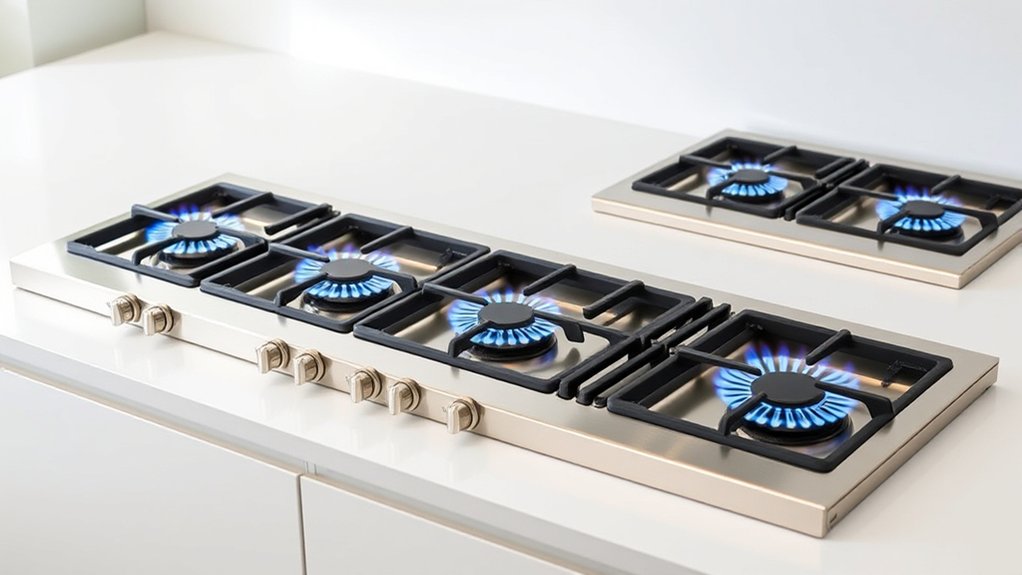
When you need cooking power, bang for your buck, and flexibility all at once, a five-burner gas stove delivers. You get rapid heat for big pots, a strong center burner for searing, and extra burners for multitasking without crowding the cooktop.
Look for models that balance speed, value, and versatility. A high-BTU center burner, evenly spaced auxiliary burners, and sturdy grates can make everyday cooking faster.
Seek a stove with a powerful center burner, well-spaced auxiliaries, and rugged grates for faster, versatile cooking.
Focus on reliable ignition, simple controls, and durable finishes so you don’t waste time or money. Before buying, confirm gas line compatibility, ventilation needs, and clearance requirements.
For safe installation, hire a licensed professional. To keep performance consistent, clean spills promptly, check burner ports for clogs, and schedule periodic professional inspections.
Choose a stove that matches your cooking style and kitchen layout, and you’ll get fast, dependable results without unnecessary features or expense.
How the Top Picks Compare: Heat Output, Burner Layout, and Real-World Energy Use

Although each top five-burner model excels in different ways, you can compare them neatly by focusing on measured heat output, burner spacing, and how much gas they actually use in everyday cooking. You’ll check BTU ranges for peak and simmering power, note burner design that directs flame efficiently, and observe real-world cooking efficiency during tasks like boiling, searing, and simmering.
Pay attention to layout: center wok burners, offset mids, and wide spacing let you run multiple pots without crowding, improving throughput and lowering overall gas use.
| Metric | Why it matters |
|---|---|
| Peak BTU | Determines rapid boiling and high-heat searing |
| Simmer control | Affects gentle cooking and fuel savings |
| Burner design | Impacts heat focus and evenness |
| Spacing/layout | Enables simultaneous use without heat loss |
You’ll favor models that balance high peak output with precise low settings. That’s where real savings and superior cooking efficiency show up.
Safety & Convenience Features to Check for Five-Burner Gas Stoves
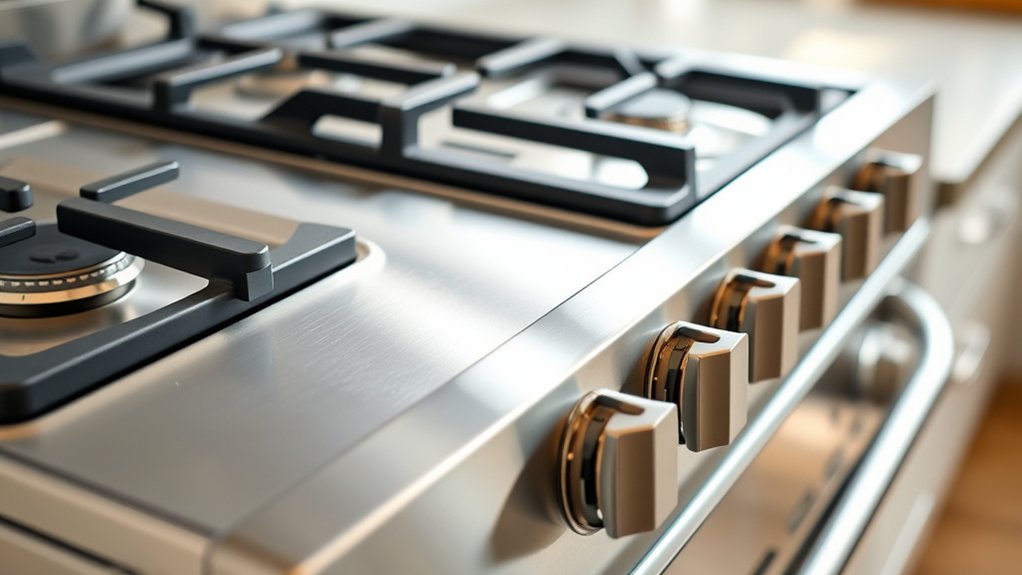
You’ve just looked at performance metrics—now check the features that keep cooking safe and convenient day to day. Prioritize models with automatic flame failure protection so gas cuts off if a flame goes out, and choose knobs that click and resist accidental turning, which is crucial for child safety.
Look for sealed, removable burner caps and a smooth, sloped cooktop surface to prevent spills from pooling and to speed cleanup.
Consider electronic ignition and easy-to-reach controls so you don’t fumble with matches or a lighter. A convection oven fan and interior light improve visibility and reduce overcooking, while clear, heated-zone markings help you position pans efficiently.
Magnetic or removable grates make removal easier for deeper scrubbing, improving ease of cleaning without tools.
Finally, check ventilation compatibility and certifications for low emissions. These practical safety and convenience features lower risk, save time, and make daily cooking more predictable, so they’re worth prioritizing alongside heat output and layout.
Frequently Asked Questions
Are Five-Burner Stoves Compatible With Induction Cookware?
Yes, five-burner stoves can be induction compatible if they’re induction cooktops, but not all are. You’ll need to check the cooktop’s compatibility and cookware requirements.
Induction requires magnetic-bottom pans, such as cast iron or stainless steel with a magnetic base. Flat, smooth bottoms are best for even heating and proper burner fit.
If your five-burner unit is gas, it won’t use induction. If it’s an electric induction model, follow the cookware requirements for the best performance.
Can I Convert a Gas Stove From Natural Gas to Propane?
Yes, you can convert a gas stove from natural gas to propane, but you’ll need a proper gas conversion kit and follow important safety precautions.
Turn off the gas supply, replace the orifices and pressure regulator according to the manufacturer’s instructions, and test for leaks.
If you’re not confident doing the work yourself, hire a licensed technician to complete the conversion and certify it so your stove operates safely and efficiently.
How Often Should I Service a Five-Burner Gas Stove?
Coincidentally, you should service a five-burner gas stove at least once a year, and sooner if you cook heavily. You’ll want a clear maintenance schedule: annual professional inspection, burner cleaning quarterly, and immediate checks after leaks or odd smells.
Follow safety precautions—shut off gas before any work, ventilate, and use qualified technicians for conversions or repairs. Staying proactive will keep your stove efficient and your kitchen safe.
Do Five-Burner Stoves Require Special Ventilation Systems?
Yes, you’ll need proper ventilation for five-burner stoves. Install a range hood or make-up air system sized to the stove’s BTU output, and follow local codes.
Safety considerations include preventing carbon monoxide buildup, ensuring adequate airflow, and positioning vents to remove combustion gases. You’ll also want regular checks and a CO detector nearby to keep cooking safe and compliant with regulations.
What Warranty Terms Typically Cover Burner and Ignition Failures?
Manufacturers typically cover burner and ignition failures under limited warranties that promise repair or replacement within a set period, often one to two years. You’ll see warranty exclusions for misuse, corrosion, or improper installation, and coverage limitations like labor caps or required authorized service.
Keep receipts, register the appliance, and follow maintenance rules so you’re eligible. Extended plans can fill gaps not covered by the basic warranty.
Conclusion
You’ve seen the top five-burner gas stoves—speedy performers, budget winners, and all-round champs—but the real choice still hangs in the air. Which layout will fit your rhythm?
Which burner power will shave minutes off dinner? Picture the simmer you won’t ruin and the rapid boil that won’t drain your patience.
Decide on the safety features you won’t regret, then pick the stove that feels made for your kitchen. With the right five-burner gas stove, your next meal can start with confidence.