5 Subway Menu Items and Prices
Trying to choose a filling Subway meal without overspending can be frustrating. You’re not alone—many people struggle to compare Subway menu prices, portion sizes, and meal deals quickly.
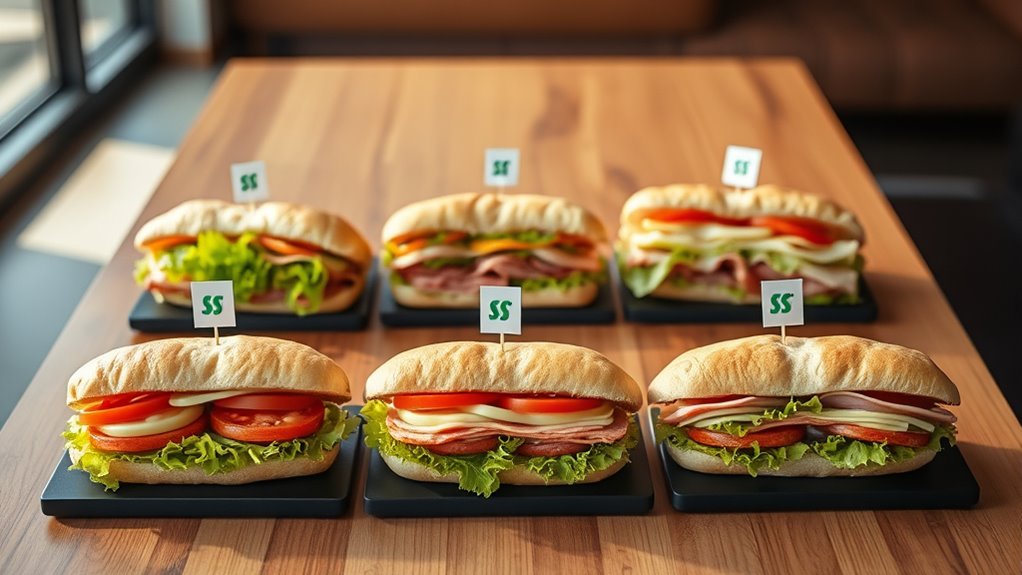
Subway menu prices vary by location, ingredients, and promotions. Popular choices include footlongs like Italian B.M.T., Meatball Marinara, Turkey Breast, and Steak & Cheese, while six-inch subs offer a smaller, cheaper portion.
You can also choose breakfast sandwiches, wraps, or protein-packed salads.
Add chips, cookies, or drinks individually, or save with a meal bundle.
Check Subway’s app for current prices and deals, and investigate the details below to compare your best-value options.
Key Takeaways
- Footlong subs, including Italian B.M.T., Meatball Marinara, Turkey Breast, and Steak & Cheese, have location-dependent prices.
- Six-inch subs cost less than footlongs and offer the same customizable fillings in a smaller portion.
- Breakfast sandwiches with eggs, bacon, sausage, ham, or vegetables vary in price by ingredients and meal bundles.
- Wraps generally cost about as much as six-inch subs, while salad prices depend on protein and toppings.
- Chips, cookies, and drinks add to meal costs, although combo deals may provide better overall value.
Footlong Subs: Prices and Popular Picks
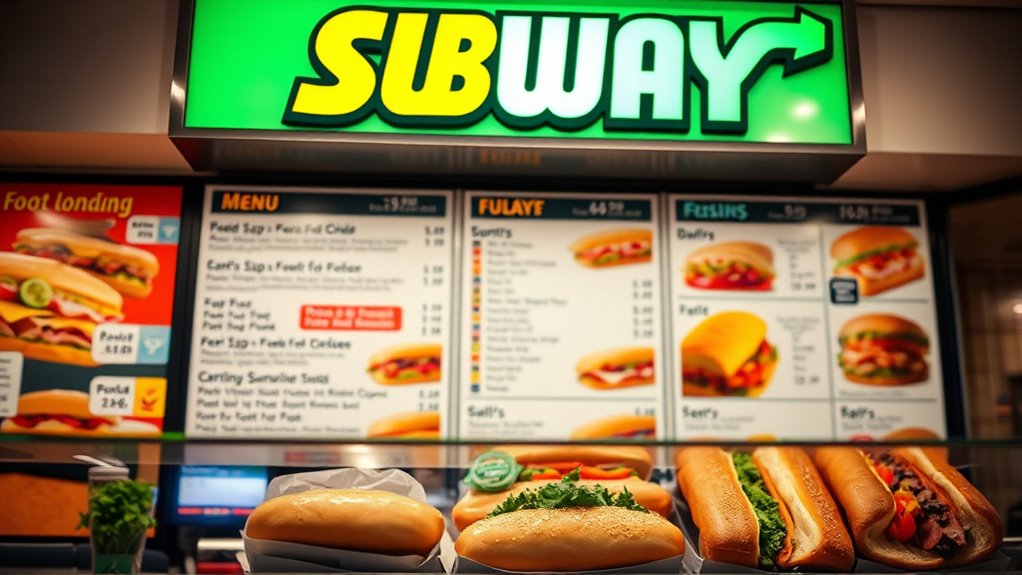
Footlong subs are Subway’s signature choice, offering a full 12 inches of customizable ingredients in every sandwich. You can choose a popular classic, such as Italian B.M.T., Meatball Marinara, Turkey Breast, or Steak & Cheese, then build your meal with vegetables, sauces, and cheese.
Prices vary by location, ingredients, promotions, and ordering method, so check your nearby Subway menu for the most accurate total. You’ll often find value through app offers, meal bundles, or limited-time deals, though availability can differ between restaurants.
For better Subway nutrition, you can request extra vegetables, select leaner proteins, and limit cheese or sauce. Subway also provides dietary options, including salads, protein bowls, and ingredient swaps that help you match personal preferences.
Consider toasted or untoasted bread, and customize seasoning to suit your taste. If you’re feeding someone with allergies, review ingredient information and ask staff about preparation practices before ordering.
Your choices let you create a filling sandwich that fits your needs.
Six-Inch Subs: Prices and Value Comparison
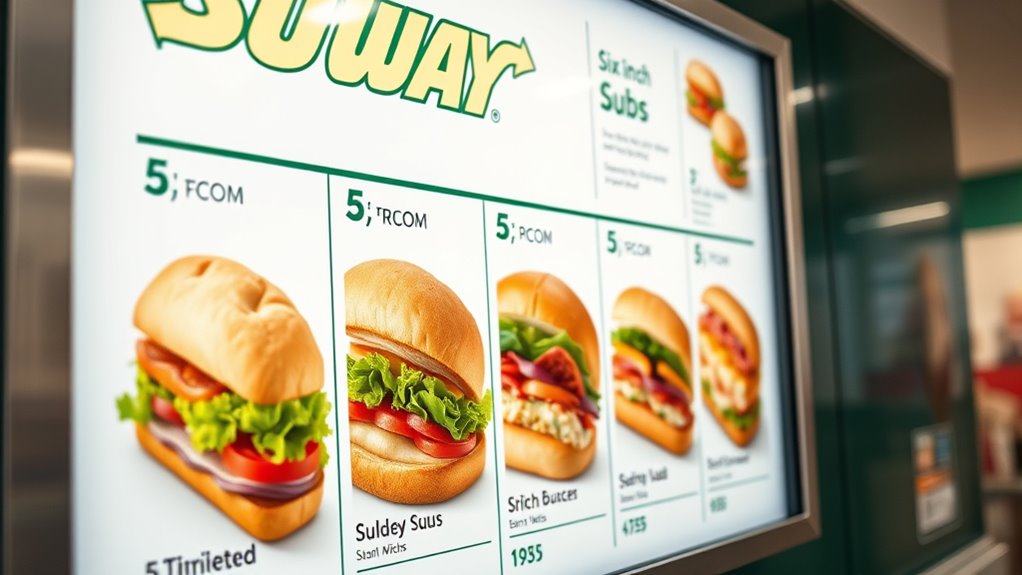
If a full footlong feels like too much, a six-inch sub gives you the same customizable format in a smaller portion. You can choose your bread, protein, cheese, vegetables, sauces, and toppings, then build a meal that fits your appetite and budget.
Six-inch prices typically cost less than footlongs, making them a practical choice when you want a lighter serving or don’t need leftovers. However, the exact price varies by location, sandwich selection, and current promotions.
Check the menu before ordering, especially if you’re comparing a premium protein with a basic option.
Use Subway nutritional information to compare calories, protein, sodium, and ingredient details before finalizing your order. Customization options can *considerably* change the nutrition profile, so sauces, cheese, and extra toppings deserve attention.
You can also pair your sub with a drink or side, but adding extras may reduce the savings. For the best value, choose a filling protein, load up on vegetables, and skip costly add-ons you won’t miss.
Breakfast Sandwiches: Prices and Meal Options
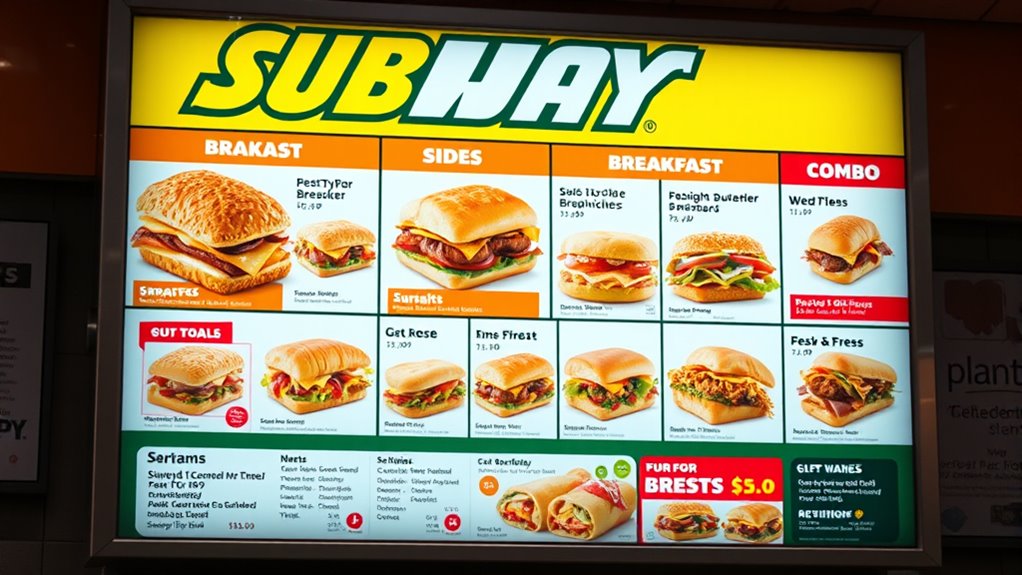
Subway breakfast sandwiches offer a convenient, customizable meal with options such as eggs, bacon, sausage, ham, and vegetables. You can choose a six-inch sandwich on your preferred bread, then add cheese, sauces, and fresh toppings.
Build a personalized six-inch breakfast sandwich with eggs, meats, cheese, sauces, and fresh vegetable toppings.
Prices vary by location, ingredients, and whether you order the sandwich alone or as a meal.
A breakfast meal typically includes a sandwich, a drink, and a side, such as hash browns. You’ll often save compared with purchasing each item separately, though participating restaurants set their own prices.
Check the local menu or app for current costs, availability, and limited-time offers.
Review the Nutritional Information before ordering if calories, sodium, protein, or allergens matter to you. You’ll find Dietary Options by selecting meat-free fillings, adjusting cheese and sauces, or choosing additional vegetables.
Since breakfast hours can differ by restaurant, confirm serving times before visiting. With simple substitutions, you can build a filling morning meal that matches your budget, appetite, and preferences.
Wraps and Salads: Prices and Alternatives
Wraps and salads give you lighter alternatives to a traditional sandwich, with prices that vary by location, ingredients, and portion size. You can usually choose popular fillings such as turkey, grilled chicken, ham, or steak, then add vegetables and dressing to match your preferences.
A wrap may cost about the same as a six-inch sub, while a salad’s price often reflects its protein and toppings. Check your local menu before ordering, since regional pricing and promotions can change the total.
For Healthy eating, a salad lets you emphasize vegetables and control heavier ingredients, while a wrap offers a convenient option when you want something handheld. Customization options make either choice flexible: you can request extra vegetables, skip cheese, select a lighter dressing, or adjust sauces.
Keep in mind that premium proteins and additional toppings may raise the price. If you’re comparing value, review portion sizes and ingredient costs rather than choosing by menu category alone.
Sides and Drinks: Add-On Costs and Combos
Sides and drinks can turn a sandwich order into a complete meal, but they’ll also increase the total. You can add chips, cookies, or a drink individually, or choose a meal deal that bundles a sandwich, side, and beverage for one price. Compare both options before ordering, because the combo may offer better value, especially when you want all three items.
Bottled water, fountain drinks, and specialty beverages often carry different prices. You’ll usually pay more for premium drinks, larger sizes, or extras such as flavored additions. If you’re watching calories, review Subway’s Nutritional information before selecting cookies, chips, or a sweetened beverage. A diet drink or water can keep your meal lighter.
Prices and availability depend on location, so check for Regional menu variations. Some restaurants feature local snacks, limited-time sides, or different combo pricing. You can confirm current costs on the Subway app, website, or in-store menu before finalizing your order.
Frequently Asked Questions
Does Subway Offer Gluten-Free Bread or Ingredient Options?
Yes, you can find some gluten-free options at select Subway locations, but availability varies. Subway has offered gluten-free bread in certain markets, though it’s not guaranteed at every restaurant.
You can also request ingredient substitutions, such as a salad instead of bread, and choose naturally gluten-free fillings, vegetables, cheese, and sauces.
Ask staff about current ingredients and cross-contact procedures, especially if you have celiac disease or a severe allergy.
Can I Customize My Sandwich With Different Toppings and Sauces?
Yes, you can build your sandwich like a canvas, layering flavors until every bite feels distinctively yours. With Custom sandwich options, you choose your bread, protein, cheese, vegetables, and preparation.
Topping and sauce customization lets you add or skip ingredients, then select sauces to match your taste. You can ask for extra, light, or separate sauces, though availability and added charges may vary by location.
Always confirm special requests when ordering.
What Allergens Are Present in Subway Menu Items?
You’ll find common allergens in Subway items, including wheat, gluten, milk, eggs, soy, sesame, and sometimes tree nuts or peanuts, depending on ingredients and suppliers. Check Subway’s current allergen guide before ordering, because recipes and availability can change.
Tell staff about your allergies, and ask them to change gloves and use clean equipment. Allergen cross contact remains possible. Consider hidden ingredient concerns in sauces, breads, meats, and dressings, too.
Does Subway Provide Vegetarian, Vegan, or Halal Choices?
You’ll find vegetarian choices at Subway, and many locations offer plant-based options, such as a meatless patty or veggie sandwich. Vegan availability varies because breads, sauces, and preparation practices differ, so you should check the local allergen guide and ask staff about cross-contact.
Halal-certified choices aren’t available everywhere; participating restaurants may offer halal meats. About 79% of Subway restaurants operate under franchise agreements, so menus and certifications can differ locally.
Are Subway Menu Prices Different by Location?
Yes, you’ll find that Subway prices can differ by location. Each franchise sets prices based on local labor costs, rent, ingredient expenses, taxes, and promotions.
You may notice Regional variations between cities, states, or countries, even for identical sandwiches and meal deals. While Subway encourages Pricing consistency across its restaurants, individual owners often adjust menus and prices.
Check your nearby restaurant’s menu, website, or ordering app before visiting to confirm current costs.
Conclusion
Whether you’re craving a footlong, a six-inch sub, breakfast, a wrap, or a salad, Subway gives you plenty of ways to customize your meal. Add chips and a drink, and you’ll have a complete combo—though that “budget-friendly” sandwich can quickly become a pricier feast.
Still, you can compare portions, prices, and specials before ordering. In the end, the best value isn’t always the biggest item; it’s the meal that satisfies you without emptying your wallet. Reviewing Subway menu items and prices can help you make the right choice.