
What Temp Should a Freezer Be Set To?
Finding the right freezer temperature can be frustrating. Food may develop freezer burn, ice cream can turn rock-hard, or you may worry that items aren’t staying safe. You’re not alone—many people struggle to balance food quality, safety, and energy use, so choosing the right freezer thermometer or control setting can make a real difference.
Set your freezer to −18°C (0°F); that temperature keeps food safe, slows microbial and enzyme activity, prevents large ice crystals, and minimizes freezer burn while balancing energy use.
Put a thermometer in the center, wait an hour, and adjust the dial or digital control as needed, then let it stabilize. Don’t overfill, keep vents clear, and defrost when frost exceeds about 1/4 inch.
Keep going for practical checks, storage tips, and troubleshooting steps.
Key Takeaways
- Set your freezer to 0°F (-18°C) to keep food safe, preserve quality, and prevent bacterial growth.
- Use a reliable thermometer in the center and adjust controls until it reads 0°F (-18°C).
- After any adjustment, wait 24 hours for the temperature to stabilize before rechecking.
- Avoid overpacking and blocking vents so cold air circulates evenly and temperatures stay consistent.
- Defrost when frost exceeds 1/4 inch, clean coils annually, and call a technician for persistent temperature issues.
Ideal Freezer Temperature: -18°C (0°F)
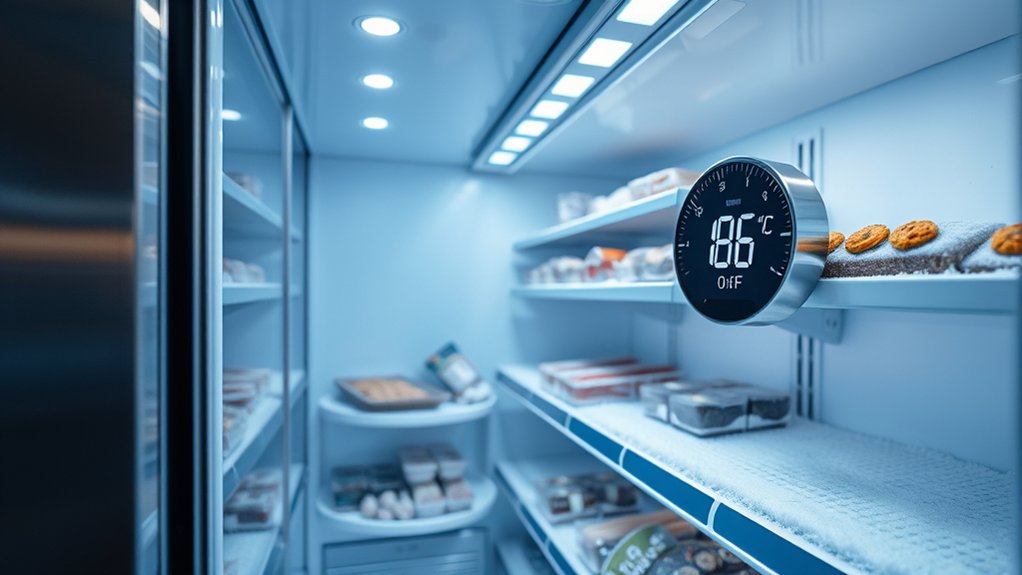
Although some freezers run colder or warmer, you should set yours to -18°C (0°F) to keep food safe and maintain quality. You’ll find that this temperature balances safety and texture across most items, from meats to prepared meals.
Set your freezer to −18°C (0°F) for safe, well-preserved food—ideal for meats and prepared meals.
For effective food storage, monitor the dial or digital display and use a thermometer to confirm the setting, especially after loading fresh groceries. You should avoid frequent, wide fluctuations; consistent Temperature regulation prevents freezer burn and preserves nutrients.
When organizing shelves, put newer items behind older ones so you use stock rotation and reduce time spent with the door open.
If your unit doesn’t hold -18°C under load, check door seals, defrost coils, and ventilation paths, and don’t overload it.
With routine checks and sensible loading you’ll maintain stable cold, minimize waste, and keep flavors and textures closer to what you expect when you thaw and cook.
Why -18°C (0°F) Keeps Food Safe and Fresh

Because -18°C (0°F) slows microbial growth and halts enzymatic reactions that spoil food, keeping texture and nutrients intact while preventing most pathogens from reproducing, you can store meats, prepared dishes, and produce safely for extended periods. At that temperature, ice crystals form slowly enough to limit cell rupture, so meats retain juiciness and produce stays firmer than in colder, more crystal-damaging conditions.
You’ll also preserve flavor compounds and vitamins better because chemical reactions are effectively paused. For frozen desserts, consistent -18°C prevents texture degradation and ice crystal enlargement that cause graininess.
That’s why maintaining proper climate control in your freezer matters: temperature swings accelerate spoilage and ruin sensitive items. You don’t need commercial blast freezing to get long shelf life; you do need stable conditions and sensible packaging to prevent freezer burn.
How to Check Your Freezer Temperature Quickly

If you want to be sure your food’s staying safe, check the freezer temperature with a quick, simple method: place a refrigerator/freezer thermometer in the center of the compartment, close the door, wait an hour (or longer for a full freezer), then read the display—aim for -18°C (0°F). You’ll get a reliable reading fast, and doing this periodically helps with temperature calibration so you know the gauge matches reality.
Don’t rely on door dials or guesswork. Those lead to common freezer myths like “colder is always better” or “if it feels cold, it’s cold enough.”
If the thermometer reads warmer than -18°C (0°F), confirm after several hours or when the unit’s been idle, then consider servicing.
For quick checks after power outages or grocery runs, repeat the same thermometer placement and timing. Small, regular checks keep food safe and prevent surprises without complicated tools.
How to Adjust Settings on Common Freezer Types
Want to change your freezer’s temperature but not sure where to start? First, identify the type: top-freezer, bottom-freezer, chest, or upright. For top- and bottom-freezers, locate the dial or digital control inside the fridge compartment or near the temp display; turn the dial one notch toward colder or use the digital arrows in small increments and wait 24 hours to stabilize.
Chest freezers usually have a thermostat knob inside. Move it slowly and let the unit run overnight. Upright freezers often provide a digital panel on the door; adjust in 1°F or 1°C steps and monitor with a thermometer.
Keep freezer organization tight but not packed so air can circulate. Avoid blocking vents after adjusting settings. If temperatures seem off, perform temperature calibration: compare an appliance thermometer to the displayed reading and follow the owner’s manual to recalibrate or contact service.
Regular checks ensure accurate cold and preserve food quality.
Set Temperatures for Meat, Fish, Vegetables, and Ice Cream
When you set your freezer for different foods, aim for a balance that keeps meat and fish safely frozen, preserves vegetables’ texture, and maintains ice cream’s scoopable consistency. You’ll typically keep a household freezer at around -18°C (0°F), but you can fine-tune zones: store meat and fish where temperature calibration shows the coldest readings, usually lower shelves or the back, so they stay solid.
Put vegetables in crisper-style bins or upper drawers to reduce freezer burn and retain texture. Keep ice cream near the door or a slightly warmer shelf to avoid rock-hard scoops while still frozen.
Practice good freezer organization: group like items, label packages with dates, and avoid overpacking so air circulates. Use a reliable thermometer after any setting change to confirm your calibration.
Small adjustments plus consistent monitoring help you tailor the freezer to different items without compromising quality or convenience.
How Freezer Temperature Affects Food Safety & Quality
Although freezing doesn’t sterilize food, it sharply slows the growth of bacteria, yeasts, and molds so your food stays safe much longer; you still need to keep it at the right temperature to preserve quality.
At 0°F (-18°C), enzymatic activity and microbial replication are fundamentally halted, so meats, fish, and prepared meals retain safety and texture for months.
Higher temperatures let ice crystals grow and re-crystallize, damaging cell structure and causing dry, tough, or mushy results when thawed.
Proper freezing also protects flavors and nutrients, so you won’t lose the character of heirloom produce or delicate seafood.
Consider how historical freezing methods and cultural preservation relied on cold storage, salting, or drying to extend edibility. Modern freezers give you consistent, controllable conditions those methods couldn’t.
Label packages, avoid partial freezes, and maintain steady setpoints to keep food both safe and palatable without relying on guesswork.
Signs Your Freezer Is Too Warm or Too Cold : Quick Fixes
If your freezer is running too warm, you may notice soft spots on frozen food, excess frost, or an internal temperature that’s higher than normal. On the other hand, if it’s too cold, your food may be completely encased in ice, and frost can build up on the walls and shelves. Let’s go over a few quick fixes to help restore the right temperature fast.
Freezer Running Warm
Noticing frost melting, soft ice, or food that’s thawed when it shouldn’t be? You’ll want to check the freezer insulation and door seal integrity first. Poor insulation or a warped seal lets cold leak out and warm air in, forcing the compressor to overwork.
Feel around the gasket for cracks, and run a dollar-bill test: if it slips out easily, the seal’s failing. Keep vents clear, don’t overload the compartment, and avoid leaving the door open too long.
Clean condenser coils and ensure the unit sits level with adequate airflow. If the temperature still reads above 0°F (-18°C) after these steps, reset the thermostat and monitor.
Call a technician if problems persist, especially if the compressor cycles oddly.
Freezer Freezing Too Much
Once you’ve ruled out insulation and seal problems, check for the opposite issue: a freezer that’s freezing too much. You’ll notice excess frost, overly hard items, or freezer-burned food.
That often signals a thermostat problem or a freezer malfunction causing temperature fluctuations. Don’t ignore sudden drops.
| Symptom | Likely Cause |
|---|---|
| Heavy frost buildup | Faulty defrost timer |
| Ice-coated items | Stuck relay or overactive compressor |
| Food too hard | Wrong thermostat calibration |
| Cycles too short/long | Electronic control issues |
Quick fixes: reset the thermostat to recommended −18°C (0°F), defrost fully, and clean condenser coils.
If temperature fluctuations persist, test the thermostat and relay, then call a technician. Address the issue promptly to avoid wasted food and higher energy bills.
Freezer Temperature and Energy: Balance Cold vs. Cost
You can save energy by keeping your freezer at the recommended temperature: about 0°F (-18°C). A few simple habits can help lower costs without compromising food safety. Avoid overfilling the freezer, seal any gaps around the door, and defrost it when ice buildup becomes excessive. Together, these practical steps help you balance reliable cooling with efficient energy use.
Optimal Freezer Temperature
How cold should your freezer be to keep food safe without wasting energy? Aim for 0°F (-18°C); that’s the sweet spot that stops bacterial growth and limits ice crystal formation that damages texture.
You’ll want to check the built-in thermostat with a thermometer because older units and poor freezer insulation can cause temperature swings. Set it, then monitor for a day or two to confirm stability in different compartments.
Keep airflow unobstructed and avoid packing it so tightly that cold can’t circulate; uneven temperatures lead to more thaw-refreeze cycles.
If you frequently store delicate items, a slightly colder setting can help, but beware of unnecessary energy use. Maintain seals and defrost when needed to preserve efficiency.
Energy-Saving Temperature Tips
Keeping your freezer at 0°F (-18°C) is a good baseline, but you can shave energy costs without risking food safety by fine-tuning a few habits. Start by minimizing door openings. Plan what you’ll grab so cold air stays in.
Keep the freezer reasonably full. Stored containers and frozen desserts act as thermal mass and cut compressor cycles.
Defrost manual freezers when frost exceeds 1/4 inch to avoid reduced efficiency and ice crystal formation on foods.
Check door seals for gaps and replace them if light slips through. Set temperature controls to the recommended range, not colder than needed.
Clean condenser coils annually and avoid placing the unit near heat sources. Small tweaks lower bills without harming food quality.
Habits to Keep Freezer Temperature Steady
Although it’s easy to ignore, simple habits make a big difference in keeping your freezer temperature steady: close the door quickly, avoid overstuffing the unit, and place hot items in the fridge to cool first. You should organize contents so air can circulate, group similar items together, and use clear labels to reduce how long the door stays open.
Schedule regular freezer maintenance routines like defrosting manual models, cleaning coils, and checking door seals. These steps prevent temperature drift and improve efficiency.
Track seasonal temperature adjustments by slightly lowering settings in hot months and checking performance after large seasonal food hauls. Keep a thermometer inside to verify the thermostat and respond quickly if readings shift.
Don’t cram new groceries into a full freezer—space matters. By forming these simple habits and keeping a short checklist for upkeep, you’ll avoid temperature fluctuations, preserve food quality, and extend your appliance’s life without expensive fixes.
When to Call a Technician: Temperature Problems That Need Repair
Those everyday habits will prevent most temperature hiccups, but some cooling issues mean you should call a technician.
If your freezer won’t reach the correct temperature after basic troubleshooting steps, like checking seals, clearing vents, and confirming settings, you shouldn’t delay.
Persistent frost buildup, loud or unusual noises, or a sudden rise in internal temperature can signal compressor, refrigerant, or thermostat failure. These common causes need professional diagnosis.
| Symptom | Likely issue |
|---|---|
| Freezer too warm despite settings | Compressor or refrigerant leak |
| Excessive frost or cycling | Defrost system or thermostat fault |
| Loud humming or clicking | Motor or relay problems |
Before calling, document temperature readings, recent troubleshooting steps, and how long the problem’s persisted. That information can speed repairs and help avoid unnecessary service calls.
You’ll save food and money by contacting a qualified technician when you notice persistent temperature variance, repeated error behavior, or safety concerns such as leaking fluids or electrical smells.
Frequently Asked Questions
Can Storing Warm Food Raise Freezer Temperature Significantly?
Yes, storing warm food can raise your freezer’s temperature temporarily, but it usually won’t cause long-term harm if you act quickly. You’ll risk food safety if the internal temperature climbs above safe levels for an extended period.
To prevent issues, cool food before freezing, avoid overloading the freezer, and perform regular temperature calibration so your thermostat reads accurately. That keeps frozen items safe and your freezer working efficiently.
Does Freezer Location (Garage Vs Kitchen) Change Ideal Settings?
Yes, freezer placement matters: think of your garage as a fickle friend. You’ll need different settings because ambient temperatures affect temperature accuracy.
In a kitchen, your unit stays closer to designed conditions, so standard settings work and you’ll get reliable temperature accuracy.
In a garage, temperature extremes can force the compressor to work harder or fail to engage. Monitor the freezer, adjust the thermostat slightly colder, and consider an insulated enclosure or a model rated for outdoor use.
How Does Frequent Door Opening Affect Long-Term Freezer Performance?
Frequent door opening increases energy consumption and makes your freezer work harder, which shortens component life and raises utility bills. You’ll let warm, moist air in, causing frost buildup that forces the compressor to run more often.
To limit damage, open the door quickly, organize items so you can grab things fast, and avoid leaving it ajar. Consider a frost-free model or auto-close hinges to reduce wear over time.
Are Chest Freezers Better for Power Outages Than Upright Freezers?
Yes, chest freezers usually fare better in outages. Imagine a cold cave holding its chill; you’ll lose less energy, and food stays frozen longer.
You’ll benefit from greater energy efficiency because cold air stays trapped, and less frost buildup forms with stable temperatures. Uprights leak cold when opened more often, so they warm faster.
For outages, keep lids closed, pack contents tightly, and monitor thaw times.
Can Freezer-Safe Packaging Influence Temperature Consistency?
Yes, freezer-safe packaging affects temperature stability by preserving packaging integrity and reducing air exchange. If you wrap items tightly in durable, insulated materials, you’ll limit moisture loss and cold spots, helping the freezer hold steady.
Poor or compromised packaging lets cold escape and warm pockets form, forcing the appliance to cycle more. You should check seals, use rigid containers or vacuum bags, and avoid overpacking to maintain consistent temperatures.
Conclusion
Aim for −18°C (0°F): it’s cold enough to stop bacterial growth but not so cold your energy bill soars. Check with a thermometer and tweak the dial—upright, chest, or fridge-freezer—until readings match.
Separate settings for meat, fish, veggies and ice cream keep texture and taste intact. If frost builds fast or temperatures swing wildly, troubleshoot seals and vents or call a technician.
Keep routines steady; small habits prevent big problems. For the best results, maintain the recommended freezer temperature of −18°C (0°F).