
5 Benefits of Electric Stove Top Vs Induction Cooktops
Choosing between an electric stovetop and an induction cooktop can feel overwhelming, especially when you’re trying to balance cost, convenience, and cooking performance. You’re not alone—many people struggle to know which option best fits their kitchen and budget.
If you want to save money and avoid hassles, an electric stovetop is often the smarter pick: it costs less to buy and install, and replacement parts are cheaper. You can use virtually any cookware, including aluminum, copper, glass or non-magnetic stainless, so you won’t need new pots.
Electric coils and radiant surfaces provide steady, forgiving low heat for simmering, and repairs are simpler and more DIY-friendly. Keep reading for practical tips and comparisons to help you decide between electric stovetops and induction cooktops.
Key Takeaways
- Lower upfront cost for purchase and installation makes electric stoves more budget-friendly than induction units.
- Works with nearly any cookware—no magnetic compatibility or adapters needed.
- Provides steady, forgiving heat ideal for simmering and slow cooking.
- Simpler parts and electronics mean easier, cheaper repairs and DIY maintenance.
- Readily available replacement coils and components reduce long-term service costs.
Quick Decision: When to Pick Electric Stoves Over Induction
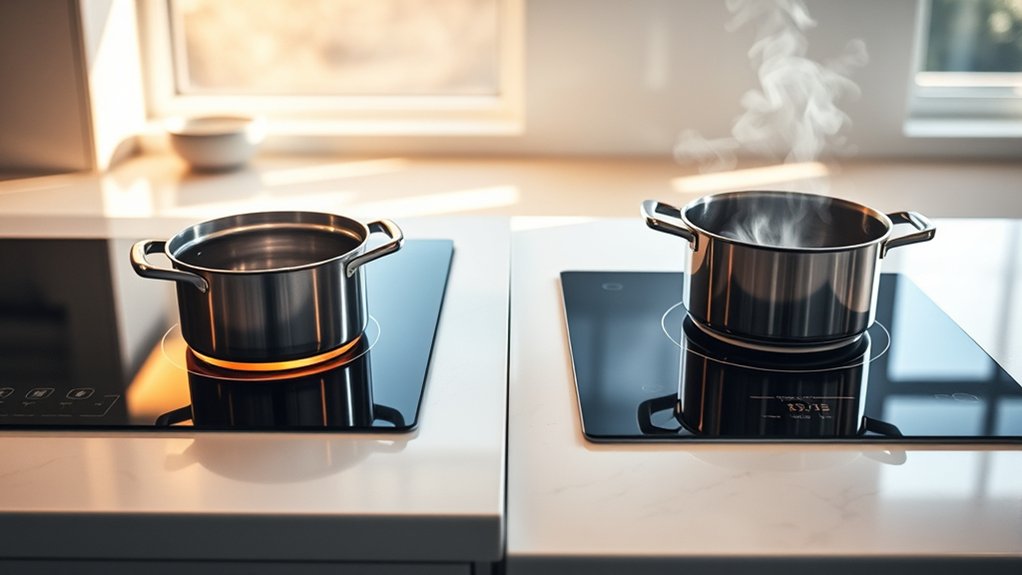
If you want a reliable, budget-friendly cooktop that works with any cookware and requires little change to your routine, choose an electric stove. You’ll pick it when you value straightforward operation and broad compatibility. Cast iron, copper, and aluminum all work without adapters.
You’ll appreciate steady, predictable heat for simmering and baking tasks where sudden power changes would disrupt results. Energy efficiency matters, but you’ll accept slightly higher transfer losses for the convenience and lower installation cost.
Safety considerations are clear: electric coils and smooth-top elements stay hot after use, so you’ll use indicators and good habits to avoid burns. Choose electric if you rent, use many pan types, or don’t need instant heat shifts that induction provides.
It’s also smart when you want fewer electrical upgrades or prefer repairs that local technicians can handle. In short, pick electric for compatibility, ease, and practical everyday cooking.
Lower Upfront Cost vs Induction

You’ll often choose an electric stove because it saves money up front compared with induction, and that cost gap is one of the clearest practical differences between the two technologies. If your budget is tight, an electric cooktop or coil range gets you cooking for less: lower purchase price, simpler installation, and cheaper replacement parts.
You’ll spend more on an induction unit, partly because of the sophisticated electronics and tighter manufacturing tolerances. That higher induction price can be offset over time by better energy efficiency and advanced Safety features, but the break-even point depends on how often you cook and local energy rates.
You should weigh upfront savings against potential long-term gains. If you move frequently or want minimal initial expense, electric wins. If you plan to stay long-term and prioritize efficiency and safer, cooler surfaces, investing in induction could make sense despite the higher initial outlay.
Electric Stoves Work With More Cookware (No Magnetic Pots Needed)

Because electric cooktops heat with radiant elements or coils rather than magnetic fields, they work with virtually any pot or pan you already own. You won’t need to check cookware compatibility or worry about magnetic requirements before cooking.
That means aluminum, copper, glass, ceramic, and older non-magnetic stainless steel all perform fine on electric elements. You can use specialty pieces, such as woks, griddles, or delicate enameled cookware, without buying new magnetic pots.
Below is a quick reference to show what works and why:
| Cookware Type | Works on Electric? |
|---|---|
| Aluminum | Yes, it heats directly from a coil or radiant plate |
| Copper | Yes, it’s an excellent conductor and has no magnetic requirements |
| Glass/Ceramic | Yes, but it’s safe and has a slower heat response |
| Magnetic Stainless/Cast Iron | Yes, it also works on induction, but magnetism isn’t required |
If you value flexibility and don’t want to replace your collection, electric stoves give you broad compatibility. You can prioritize the pans you like instead of chasing magnetic compatibility.
Better Low‑Heat Simmering and Steady Slow Cooking Than Many Induction Models
While induction reacts almost instantly to changes, electric stovetops hold heat longer and give you a gentler, more forgiving low flame for simmering and slow cooking, so you can maintain steady temperatures without constant adjustments. You’ll find that the residual heat from coils or radiants smooths out tiny thermostat swings, so delicate sauces and stews won’t seize or boil over when a sensor overshoots. That predictable thermal inertia simplifies temperature control when you need prolonged, even heat.
You’ll also appreciate that maintaining a low, steady setting often uses less power than repeatedly cycling between high and low. In practical use, your energy efficiency can be competitive, especially during long braises. Because you’re not constantly babysitting knobs or compensating for rapid shifts, you can focus on timing and seasoning.
For many home cooks who favor slow, attentive techniques, electric stovetops offer a reliably calm, controlled environment. They support consistent results without fuss.
Easier, Cheaper Repairs and Long‑Term Maintenance
If you value straightforward fixes and lower upkeep costs, electric stovetops are hard to beat. Their components—coils, switches, and glass-ceramic elements—are simpler and more standardized than induction’s specialized electronics, so parts are cheaper and many repairs are DIY-friendly or handled by general appliance technicians.
You’ll spend less on diagnostics and replacement modules, and you won’t need a specialist for most faults. That practicality pairs well with vintage appeal or modern design needs, since you can maintain or swap parts without altering your aesthetic versatility.
- Replaceable coils or elements: readily available and cheap.
- Simple thermostats and switches: easy troubleshooting with basic tools.
- Fewer electronic controls: lower failure rates over time.
- Glass-ceramic surface repairs: regional technicians can restore chips or scratches.
You’ll appreciate predictable service costs, longer intervals between major failures, and easier sourcing of parts for older units. That makes electric stovetops a sensible long-term choice.
Frequently Asked Questions
Are Electric Stovetops Less Energy Efficient Than Induction Cooktops?
Yes, electric stovetops are generally less energy efficient than induction cooktops. You’ll waste more energy because electric coils or smooth-tops heat cookware indirectly, losing some heat to the surrounding air.
Induction transfers energy directly to compatible pans through magnetic fields, heating them faster and with less waste. When efficiency matters, induction usually outperforms conventional electric models.
Do Electric Stoves Pose a Higher Fire Risk Than Induction?
Worried about kitchen fires? You’re more likely to face higher fire risk with electric stoves than induction because coils stay hot and can ignite nearby items. You’ll also deal with greater electrical hazards from exposed elements and faulty wiring.
Induction only heats the pan, reducing accidental burns and stray ignition. You should still follow fire safety steps: keep flammables away, check cords, and install detectors to stay safe.
How Do Cooking Times Compare Between Electric and Induction?
Induction cooks faster; you’ll notice superior cooking speed and quicker boil times. You’ll get near-instant heat responsiveness when you change settings, so foods reach and maintain target temperatures with less lag.
Electric stoves heat slower and hold residual heat longer, so you’ll adjust earlier and wait more. For precise, speedy results, especially boiling or searing, induction usually saves you time and gives tighter control over temperature changes.
Can Electric Stoves Interfere With Kitchen Ventilation or Smoke Alarms?
Yes, electric stoves can contribute to kitchen fumes and may trigger smoke alarms if ventilation is poor or cooking produces heavy smoke. Use a range hood or open windows, clean grease buildup, and position alarms according to code to avoid nuisance alarms.
Proper ventilation reduces airborne particles and heat that can set off detectors, helping prevent false alarms and maintain safer indoor air while cooking.
Are There Environmental Differences in Manufacturing or Disposal Impacts?
Think of a smoldering factory chimney: you’ll see manufacturing emissions from both types, but induction needs rare metals, raising mining impacts.
You’ll also face disposal recyclability differences: electric coils are simpler to recycle, while induction’s electronics and magnets complicate recovery.
You’ll reduce your footprint by choosing durable models, looking for recyclers, and favoring repairable designs.
You’ll weigh upfront emissions against end-of-life recyclability when deciding what to buy.
Conclusion
So which should you choose: electric or induction? If you want a lower upfront cost, cookware freedom, gentler low-heat control, and cheaper repairs, electric stoves make a lot of sense.
You’ll skip magnet-only pots, get steadier simmers for delicate sauces, and avoid pricey electronic fixes. If those practical benefits matter more than top-tier efficiency and speed, choose an electric stove top over induction.
You’ll save money and hassle without sacrificing everyday cooking performance.