
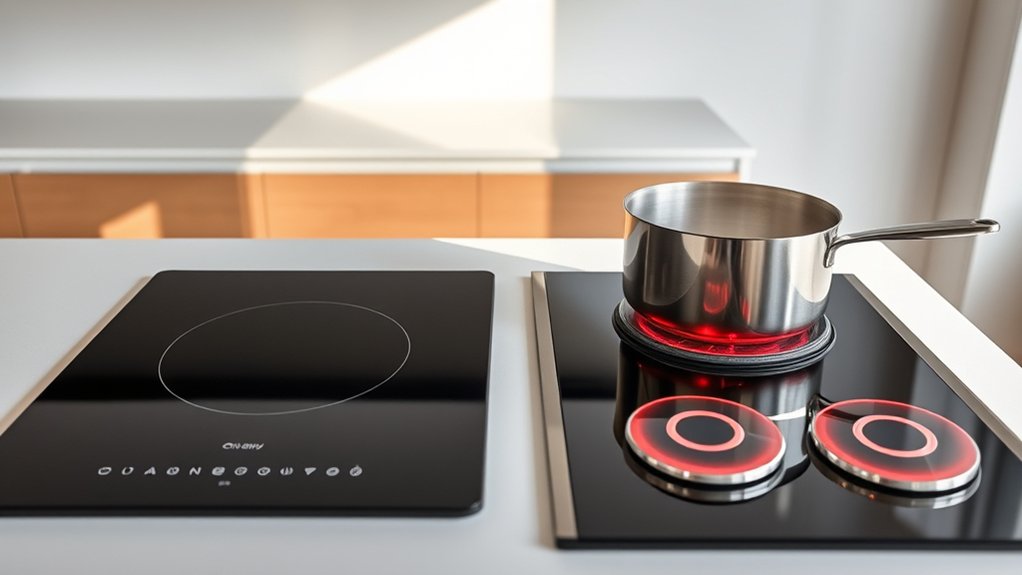
Induction Stove Versus Electric: Three Key Differences
Choosing between an induction stove and an electric cooktop can be frustrating, especially when you want faster cooking, better control, and lower energy use. You’re not alone—many home cooks struggle to know which option fits their kitchen and daily habits.
You’ll notice three big differences: heat method, speed/control, and efficiency. Induction uses magnetic fields to heat the pan directly, so it reacts almost instantly and keeps the cooktop cooler.
Electric coils or glass tops heat the surface first, so they’re slower and hold more residual heat. Induction gives finer temperature control and usually lower energy use, though it needs ferrous cookware and costlier installation.
Keep going to see which fits your kitchen and habits.
Key Takeaways
- Heating method: induction uses magnetic fields to heat cookware directly, while electric heats the cooktop surface first then transfers heat to the pan.
- Response and control: induction provides near-instant temperature changes and precise control; electric responds slower with lingering residual heat.
- Energy efficiency: induction transfers energy more efficiently to food, typically using less electricity than electric cooktops for same tasks.
- Cookware compatibility: induction requires ferrous (magnetic) cookware; electric works with virtually any pot or pan material.
- Safety and surface heat: induction cooktops stay cooler with lower burn risk and automatic shutoff; electric surfaces retain high residual heat after use.
Who This Guide Is For (And How to Use It)
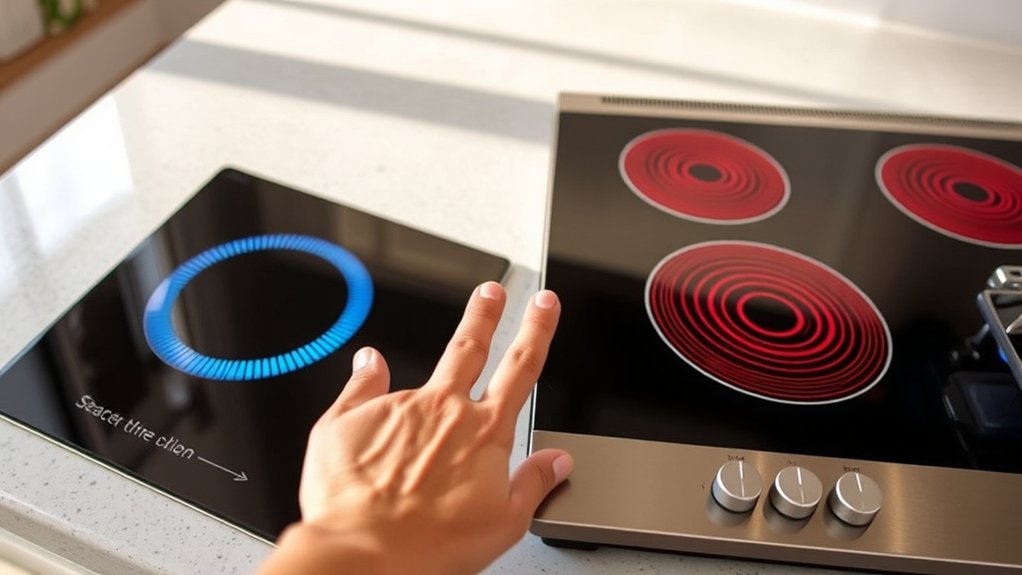
Whether you’re comparing cooktops before a kitchen remodel or deciding whether to replace a failing range, this guide helps you weigh induction and traditional electric options. You’ll find concise comparisons if you’re a homeowner balancing budget, cooking habits, and long-term efficiency.
You’ll also get practical context whether you hire a contractor or DIY the swap. Focus sections highlight performance, safety, and the user interface differences that affect daily use.
Don’t skip the parts on cookware compatibility and installation constraints. They directly shape cost and convenience.
If aesthetic appeal matters, we point out design choices that blend with cabinetry and ventilation. You’ll learn which questions to ask salespeople and installers, plus quick checks to confirm electrical capacity.
Use the guide to narrow choices, create a short shopping list, and prepare for installation day. It’s aimed at people who want to make a confident, efficient decision without wading through technical overload.
Quick Verdict: Pick Induction Or Electric (TL;DR)

If you want the fastest, most energy-efficient cooktop with the best temperature control, go with induction. If budget, simple compatibility, or a matching look with existing electric appliances matter more, stick with traditional electric.
You’ll prefer induction when speed, precise simmering, and safer surfaces matter, and you don’t mind buying compatible cookware or paying more up front. Choose electric if you want lower initial cost, full cookware freedom, and a familiar heating method that often blends with your kitchen’s design aesthetics.
Also weigh service and brand reputation. A trusted induction maker can reduce headaches, while well-known electric brands offer wide support and spare parts.
Think about how long you’ll keep the appliance, how often you cook, and whether resale value or energy savings matter. In short, pick induction for performance and efficiency; pick electric for simplicity, lower entry cost, and visual continuity with other appliances.
How Induction Vs Electric Actually Heat Pans
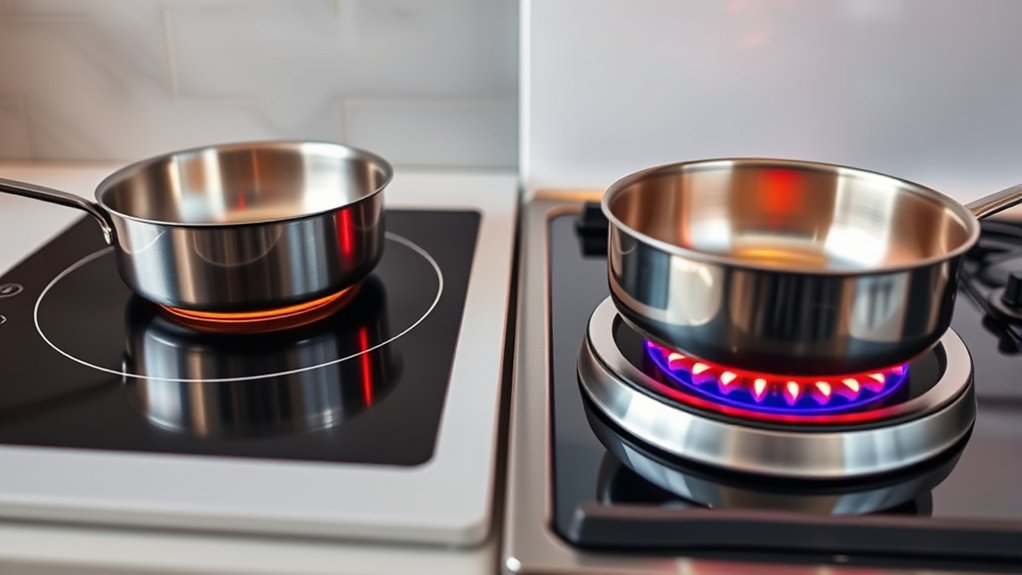
Because they use different physics, induction and electric cooktops heat pans in completely different ways: induction creates a magnetic field that induces electric currents directly in ferrous cookware so the pan itself becomes the heater, while electric coils or radiant elements heat by conduction and radiation, warming the cooktop surface first and then transferring that heat into the pan.
You’ll notice induction’s power transfer is more direct. The energy jumps into the metal, and you feel the pan heat almost instantly, with minimal wasted heat around the cooktop.
Electric surfaces rely on the element-to-pan contact, so uneven bottoms or poor contact reduce efficiency and slow response. Heat distribution differs too: induction tends to concentrate warmth where the magnetic field and ferrous metal meet, giving even, localized heating.
Electric elements spread heat across the plate and then into the pan, which can create hotspots or lag in temperature change. Your choice affects efficiency and how predictably pans warm.
Cooking Performance: Speed, Control, And Simmering
When you need rapid heat or precise adjustments, induction wins hands down: it heats pans almost instantly and responds the moment you dial temperature up or down, while traditional electric elements lag and keep releasing residual heat after you cut power.
You’ll notice that on induction you can sear, stir-fry, or reduce sauces with immediate feedback, which lets you refine cooking techniques and achieve consistent results.
Electric cooktops can still do steady simmering, but you’ll be compensating for delayed response and occasional overshoot.
For delicate tasks like melting chocolate or keeping stocks barely bubbling, induction’s fine control prevents scorching and preserves subtle aromatics.
Because you control temperature precisely, you can layer flavors more predictably and get better flavor amplification from caramelization and timed reductions.
If you value speed for high-heat methods and subtlety for low-heat finishes, induction gives you sharper control. If you mainly need long, even holds without rapid changes, electric remains serviceable, though less responsive.
Energy Efficiency And Operating Costs (Real Savings)
When comparing induction and electric stoves, start with energy efficiency. Induction transfers more energy directly to the pan, so less heat is wasted. That usually means lower electricity use and potentially smaller bills over time.
Of course, operating costs aren’t the whole story. The appliance’s purchase price, maintenance needs, and lifespan also affect your total savings. Let’s look at how efficiency can translate into real savings over time.
Energy Conversion Efficiency
How much of the electricity you pay for actually turns into cooking heat? You’ll notice induction excels at energy transfer because it creates heat directly in the pan via magnetic fields, so less energy is lost to the cooktop or air.
Electric coil or ceramic elements heat the element first, then the pan, so more energy dissipates before reaching food. That difference matters when you want efficient, responsive cooking: induction raises and lowers temperatures faster with less wasted electricity.
Heat retention in cookware also affects results. Heavy, well-fitted pans keep heat steady on either stove, but induction’s direct heating means you’ll need less input to maintain temperatures.
In short, induction converts a higher share of electricity into usable cooking heat.
Long-Term Operating Costs
Because induction turns a larger share of electricity into direct pan heat, you’ll typically pay less to run an induction cooktop than an electric coil or ceramic range for the same cooking habits. Over years, lower energy consumption means real savings: shorter cook times and reduced standby losses cut your monthly bills.
When you do a cost analysis, factor initial purchase and compatible cookware against lower operating expenses and potential rebates. Maintenance and repair costs for induction units tend to be comparable or lower because there are fewer heating elements subject to wear.
If you cook frequently, the cumulative difference becomes significant; occasional cooks will see smaller gains. Run simple comparisons using your local electricity rate, typical usage hours, and appliance lifespans to decide what saves you most.
Safety: Surface Heat, Burn Risk, And Child Safety
Induction cooktops usually stay cooler than traditional electric cooktops because they heat the pan directly rather than the glass surface. This can help reduce the risk of burns, but the cooktop may still be hot after cooking.
Always check the residual heat indicators on either type before touching the surface. If you have children, use stove locks, turn pan handles inward, and teach them to stay in designated safe areas around the cooktop.
Surface Temperature Differences
When you’re deciding between an induction and a traditional electric cooktop, surface temperature and burn risk should be top of mind: induction stovetops heat the cookware directly so their surrounding glass or metal stays much cooler, while electric coil or radiant elements leave the surface hot long after you turn them off, increasing the chance of accidental burns, especially for kids who might touch the surface or reach across the stove.
You’ll notice induction’s lower surface temperature reduces immediate burn risk because most heat is confined to the pan. Any warmth on the cooktop comes from residual contact. With electric, uneven heat distribution means hot spots persist across the surface, raising the likelihood of unnoticed burns.
Choose induction if minimizing exposed hot surfaces and unpredictable heat distribution matters to your household safety.
Residual Heat Indicators
Surface temperature differences lead naturally to thinking about residual heat indicators: these are the lights or displays that tell you a cooktop is still hot after you remove a pan.
You’ll notice induction often shows minimal residual heat because the surface cools quickly, while traditional electric coils or radiant tops retain heat longer.
Residual heat and safety indicators help you judge burn risk and avoid accidents.
| Feature | What it means |
|---|---|
| Indicator type | Light, icon, or display |
| Induction behavior | Shorter residual heat |
| Electric behavior | Longer residual heat |
| Safety impact | Faster safe handling with induction |
| User tip | Always heed safety indicators before touching |
Child Safety Precautions
How close do curious little hands get to your cooktop while you’re cooking? You’ll prefer induction if safety’s a priority: its surface stays cooler because heat’s induced only in the pan, reducing burn risk for small explorers. Still, you shouldn’t be complacent. Hot pans and residual heat can hurt.
Install childproof locks and use safety barriers to keep toddlers from reaching controls and cookware. Teach older kids that glass-ceramic electric surfaces can stay dangerously hot long after use, and point out residual heat indicators if present.
Position handles inward, secure hot liquids, and never leave cooking unattended. Regularly test locks and barriers so they work when needed. These steps cut incidents and give you more peace of mind while cooking.
Cookware Compatibility: Which Pots Work And What To Replace
Although many of your favorite pans will work on both electric and induction ranges, induction needs cookware with a magnetic base. You’ll have to check which pots are compatible and which to replace.
Test current pieces with a magnet: if it sticks to the bottom, it’ll work. Cast iron and most stainless steel with iron content perform well. Aluminum, copper, and some smooth stainless won’t unless they have a ferrous layer.
Check cookware with a magnet—if it clings, it’s induction-ready; cast iron and iron-containing stainless steel work well.
Consider cookware durability and aesthetic appeal when replacing. Heavy-gauge stainless or enameled cast iron lasts, resists warping on glass electric tops, and looks good on open shelves.
Choose induction-ready sets or individual pieces that match your cooking style, such as sauté pans, stockpots, and skillets you use most. Prioritize a flat, thick base for even heat and to avoid hot spots.
You don’t need to replace everything at once. Buy selectively and reuse compatible items until you’ve built a balanced, efficient collection.
Installation, Maintenance, And Repair Differences
Once you’ve sorted which pots to keep, you’ll notice installation and upkeep differ quite a bit between induction and traditional electric ranges. You’ll often face greater installation complexity with induction because it may demand a dedicated power supply or a higher-amp circuit; you should check your home’s wiring and breaker capacity before buying. Electric coil or smooth-top ranges usually fit existing 240V circuits with fewer surprises.
For maintenance, induction surfaces resist stains and are easier to wipe, but you’ll want to avoid abrasive cleaners to protect the glass. Traditional electric tops can show scorch marks and require more frequent scrubbing of burners and drip pans.
Repairs differ too: induction units rely on electronics and sensors, so component-level fixes often need certified technicians. Diagnosing power supply or control board issues can be pricier.
With electric ranges, heating elements and switches are simpler and cheaper to replace. Many repairs are DIY-friendly if you’re comfortable with basic parts swapping.
Price, Lifespan, And Resale Value Over Time
Induction tops usually cost more upfront than traditional electric ranges, so consider how that fits your budget. Both types can last a decade or more with proper care, although specific components and warranty coverage may affect the overall value. Also, think about how the higher initial cost and modern appeal of induction could influence resale value if you plan to upgrade or sell later.
Purchase Price Comparison
Curious which option gives you more value up front and over time? You’ll notice induction units often carry higher upfront prices, but cost comparison should include features, cooktop size, and market availability.
Induction models can be pricier but are increasingly common. Electric coil and smooth-top ranges start lower, making them easier on your wallet initially.
| Feature | Induction | Electric |
|---|---|---|
| Average purchase price | Higher | Lower |
| Typical resale appeal | Growing | Stable |
| Availability in market | Expanding | Widely available |
Consider resale value: induction’s efficiency and modern appeal can raise trade-in worth, while electric’s lower entry cost keeps it competitive.
Choose based on budget, long-term plans, and how often you’ll sell or upgrade.
Expected Operational Lifespan
While induction ranges often cost more up front, they tend to hold up well and can deliver lower operating expenses over their usable life. Weigh replacement frequency and energy savings when estimating long-term value.
You’ll notice a clear durability comparison: induction cooktops have fewer mechanical parts and solid-state electronics, while traditional electric coils and radiant elements endure thermal cycling and physical wear.
Consider material longevity too. Glass-ceramic tops resist heat but scratch differently than metal coil housings, and internal component quality affects service intervals.
If you prefer minimal maintenance, choose a model with robust components and a good warranty. Track expected lifespans, often 10–15 years for induction and similarly long for quality electric models, and factor repair costs into your purchase decision.
Long-Term Resale Value
Having weighed lifespan and maintenance costs, you should also consider how each range holds value over time.
Induction units often command higher initial prices but retain value better because resale market trends favor energy-efficient, modern technology. Buyers who prioritize speed, safety, and contemporary kitchens tend to favor induction, which can boost resale appeal.
Conventional electric coils or smooth-top electric cooktops are cheaper to replace but typically depreciate faster. They may appeal more to budget-minded buyers or buyers of older homes.
When estimating long-term price recovery, consider appliance condition, service history, and local demand.
If you plan to sell within a few years, induction may improve your home’s perceived value. If you’re holding on to the property long-term, replacement cost and repairability may matter more.
Decision Checklist: Which Stove Fits Your Cooking Habits
Before you choose, think about how you actually cook: do you value speed and precise temperature control, or do you prioritize simplicity and lower upfront cost? You’ll want to match your cooking style and kitchen aesthetics to the stove that fits your routine. Ask practical questions: are you searing, simmering, or mainly reheating? Do you prefer a sleek, modern look or a traditional setup?
- Frequency: Cook daily? Induction saves time; occasional cooks may favor electric’s simplicity.
- Technique: If you need rapid temperature shifts and accuracy, induction wins; for steady, gradual heat, electric works.
- Cookware & Cost: Check if your pans suit induction; factor in any replacement cost versus lower electric price.
- Safety & Maintenance: If safety, quick cleanups, and a minimalist aesthetic matter, induction often aligns better.
Use this checklist to weigh trade-offs and pick the stove that actually supports how you cook.
Frequently Asked Questions
Do Induction Stoves Interfere With Pacemakers or Medical Devices?
You generally won’t have problems; induction stoves pose low electromagnetic interference, and most pacemaker safety guidance says they’re safe if you keep your distance.
Avoid leaning directly over the cooktop, and follow your device manufacturer’s spacing recommendations.
If you rely on a pacemaker or other medical device, check with your cardiologist and the device manual to confirm safe distances and precautions tailored to your specific implant and model.
Can Induction or Electric Stoves Be Used During Power Outages?
No, both induction and electric stoves won’t work during a power outage unless you have backup power. You can use workarounds like a generator, portable inverter, or battery-powered camp stove.
For safe alternative cooking methods, use a gas grill, camping stove, or well-ventilated propane stove outdoors. You can also heat food with a solar oven.
Always follow safety guidelines and keep fire extinguishing tools nearby.
Are There Noise Differences Between Induction and Electric Cooktops?
Yes, you’ll hear differences. Induction cooktops often make a faint hum or buzz at high power and with certain pans, while electric coil or smooth-top elements can click, pop, or hiss as they heat and cool.
You’ll notice induction’s quieter, quicker response improves cooking speed and feels more energy efficient, though specific noises vary with cookware and fan use. Choose pans and settings to minimize sounds.
Do Either Stove Type Affect Home Wi‑Fi or Electronics?
Like a radio trying to sing through a storm, you might notice tiny blips, but generally you won’t lose connectivity. Induction can cause brief wireless interference if devices sit right on the cooktop or wiring runs close; traditional electric coils are quieter electrically.
You’ll want to check electronic compatibility for medical devices or sensitive gear. Proper grounding, distance, and shielding usually keep your Wi‑Fi and electronics working fine.
What Are Recycling or Disposal Options for Old Cooktops?
You can recycle old cooktops through local recycling programs or by following appliance disposal regulations set by your municipality. Many cities offer curbside pickup or drop-off centers.
Retailers sometimes take your unit when delivering a new one. For hazardous components, follow state disposal regulations and use certified e-waste recyclers.
Contact your waste authority for guidelines, get any required permits, and request documentation if you need proof of proper disposal.
Conclusion
Ready to upgrade your kitchen? Whether you choose induction for speed and efficiency or electric for simplicity and lower upfront cost, pick what fits your cooking style and cookware.
Want precision and faster boils, or are you fine with steady, slower heat that works with any pot? Consider energy use, maintenance, and long-term value before you buy.
Then cook confidently knowing your choice between an induction stove versus electric matches how you actually cook and live.


