

Induction Range Vs Electric Range €“ 7 Key Differences
Choosing the right cooktop can be frustrating, especially when you want faster meals, easier cleanup, and lower energy costs without overspending. You’re not alone—many people struggle to decide between an induction range and an electric range.
An induction range heats pans directly, so you’ll get faster, more responsive cooking, waste less energy, and enjoy a cooler surface for safer cleanup. A conventional electric range costs less up front, works with almost any cookware, and typically offers simpler repairs.
Induction boils and adjusts almost instantly and may reduce operating costs over time. However, it requires magnetic cookware and may involve higher installation costs.
Keep reading to discover the seven key differences between an induction range and an electric range.
Key Takeaways
- Induction heats cookware directly via magnetic fields, offering faster, more precise temperature control than electric elements.
- Electric ranges transfer heat from coils or ceramic elements, causing slower response and more uneven heating.
- Induction is more energy-efficient with less wasted heat, often lowering operating costs over time.
- Induction requires magnetic cookware, such as cast iron or magnetic stainless steel. Electric works with any cookware.
- Induction surfaces stay cooler and are easier to clean, while electric tops retain heat and can be harder to scrub.
Quick Verdict: When to Choose Induction vs Electric

If you cook often and value speed, precision, and energy efficiency, choose induction; you’ll notice boiling, searing, and temp adjustments happen faster and with less wasted heat. You’ll appreciate the energy efficiency in both lower bills and a cooler kitchen, plus the smooth glass surface that makes cleanup quick.
Pick induction if you want modern control: precise temp steps, instant response, and safety features that cut power when pans aren’t present. Choose electric if upfront cost and broad cookware compatibility matter more; coil or radiant elements work with any pot and usually cost less to buy and repair.
Electric still delivers steady heat for baking and simmering, and some models offer stylish designs if aesthetic appeal is a priority on a budget. In short, go induction for performance and efficiency; pick electric for economy and simplicity, especially if you don’t want to replace existing cookware.
How Induction vs Electric Ranges Heat Cookware

Induction and electric cooktops heat cookware in different ways. Induction uses magnetic fields to heat the pan directly, while electric coils or glass-ceramic elements heat up first and then transfer that heat to the cookware.
Because the pan itself acts as the heating element, induction typically heats faster, uses energy more efficiently, and responds more precisely to temperature adjustments. Electric ranges can be slower to heat and less responsive because heat has to move from the element into the pan.
How Heat Is Generated
While both induction and traditional electric ranges cook food, they generate heat in fundamentally different ways. With induction, you place compatible cookware on a cooktop coil that creates alternating magnetic fields; those fields induce currents in the metal, and resistance in the pan produces heat directly.
That direct coupling boosts power efficiency and gives rapid response. Traditional electric ranges use an element—coil or ceramic—where electrical resistance heats the element itself; that element then radiates and conducts heat to the cookware.
You’ll notice slower changes and more standby heat with electric elements because energy first warms the element, then transfers outward. In short, induction generates heat inside the pan via magnetic induction, while electric ranges rely on a separate heated element as the initial heat source.
Heat Transfer To Cookware
Now that you know how each cooktop generates heat, look at how that energy actually reaches the food.
You’ll feel induction’s direct heating: magnetic fields make the pan itself hot, so heat moves quickly into ingredients with minimal loss. This boosts energy efficiency and often improves cooking performance.
Electric coils or smooth-tops heat the element first, then the pan, so you’ll notice slower response and more ambient heat.
- Picture a pan heating from within: rapid, even energy transfer.
- Picture a pan warming from underneath: lag and hot spots near the element.
- Picture wasted heat rising into the kitchen: lower efficiency and less precise control.
You’ll choose induction for responsiveness. Electric works, but wastes more energy.
Which Heats Faster and Responds Better: Induction or Electric?
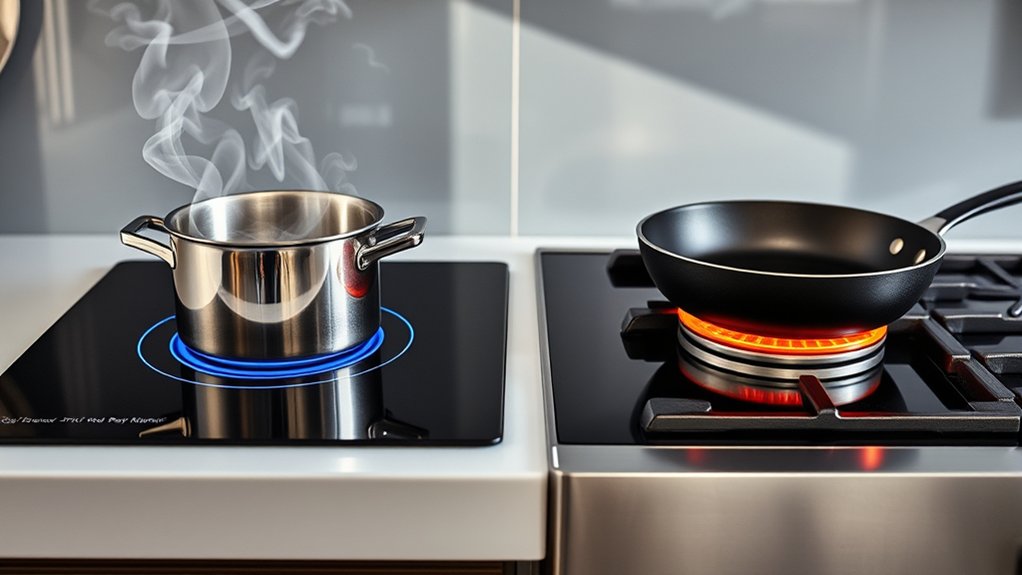
Induction heats cookware much faster than traditional electric coils or glass-top ranges, so your pans reach boiling or searing temperatures more quickly. It also responds more immediately when you adjust the controls. That gives you better control for delicate tasks, such as simmering or melting, than slower electric ranges typically provide.
Heat-Up Speed
Because induction heats the cookware itself with magnetic energy, it brings water to a boil and pans to sear much faster than a traditional electric range. You’ll notice the difference in both startup speed and responsiveness.
You’ll also see how design aesthetics and maintenance requirements play into daily use. The flat glass surface of induction looks sleek and wipes clean quickly, while coils on electric models can trap grime.
In practical terms, think of heat-up like stages you observe:
- Instant spark: induction gives almost immediate simmering and rapid boiling.
- Mid ramp: electric smooth tops take noticeably longer to reach high heat.
- Recovery lag: induction recovers heat faster after adding cold ingredients, speeding repeats.
You’ll save time and get more predictable cooking with induction.
Temperature Responsiveness
Besides heating speed, how a cooktop responds when you change temperatures matters just as much for control. Induction reacts almost instantly when you raise or lower power because it creates and cuts magnetic heat directly in the pan, giving you immediate feedback and precise temperature changes.
On a ceramic surface electric range, the glass and heating element retain heat, so changes lag. You’ll often overshoot or wait for cooldown.
Heat distribution also differs. Induction concentrates energy where the pan contacts the cooktop for even, fast response, while electric radiant zones may have hot spots and slower equalization across the pan.
If you value quick, accurate tweaks while cooking, induction gives superior responsiveness and finer control than traditional electric.
Energy Use and Household Operating Costs: Induction vs Electric
When you compare induction and traditional electric ranges, the biggest differences show up in how efficiently they convert electricity into usable cooking heat and how that affects your monthly bills.
You’ll notice induction stoves deliver higher energy efficiency by sending heat directly to the pan, so less electricity is wasted warming the cooktop or surrounding air.
In a clear cost comparison, that efficiency translates to lower operating costs for regular cooks, though upfront prices can be higher.
- Picture a pot heating instantly with most power going into the food.
- Picture a coil glowing and slow heat soaking into the cooktop before moving to the pan.
- Picture your monthly energy bill shrinking when cooking habits favor efficient induction.
You should weigh typical cooking frequency, local electricity rates, and appliance cost to estimate payback time.
For many households, induction’s lower ongoing energy use offsets the initial investment over a few years.
Safety and Everyday Impacts: Stovetop Hazards and Cleanup
While both induction and traditional electric ranges can cook well, they differ in everyday safety and cleanup in ways you’ll notice every time you use them.
With induction, the cooktop itself stays relatively cool because heat transfers to the pan, so you’re less likely to burn yourself or start a fire from stray paper or grease. That also reduces stubborn baked-on residues from stovetop spills since food doesn’t carbonize on a super-hot surface as quickly.
Traditional electric coils and radiant glass tops hold heat longer, so you need to be careful after turning burners off and vigilant about hot pans.
Those models can make cleaning challenges worse: sugary spills and burnt-on food bond tightly to hot elements or glass and demand scraping or stronger cleaners.
Induction surfaces still need wiping, especially when spills smear, but you’ll usually clean them faster and with gentler products.
In short, induction lowers burn and cleanup risk, while electric ranges require more caution and elbow grease.
Cookware You Need for Induction (and What Works on Electric)
Safer, cooler cooktops change what you need in the kitchen: induction uses magnetic fields, so only cookware with a ferrous (iron-containing) base will heat properly. You’ll check Cookware compatibility and Material requirements before upgrading.
Most stainless steel labeled “magnetic” works; cast iron is ideal for induction but heavy. Copper and aluminum need a magnetic layer or won’t work.
Think visually about what to keep and buy:
- A heavy cast-iron skillet for searing and steady heat.
- A magnetic stainless set (clad or with a ferrous base) for everyday frying and sauce making.
- A nonstick pan with a bonded ferrous plate for eggs and delicate foods.
On a conventional electric range, all these pieces perform fine. Electric coils and ceramic tops don’t need magnetism.
You’ll avoid trial-and-error by testing pans with a magnet: if it sticks, the pan meets Material requirements and offers reliable Cookware compatibility for induction cooking.
Upfront Price, Installation, and Long‑Term Costs
If you’re weighing induction against a conventional electric range, start by comparing sticker prices, installation needs, and likely operating costs over time.
Induction units usually cost more up front, especially high-powered or slide-in models, while basic electric coil or smooth-top ranges are cheaper. Check market availability for the brands and models you want, since premium induction options may be harder to find locally.
Installation can raise costs. Induction often requires a dedicated 240V circuit and sometimes panel upgrades, but electric ranges may need similar wiring. Factor in labor and permit fees.
Over the long term, induction is typically more energy-efficient, so you may save on electricity. Faster cooking can also reduce overall energy use.
Also compare warranty coverage and expected repair costs. Induction electronics can be pricier to fix, but strong warranties can help reduce the risk.
Balance the purchase price, installation costs, efficiency, and warranty coverage to decide which range best fits your budget and cooking habits.
Frequently Asked Questions
Do Induction Ranges Interfere With Medical Implants Like Pacemakers?
Yes, you should be cautious: induction ranges can pose medical safety concerns for some people with implants. You’ll usually be fine if your pacemaker or implant is modern and kept several inches away, but interference can occur if you get too close to strong magnetic fields.
Talk with your cardiologist or device manufacturer, follow their distance guidelines, and avoid leaning directly over active induction cooktops to reduce risk.
Can Induction or Electric Ranges Be Used During a Power Outage?
Short answer: no, they won’t work without grid power. You’ll want to consider practical power outage alternatives and emergency backup options instead.
You can’t run induction or conventional electric ranges during an outage unless you’ve arranged a generator, battery system with an inverter, or another powered cooktop.
If you want to keep cooking when the lights go out, consider portable gas stoves, camp stoves, or a professionally installed backup generator.
Which Range Is Better for Glass-Top Cleaning and Scratch Prevention?
You’ll find induction is better for glass cleaning and scratch prevention because it heats cookware directly and keeps the surface cooler. You’ll wipe spills more easily since food’s less likely to burn on, and magnetic, flat-bottomed pans reduce sliding that causes scratches.
With an electric glass-top you’ll need gentler cleaners and careful scrubbing to avoid marks. Either way, use soft cloths, nonabrasive cleaners, and avoid dragging heavy pots.
Are There Audible Noises or Humming Differences Between Induction and Electric?
Yes, you’ll notice differences in sound levels and humming noises. Induction cooktops often produce a light high-pitched hum or buzzing, especially at low to medium settings or with thin cookware, and you’ll hear occasional fan noise.
Traditional electric coils/glass-top electric ranges usually emit less electromagnetic hum but can have clicking or heating element sounds and louder cooling fans. You’ll hear more electrical hum from induction under specific conditions.
Can Induction Ranges Damage Non-Magnetic Cookware or Decorative Finishes?
Yes, you won’t get damage to non-magnetic cookware from the induction field itself, but you can’t cook effectively with it because it won’t heat.
Avoid dragging pots to prevent scratches, and be mindful of decorative finishes. Strong magnets or abrasive cleaning can harm enamel or painted surfaces.
Use compatible magnetic-bottom pans and soft pads or cleaners to protect finishes and prevent wear.
Conclusion
Choose induction when you want faster heating and precise control; choose electric when you want a lower upfront cost and broader cookware compatibility. You’ll save time with induction and money with electric. Induction offers better burn protection and easier cleanup, while electric ranges may have slower response times and occasional hotspots.
Consider installation needs, long-term energy use, and your cooking style before deciding. Compare these induction range vs electric range differences, then choose the option that best fits your priorities and kitchen routine.


