

Induction Range Vs Gas €“ 7 Key Differences to Know
Choosing between induction and gas can feel overwhelming, especially when you want fast cooking, precise control, and a setup that fits your budget. You’re not alone—many home cooks struggle to decide which option suits their kitchen and cooking style.
In this guide to Induction Range Vs Gas, we’ll compare the key differences to help you choose with confidence.
You’ll get faster, more precise heat with induction and tactile flame control with gas, so pick based on how you cook.
Induction uses electricity, needs magnetic cookware, and often lowers operating costs.
Gas works with any pan but wastes more heat and needs ventilation.
Induction surfaces are easier to clean and safer around kids, while gas gives visual flame feedback and wider pan size flexibility.
Keep going to see which fits your kitchen, budget, and cooking style.
Key Takeaways
- Induction heats faster and more efficiently, transferring electricity directly to cookware for quicker boils and lower energy loss than gas.
- Gas provides visible flame control and tactile low-heat nuance preferred for simmering, charring, and traditional cooking techniques.
- Induction requires magnetic, flat-bottom cookware; gas works with any pan material and size, including warped or oversized pans.
- Induction surfaces stay cooler and have built-in safety features, while gas emits combustion byproducts and needs proper ventilation and leak checks.
- Induction often costs more upfront and may need electrical upgrades; gas is usually cheaper initially but can incur higher operating and maintenance costs.
Which Range Fits Your Kitchen, Cooking Goals, and Budget?

When choosing between induction and gas, think about how you actually cook, how your kitchen is set up, and what you can comfortably spend. The best range is the one that matches your habits, space, and budget.
You’ll want to weigh installation needs. Gas requires a line and ventilation, while induction needs proper electrical capacity.
Consider cookware too. Induction requires magnetic bottoms, while gas works with any pot.
If you value clean surfaces and modern features, induction often offers smart technology and a sleeker design. It may also boost resale value and add daily convenience.
Think about maintenance. Gas burners can be fiddly to clean, while induction tops wipe down easily.
Also factor in recurring costs and safety. Induction can be more energy-efficient and reduces the risks associated with an open flame.
Finally, set a realistic budget that includes potential upgrades to power, ventilation, or cookware. Match the range to your cooking style, space constraints, and long-term costs so you won’t regret the choice.
Heat Speed and Responsiveness: Induction vs Gas
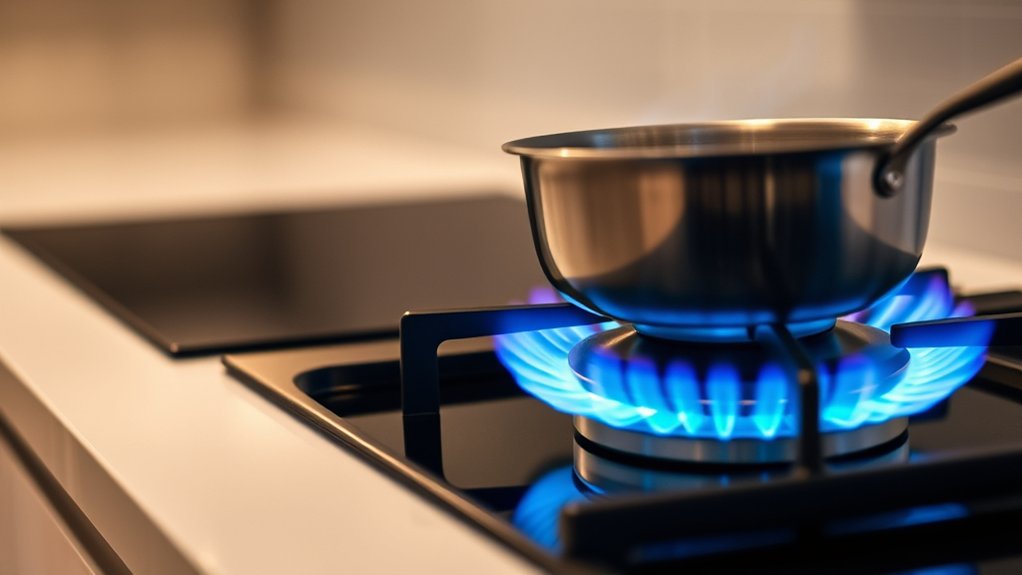
You’ve thought about installation, cookware, and upkeep — now let’s look at how quickly and precisely each range heats.
You’ll notice induction responds almost instantly: when you change settings, the pan temperature shifts fast, so your temperature control feels precise.
Gas gives visual feedback with flames and offers intuitive power adjustment by eye, but it’s slightly slower to change pan temp.
For rapid tasks like searing or boiling, induction often wins. For simmering or gradual reductions, gas gives tactile nuance you may prefer.
| Feature | Induction | Gas |
|---|---|---|
| Heat-up speed | Immediate | Fast |
| Responsiveness to adjustment | Very high | High |
| Fine simmer control | Good with practice | Excellent |
Choose induction if you want surgical temperature control and instant power adjustment. Pick gas if you value flame feedback and nuanced low-heat control.
Energy Efficiency and Operating Costs: Induction vs Gas

One clear advantage of induction ranges is that they convert much more of the energy they draw into heat in the pan, so you’ll see lower operating costs compared with gas for the same cooking tasks. When you cook on induction, magnetic coils heat the cookware directly, cutting wasted heat and reducing overall power consumption. That efficiency translates into noticeable energy savings over time, especially if you cook frequently or use high heat settings.
Gas stoves lose more heat to the air, so even though the flame responds quickly, you’re paying to warm your kitchen as well as the pan. You’ll likely consume more gas energy per meal than electricity on an induction cooktop delivering the same result.
To estimate your costs, compare the wattage and usage hours of induction elements to your gas meter readings. This gives a clearer view of operating expenses. In short, induction typically delivers better energy savings and lower running costs for comparable cooking.
Upfront Price, Installation, and Long‑Term Value
Compare the upfront purchase and installation costs of induction and gas ranges so you know what you’re getting into. For a gas range, you may need a gas hookup, while an induction range could require electrical upgrades. Electrician or plumber fees can also increase the initial cost.
Once you understand those expenses, consider the long-term value. Factor in energy use, maintenance, and potential resale impact to determine which option is likely to be more economical over time.
Purchase And Installation Costs
Curious which option costs more up front and over time? You’ll want a clear cost comparison: induction units often carry higher upfront prices, but gas ranges can require costly gas-line hookups. Consider installation complexity, including electrical upgrades for induction or certified gas fitting for gas.
| Item | Typical cost impact |
|---|---|
| Appliance price | Induction higher; gas lower |
| Installation | Induction may need electrical upgrade |
| Gas hookup | Professional certification required |
| Long-term value | Depends on energy rates and maintenance |
You should factor in permit fees, countertop modifications, and ventilation for gas.
If you already have a compatible electrical circuit, induction installation is simpler. If you need new gas lines, expect higher immediate installation costs.
Balance the purchase price with realistic installation quotes before deciding.
Lifetime Operating Value
Having weighed purchase and installation costs, it helps to look at lifetime operating value to see which range truly costs less over time.
You’ll find induction models usually cost less to run because they’re more energy-efficient and transfer heat directly to cookware, lowering monthly energy bills.
Gas burners heat quickly but waste more energy, so your utility costs can add up.
Consider durability comparison: induction surfaces have fewer moving parts and often last longer, while gas components like valves and igniters may need periodic replacement.
Factor in maintenance considerations. Induction tops are easier to clean and need fewer service calls, while gas ranges may need annual inspections for leaks and burner upkeep.
Add expected lifespan and service costs when deciding which fits your budget.
Safety, Ventilation, and Home Requirements
How safe is your kitchen’s setup when you switch between induction and gas? You’ll notice induction cuts several risks: no open flame, reduced fire hazards, and cooler surrounding surfaces that lower burn chances. Electromagnetic fields are confined to the cooktop, and auto-shutoff and precise temperature control prevent overheating, though you should still follow manufacturer safety guidelines.
With gas, you’ll manage combustion byproducts and potential odor issues from leaks or incomplete burning, so proper ventilation is essential. You’ll want a range hood vented outdoors, regular gas-line inspections, and carbon monoxide detectors placed per local codes.
Apartment dwellers should check building rules; some complexes limit gas appliances.
Consider electrical capacity too: induction often needs a dedicated circuit and higher amperage. Measure panel capacity and consult an electrician to ensure safe installation.
Ultimately, you’ll prioritize ventilation, detectors, and professional installation to meet home requirements and minimize risks for either cooktop.
Cookware Compatibility, Cleaning, and Maintenance
When you switch between induction and gas, your cookware choices and care routines change noticeably. You’ll need to evaluate cookware compatibility: induction demands magnetic-bottom pans, such as cast iron or stainless steel with ferrous bases, while gas works with almost anything.
Inspect bases for flatness on induction and avoid warped pans. For cleaning tips, treat surfaces differently: induction tops scratch if you drag rough bottoms, while gas grates collect grease and need deeper scrubbing.
| Induction | Gas |
|---|---|
| Requires magnetic cookware | Works with all materials |
| Flat-bottom pans perform best | Warped pans still heat |
| Smooth glass cooktop; use soft cloth | Open flame; removable grates |
| Clean spills quickly to avoid staining | Degrease grates and drip trays regularly |
Maintain pans by seasoning cast iron and avoiding abrasive cleaners on coated cookware. For induction, lift rather than slide pans.
For gas, remove and soak grates periodically. These habits extend cookware life and keep both ranges working efficiently.
Which to Choose: Cooking Styles and Household Scenarios
If you love precise temperature control and fast heating, choose induction; if you cook with high flames, charring, or oversized pans, gas may fit your style better.
Prefer induction for precise, fast heat; choose gas for high flames, charring, or oversized pans.
You’ll want induction if you prioritize quick simmer-to-boil changes, safety for kids, and sleek cooking aesthetics that match minimalist kitchens. It’s ideal when you value appliance integration, such as smart cooktops that sit flush with counters and link to home automation.
Choose gas if you rely on visual flame cues, frequent wok cooking, or need to use varied pan sizes and materials. Pro-chef techniques often favor gas’s tactile feedback.
Consider household scenarios: small apartments with ventilation limits commonly suit induction, while homes with existing gas lines or frequent outdoor-style cooking might prefer gas.
If multiple cooks share tasks, induction’s even heat reduces mistakes. For heavy-duty, high-heat searing, gas gives immediate response.
Weigh cooking aesthetics, safety, and how the range fits your kitchen systems before deciding.
Frequently Asked Questions
Do Induction Ranges Emit Harmful Electromagnetic Fields?
Yes — induction ranges produce electromagnetic fields, but they’re generally low and focused, so electromagnetic safety concerns are minimal for typical use.
You’ll get higher field exposure risks very close to the cooktop while it’s on, but strength drops sharply with distance.
If you’re worried, stand back a bit, use cookware that fits the coil, and follow manufacturer guidelines. Those steps keep your exposure within common safety limits.
Can Induction Ranges Work During Power Outages?
Can they? No. Induction ranges need electricity, so they won’t work during power outages unless you provide power.
You can use power outage solutions like a generator or battery backup to run an induction cooktop, but confirm the wattage and safety requirements first.
You should also evaluate electromagnetic safety when installing alternative power sources or using portable induction units. Follow the manufacturer’s guidelines to avoid risks and overloads.
Are There Resale Value Differences Between Homes With Gas Vs Induction?
Yes, you’ll often see higher resale appeal for homes with induction, especially among buyers valuing energy efficiency and modern kitchens. You’ll also attract buyers wary of gas lines, though some traditionalists prefer gas for cooking.
Installation costs can sway decisions: induction may raise initial costs if electrical upgrades are needed, while gas appliances can require gas hookups. Overall, market and buyer preferences in your area will determine the premium.
Do Professional Chefs Prefer Gas Over Induction?
Some pros prefer gas, but many chefs now choose induction for precise heat and cleaner kitchens. You’ll find gas offers familiar tactile control and quick visual feedback, yet induction often beats gas on cooking speed and energy efficiency, heating pans faster and wasting less heat.
Don’t worry, you won’t lose technique. Induction responds quickly and lets you control simmering and searing once you adapt, so your skills translate.
How Do Induction and Gas Ranges Compare for Baking Consistency?
You’ll find induction offers superior baking accuracy and temperature stability because it heats more evenly and responds faster to adjustments, so oven temps stay steadier. Gas can create hot spots and fluctuating heat that you’ll have to learn around, though it gives quick visual control.
For precise bakes and delicate pastries you’ll prefer induction; for rustic roasting or when you want instant flame feedback, gas still works well.
Conclusion
Deciding between an induction range and gas is like choosing between a trusty sports car and a versatile SUV: one offers lightning-fast, precise control, while the other delivers tactile flames and familiar muscle.
Think about your cooking style, budget, and home setup. Speed, efficiency, safety, and cookware compatibility all matter.
Whichever you choose, an induction range or gas range can help you create better meals. Match the range to your rhythm, and it’ll feel like it was made just for you.


