
7 Benefits of an Induction Stove and Oven
Many home cooks struggle with slow heating, uneven results, and messy cleanup. You’re not alone—choosing the right appliance can make everyday cooking faster, safer, and more enjoyable.
An induction stove and oven heats pans directly, so water boils in minutes and searing and simmering feel quicker and more responsive. You’ll also save energy and potentially lower bills with shorter preheat and recovery times.
Precise temperature control improves baking and delicate sauces, while the flat cooking surface wipes clean easily.
Built-in safety features, such as cooler tops and automatic shutoff, add peace of mind for your family.
Keep reading to learn more about the installation process, compatible cookware, and overall costs.
Key Takeaways
- Faster heating and immediate temperature response for quicker boiling, searing, and precise cooking control.
- Superior energy efficiency with direct heat transfer and shorter cook times, lowering long-term utility costs.
- Safer operation with cooler surfaces, automatic shutoffs, child locks, and residual heat warnings.
- Sleek, flat design simplifies cleaning and reduces crevice buildup for low-maintenance aesthetics.
- Long-term value through durable appliances, potential resale appeal, and savings that offset upfront costs.
Should You Switch to an Induction Stove and Oven?

If you’re weighing a switch to induction, think about how you cook, your cookware, and your budget. You’ll notice induction changes kitchen aesthetics immediately: sleek, flat surfaces give a modern look and can make small kitchens feel streamlined.
Beyond style, consider whether your pans are magnetic. You’ll need ferrous-bottom cookware or plan to replace pieces. Ask how often you cook and what techniques you use. Induction responds fast and precisely, so it’s ideal if you like control, simmering, or frequent stove use.
Consider whether your pans are magnetic and how you cook—induction offers fast, precise control for simmering and frequent use.
Also factor in cooktop maintenance. Induction surfaces are easier to wipe clean since spills don’t bake on, but you must avoid abrasive cleaners and heavy impacts that can scratch the glass.
Installation and initial cost are higher than gas or electric, yet you might save on energy over time. Weigh upfront expenses, potential cookware upgrades, and the aesthetic and maintenance benefits to decide if induction fits your kitchen and habits.
Faster Cooking: Shorter Boil and Heat-Up Times With Induction

Because induction transfers energy directly to the pan, you’ll see water boil and food heat up far faster than on gas or conventional electric cooktops. That speed lets you get meals on the table quicker and reduces the window when hot surfaces are present, improving cooking safety since pans heat instantly and cool down faster once you turn the element off.
You’ll react faster to spills or boilovers, and precise, immediate temperature changes make it easier to avoid overheating oil or burning delicate sauces.
Faster heat-up also complements kitchen aesthetics: sleek, flat surfaces stay cleaner because less time at high temperature means fewer scorched remnants. The streamlined look of induction tops pairs with the practical benefit of rapid responses, so your kitchen functions efficiently and looks modern.
Energy Savings and Lower Utility Costs With Induction Ranges
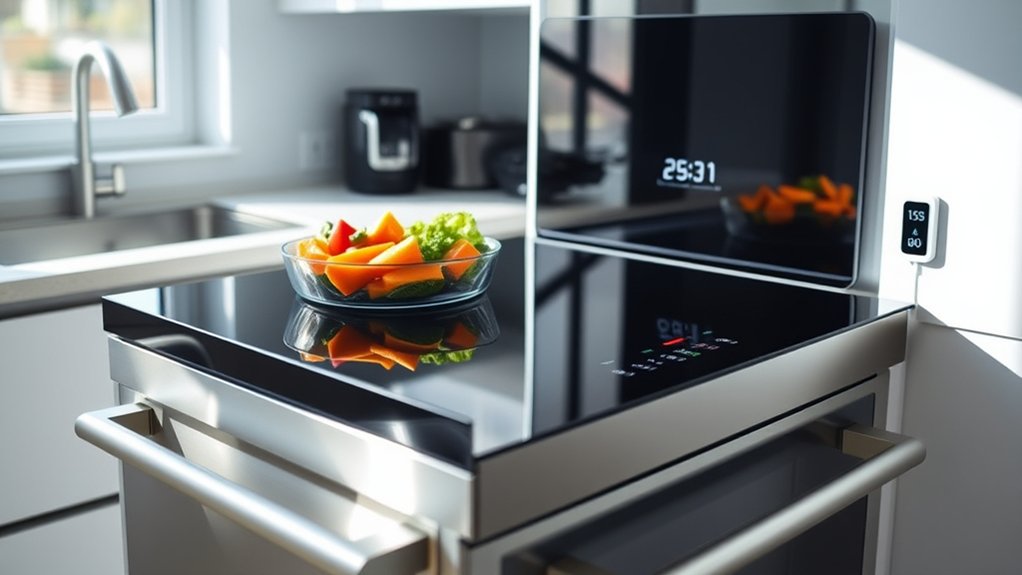
Because induction heats pans directly, it brings them up to temperature faster, which can shorten cooking times and reduce energy use. It also avoids much of the standby heat loss associated with gas burners and traditional electric coils by transferring heat straight to the pan. Over time, that efficiency can help lower your utility bills.
Faster Heat-Up Times
When you switch to an induction range, meals start cooking almost instantly thanks to rapid electromagnetic heating that sends energy straight into the cookware.
You’ll notice shorter preheat times, faster boiling, and more precise temperature control, which saves time and reduces wasted energy.
Faster heat-up also boosts cooking safety because surfaces stay cooler and spills don’t bake on as quickly.
Plus, sleek induction units improve kitchen aesthetics with flat, minimal cooktops that look modern while working efficiently.
| Task | Induction Time | Conventional Time |
|---|---|---|
| Boil 1L water | 4 min | 10 min |
| Sear steak | 2 min | 5 min |
| Simmer sauce | 3 min | 8 min |
Reduced Standby Losses
Faster heat-up not only speeds cooking but also cuts the time your stovetop spends idle, which lowers standby losses and trims your energy bill.
With induction, heat is delivered directly to the pan, so you won’t leave burners on longer to reach temperatures. That boosts standby efficiency by minimizing wasted cycles.
You’ll notice shorter preheat and recovery times, meaning the cooktop spends less time in low-power standby modes.
That reduced idle draw adds up monthly, especially if you cook often.
For households focused on power conservation, induction’s precise controls let you match output to need without background consumption.
Ultimately, using an induction range helps you save energy and lowers utility costs without changing your cooking habits.
Precise Temperature Control for Better Baking and Simmering
With an induction stove, you get fast, precise heat that reaches your chosen temperature almost instantly. That control makes baking more predictable and simmering easier because the burner maintains a steady low temperature without sudden surges. You’ll spend less time adjusting the controls and more time enjoying consistent results.
Faster, More Accurate Heat
Because induction heats the cookware directly, you get near-instant temperature changes that let you dial in exact heat levels for delicate tasks like simmering or baking finishes. You’ll notice the cooking surface stays relatively cool while the pan responds immediately, so you can pull back heat at the first sign of scorching.
That responsiveness depends on cookware material. Magnetic, flat-bottomed pans work best, so choose pots that match the stove.
- Rapid boil: jump from low to rolling boil without long lag.
- Quick cooldown: stop simmering instantly to protect sauces.
- Precise finish: nudge temperatures by small increments for custards or glaze.
You’ll save time and avoid overcooking because the range reacts the moment you change power.
Consistent Low-Temp Control
When you need steady low heat for simmering sauces or baking delicate custards, induction keeps temperatures stable so you don’t chase hot spots or guess at power levels. You’ll notice temperature stability right away: the cooktop responds instantly to adjustments, holding set points without overshoot.
That lets you simmer long without burning and bake custards or terrines with fewer cracks or curdling. Uniform heating across the pan bottom reduces edge scorching and uneven doneness, so you can rely on consistent results even with thin cookware.
Controls are precise enough to maintain a gentle simmer or low oven temperature for hours, freeing you to prep other dishes. If you value repeatable outcomes, induction’s low-temp control makes delicate techniques much easier.
Safer Kitchens: Cooler Cooktops, Auto-Shutoff, and Child Locks
Although they look similar to traditional cooktops, induction ranges keep their surfaces much cooler, so you’re less likely to burn yourself or scorch a spill. You’ll notice fewer residual-heat warnings and can clean up messes faster without waiting for coils to cool.
Built-in features like automatic shutoff add protection if a pan boils dry or is removed, reducing fire risk. Child safety is also improved with child locks that prevent settings from being changed mid-cook.
Automatic shutoff and child locks prevent overheating or accidental changes, reducing fire risk and improving kitchen safety.
- A cool-to-touch surface limits accidental burns when kids reach over counters.
- Automatic shutoff steps in when cookware is absent or overheating, cutting power quickly.
- Child locks block the controls, so curious hands won’t start a burner or change temperatures.
These layered safeguards make kitchens safer without extra devices. You still should follow basic precautions, but induction’s design and safety features give you clearer, faster protection against common cooking hazards.
Do Your Pots Work on Induction? Cookware Compatibility Explained
Safer cooktops are great, but they won’t help if your pots won’t heat. Next, check whether your cookware works with induction. Induction relies on magnetic compatibility, so you need pots with ferrous metal bases.
Test pans by holding a magnet to the bottom. If it sticks, the cookware is likely suitable. Good options include cast iron and many stainless steels. Aluminum, copper, and glass usually won’t work unless they have a bonded ferrous base.
You’ll also want flat, smooth bottoms for full contact and efficient heating. Thin, warped, or overly small pans can reduce performance, even if they’re magnetic.
For mixed-material sets, look for labels stating “induction ready” or check the manufacturer’s specifications. If you’re upgrading gradually, consider buying a few versatile induction-ready pieces.
A heavy skillet and a medium saucepan cover most needs. This keeps costs manageable while ensuring your pots deliver the fast, responsive cooking induction promises.
Cost, Installation, and Long-Term Value: What to Expect and Budget For
If you’re weighing an induction stove and oven, expect higher upfront costs but lower operating expenses over time. You’ll want clear budget planning: units cost more than gas or basic electric, but energy efficiency and faster cooking can cut bills.
Also factor in cookware upgrades if your pans aren’t induction-compatible.
Think through installation considerations: you may need a dedicated 240V circuit, a panel capacity check, or minor countertop adjustments. Hiring a licensed electrician and installer avoids surprises and protects warranties.
- Purchase: range of models and features, set a realistic appliance budget.
- Installation: electrical work, potential countertop or venting changes, and professional fees.
- Long-term value: energy savings, lifespan, resale appeal, and reduced maintenance.
When you add purchase, installation, and potential cookware costs, evaluate the payback time based on your cooking habits.
If you cook often, induction usually pays back faster and adds lasting convenience and home value.
Frequently Asked Questions
Can Induction Stoves Interfere With Medical Implants or Pacemakers?
Yes, induction stoves can pose a risk of medical device interference, though it’s uncommon. You should check pacemaker safety with your cardiologist because the electromagnetic fields from induction cooktops might affect some implanted devices.
You’ll usually be safe standing a short distance away, but don’t lean on or place medical device components directly over the cooktop. Follow manufacturer guidance and get personalized advice to minimize any pacemaker safety concerns.
How Noisy Are Induction Cooktops During Use?
Induction cooktops are generally quiet; you’ll hear low humming or buzzing at higher settings, but noise levels stay modest. You’ll notice occasional fan noise from built-in cooling systems, and light vibration depending on the cookware and power level.
Thin or loose pans can rattle more, while heavy, flat-bottomed pots reduce vibration and noise. Overall, you’ll find them far quieter than gas flames or some electric coils, especially at low to medium heat.
Do Induction Ranges Work During Power Outages With a Generator?
Yes, induction ranges can work during power outages if your generator supplies compatible power and enough watts.
You’ll need a generator that provides stable, clean electricity and meets the range’s startup and running watt requirements.
For power outage solutions, use a properly sized, grounded generator and consider inverter models for cleaner output. You’ll also need a correct transfer switch or manual isolation to ensure safe generator compatibility and prevent backfeeding.
Are Induction Surfaces More Prone to Scratching or Staining?
Yes, induction surfaces can scratch or stain, which is almost ironic since they’re marketed as pristine and high-tech. You’ll still worry about surface durability because abrasive pans, dragged utensils, or grit can mar the glass-ceramic.
Cleaning challenges arise when burns or mineral deposits set in; you’ll need nonabrasive cleaners and a scraper for tough spots. With careful use and prompt cleaning, you’ll keep the surface looking new far longer.
Can You Use Induction Cooktops With Glass or Ceramic Cookware?
Yes, you can use some glass or ceramic cookware, but it’s usually not compatible with induction unless it has a magnetic base. You’ll want pots with ferrous metal or a built-in magnetic layer for efficient heat transfer.
If a magnet sticks to the bottom, it’ll work. Otherwise, you’ll get poor heating or no response, so choose cookware labeled as induction-compatible for the best results.
Conclusion
You’ll cook faster, save on bills, and nail temperatures with confidence. You’ll keep kitchens cooler, safer, and less stressful while enjoying greater control.
You’ll check your cookware, weigh upfront costs, and enjoy years of smarter performance. Switching to an induction stove and oven means cleaner surfaces, quicker cleanup, and less guesswork.
It means investing once and benefiting daily. If you want speed, control, safety, and long-term value, an induction stove and oven gives you all four powerfully, simply, and reliably.